بريد إلكتروني: [email protected]

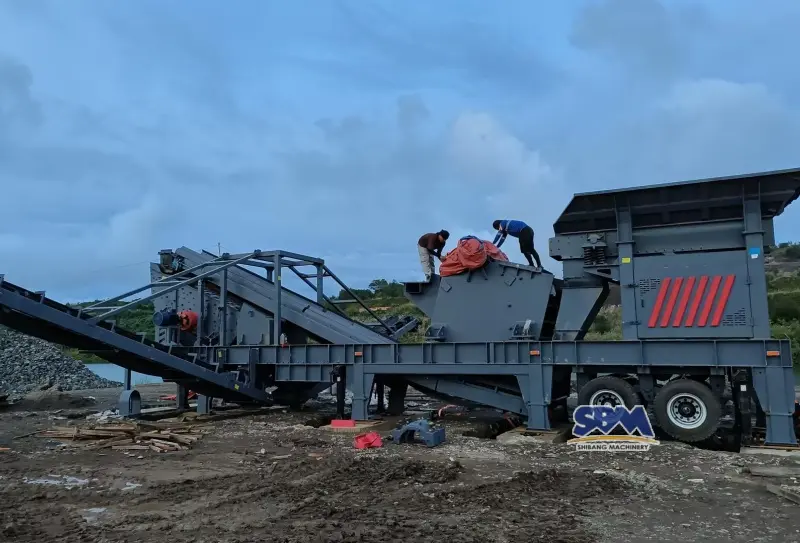
اختيار الكسارة المناسبة لخام المعادن يبدأ بخمسة عوامل: نوع الخام, حجم التغذية, صلابة, حجم المنتج المستهدف, والقدرة النباتية. إذا كانت تلك النقاط الخمس واضحة, the equipment choice becomes much easier and the final circuit is more likely to deliver stable production, ارتداء أقل, and better downstream efficiency. In real mining projects, the wrong crusher does not only reduce productivity. It can also increase liner wear, raise energy use, create unstable feed to grinding, and make the whole plant harder to operate. That is why crusher selection should be treated as a process decision, not just a purchasing decision.
في اس بي ام, we see crusher selection as part of the full metal ore processing system. A primary crusher, a secondary crusher, the screen, the transfer points, and the target feed to grinding all have to work together. A machine that looks suitable in isolation may still be the wrong choice if it does not fit the ore or the plant layout.
Why crusher selection matters?
The crusher you choose influences more than the first reduction stage. It affects throughput, سحب السلطة, wear cost, maintenance planning, and the particle size distribution sent to later stages. In many metal ore plants, small changes in crusher selection or crusher role can improve performance across the full comminution circuit.
This is especially important in hard rock mining. When ore is hard, كاشط, مبتل, or variable, the plant cannot rely on a generic equipment choice. The crusher must match the material and the operating target if the project is expected to run reliably over time.
خطوة 1: Start with the ore
The first question is simple: what kind of ore are you crushing?
Different ores break in different ways, and this changes the best equipment choice.
Hard and abrasive ores usually need robust compression crushing, while more brittle ores may allow a different secondary crushing strategy.
على سبيل المثال, magnetite often requires a tougher crushing approach because it is typically harder and more abrasive.
Hematite may behave differently depending on gangue minerals, رُطُوبَة, and brittleness.
That is why ore testing should come before final machine selection whenever possible.
If the ore contains high moisture or sticky clay, that factor must also be included early.
Some crusher and screen arrangements are more sensitive to sticky feed than others, and ignoring that can create blockage and unstable operation later.
خطوة 2: Define the maximum feed size
Feed size is one of the most practical selection criteria.
A crusher that cannot comfortably accept the largest expected lumps will struggle from the beginning.
That usually means lower efficiency, more interruptions, and a greater risk of uneven operation.
In most metal ore plants, the first-stage machine is selected largely around feed opening and coarse reduction ability.
This is why كسارات الفك are commonly used in the primary stage of hard rock and metal ore projects.
They can handle large feed and provide a strong first reduction before the material moves to secondary crushing.
If the mine produces very large tonnage and very large lump sizes, a gyratory crusher may also be considered in some operations.
The right answer depends on throughput target, mine design, and the scale of the plant.
خطوة 3: Match the crusher to the process stage
A crusher should always be chosen for a specific role in the circuit.
One of the most common selection mistakes is comparing machines that are designed for different stages as if they were direct substitutes.
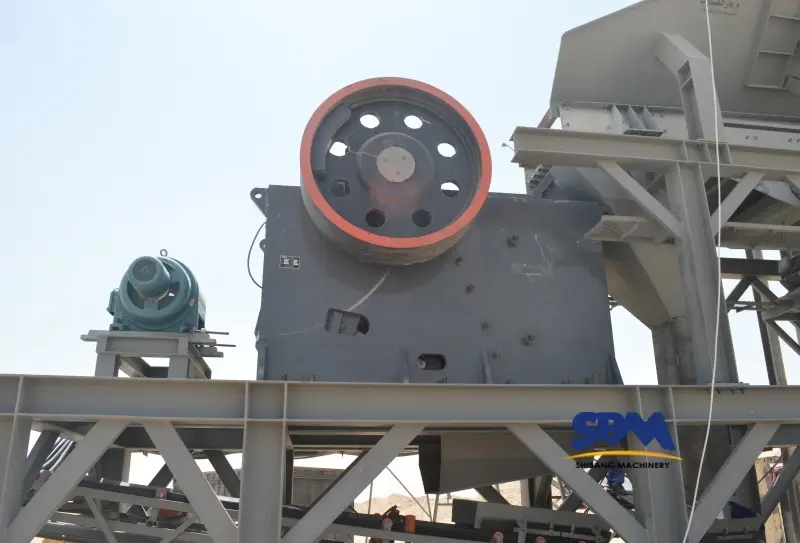
Jaw crushers are most commonly used for primary crushing.
Their job is to take large run-of-mine ore and reduce it to a manageable size for the next step.
They are rugged, بسيط, and widely used in metal ore projects where reliability matters.
الكسارات المخروطية are typically used in secondary or tertiary stages.
Their role is to take pre-crushed ore and reduce it to a finer, more controlled product.
That is why cone crushers are often selected when the plant needs tighter size control before grinding.
في الممارسة العملية, many successful metal ore plants use both.
A jaw crusher handles the first large reduction, and a cone crusher refines the product for the next process stage.
This staged approach often supports better circuit stability than trying to force one machine to do everything.
خطوة 4: Set the target product size
The target crushed size is one of the most important decisions in crusher selection.
If the plant only needs coarse reduction, the circuit can remain simpler.
If the plant must deliver a finer, more consistent feed to grinding, the crushing layout may need additional stages and better screening control.
This matters because the crusher should support the downstream process.
إذا كان المنتج المسحوق خشنًا جدًا, the grinding circuit must work harder and energy use rises.
If the product is much finer than necessary, the plant may waste energy in crushing without enough benefit later.
The best crusher choice is therefore linked to the full flowsheet.
A machine is not “right” simply because it breaks rock.
It is right when it prepares the ore efficiently for the next profitable step.
خطوة 5: Confirm throughput and plant layout
Capacity is more than a number on a data sheet.
The real issue is whether the crusher can maintain that capacity under the actual ore conditions and plant arrangement.
A machine that performs well in ideal conditions may not deliver the same result with wet feed, variable ore, or limited maintenance access.
Plant layout also matters.
A compact site, a remote mine, or a future expansion plan may all influence the most practical crusher arrangement.
The right machine for one project may be the wrong choice for another simply because the operating context is different.
This is one reason why crusher selection should include maintenance planning.
Access space, liner replacement time, transfer point design, and screen position all influence real plant performance.
خطوة 6: Think in lifecycle cost, not purchase price
A lower purchase price does not always mean lower project cost.+1
If a cheaper crusher wears faster, uses more power, or creates unstable feed, the plant may lose more money over time than it saves up front.
For many mining companies, the better question is this: what is the cost per ton over the operating life of the circuit?
That includes liner wear, التوقف, maintenance labor, استخدام الطاقة, and the effect on downstream grinding.
Viewed this way, the right crusher is usually the one that supports steady, efficient production over time.
This is especially important when the ore is hard and abrasive.
In those conditions, wear life and stable performance may matter more than a lower purchase quote.
Common mistakes to avoid
Many buyers make the mistake of choosing a crusher based only on machine type popularity.
A popular crusher is not automatically the best crusher for your ore.
Ore conditions and process targets should always come first.
Another common mistake is ignoring the screen and downstream process.
A crusher does not work alone, and product size quality depends on the circuit, not only the crushing chamber.
If the screen is poorly matched, the plant may recirculate too much material or send oversize forward.
A third mistake is assuming that one crusher can solve every stage of reduction.
In many metal ore applications, efficiency comes from combining machines in the right order rather than asking one machine to do too much.
How SBM approaches metal ore crusher selection?
في اس بي ام, we approach metal ore crusher selection from the process side first.
We begin with ore type, ظروف التغذية, حجم المنتج المستهدف, سعة, ومتطلبات العملية النهائية.
Then we match the crusher and the circuit to those conditions.
This method helps reduce the risk of overdesign and underdesign.
It also helps customers select a circuit that is practical to run, maintain, and expand later if production goals change.
For us, a good crusher recommendation is not just technically workable.
It also has to make sense in real production.
Final answer
The best way to choose the right crusher for metal ore is to match the machine to six factors: نوع الخام, حجم التغذية, crushing stage, حجم المنتج المستهدف, الإنتاجية, and lifecycle cost.
For most hard rock projects, jaw crushers are strong candidates for primary crushing, while cone crushers are more suitable for secondary or tertiary stages where better size control is required.
The best final choice is the one that supports the full circuit, not just the first purchase decision.
التعليمات
What is the first thing to check when choosing a crusher for metal ore?
The first thing to check is the ore itself, including ore type, صلابة, الكشط, الحد الأقصى لحجم التغذية, and required product size.
Is a jaw crusher always the best first choice?
A jaw crusher is the most common choice for the primary stage, but the final selection still depends on feed size, سعة, ore conditions, وتخطيط النبات.
When should I choose a cone crusher?
A cone crusher is usually selected when the material has already passed through primary crushing and the plant needs a finer, more controlled product size.
Why should crusher selection consider the grinding circuit?
Crusher selection should consider the grinding circuit because crushed product size affects mill load, total energy use, وكفاءة المصب.
Should I choose equipment based on price or lifecycle cost?
Lifecycle cost is usually the better metric because a cheaper machine can become more expensive over time due to higher wear, التوقف, التحكم في الحجم ضعيف, or higher energy use.