E-pos: [email protected]

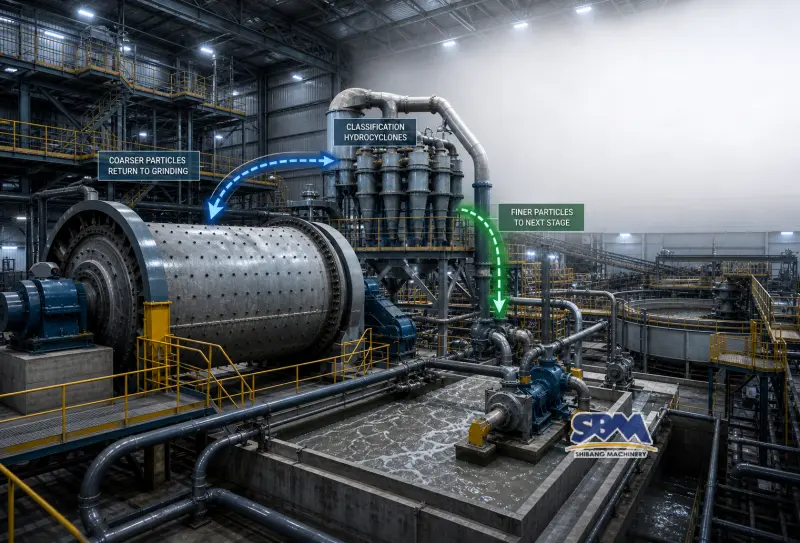
Klassifikasie doeltreffendheid het 'n direkte impak op slyp kring werkverrigting, energie gebruik, en finale herstel. As gevolg daarvan, indien klassifikasie swak is, fyn deeltjies bly te lank in die stroombaan, growwe deeltjies kan te vroeg vertrek, en die aanleg mors beide krag en kapasiteit.
In metaalerts verwerking, klassifikasie is nie 'n sekondêre detail nie. Dit beheer hoe materiaal deur die maalkring beweeg en help bepaal of die plant die teikenpartikelgrootte bereik wat nodig is vir mineraalbevryding.
Wat is klassifikasie doeltreffendheid?
Klassifikasie doeltreffendheid verwys na hoe goed 'n skeier, gewoonlik 'n hidrosikloon of skerm, skei fyn deeltjies van growwe deeltjies. 'n Hoë-doeltreffendheid klassifikasiestelsel stuur fyn materiaal vorentoe na die volgende stadium en gee slegs growwe materiaal terug vir meer maal.
Egter, wanneer klassifikasiedoeltreffendheid laag is, die stroombaan word minder stabiel. Fyn deeltjies kan voortgaan om deur die meule te sirkuleer, terwyl sommige growwe deeltjies die maalteiken kan omseil en stroomaf-herwinning verminder.
Waarom klassifikasiedoeltreffendheid saak maak?
'n Maalkring is nie afhanklik van die meule alleen nie. Dit hang af van die verhouding tussen die meule en die klassifikasiestadium.
Wanneer klassifikasie goed werk, die stroombaan kry verskeie voordele:
- Beter beheer van finale produkgrootte.
- Laer risiko van oorslyp.
- Meer stabiele deurset.
- Laer energievermorsing.
- Verbeterde stroomafskeidingsprestasie.
Daarenteen, swak klassifikasie veroorsaak dikwels hoë sirkulasielading, buitensporige boetes, en inkonsekwente produkgrootte. Hierdie probleme verminder die doeltreffendheid van die aanleg, selfs al lyk dit of die meule self normaal werk.
Algemene tekens van swak klassifikasie
Baie plante herken nie dadelik klassifikasieprobleme nie omdat die kwessie dikwels soos 'n maalprobleem lyk. In die praktyk, die waarskuwingstekens verskyn gewoonlik in die algehele kringprestasie.
Algemene tekens sluit in:
- Produkgrootte word onstabiel.
- Kragverbruik neem toe sonder 'n duidelike deursetwins.
- Herstel daal selfs wanneer maalgrootte fyner lyk.
- Hidrosikloonoorloop bevat te veel growwe materiaal.
- Die stroombaan genereer oormatige slyk.
- Sirkulasielading bly ongewoon hoog.
Wanneer verskeie van hierdie tekens saam verskyn, klassifikasie moet een van die eerste areas wees om te hersien.
Hoofoorsake van lae klassifikasiedoeltreffendheid
In die meeste gevalle, lae klassifikasiedoeltreffendheid kom van 'n kombinasie van bedryfs- en ontwerpfaktore eerder as een enkele kwessie.
Die mees algemene oorsake is:
- Inkonsekwente toevoer na die sikloon of skerm.
- Verkeerde voerdigtheid.
- Onstabiele druk in die klassifikasiestelsel.
- Verslete sikloononderdele of beskadigde binnevoerings.
- Swak passing tussen sikloongrootte en stroombaankapasiteit.
- Ertsveranderlikheid wat deeltjiegedrag verander.
As gevolg daarvan, indien hierdie faktore nie beheer word nie, die aanleg kan voortgaan om die meule aan te pas terwyl die werklike probleem in die klassifikasiestadium bly.
Hoe om klassifikasiedoeltreffendheid te verbeter?
Stabiliseer die voer
Stabiele voer is die grondslag van stabiele klassifikasie. Groot swaaie in tonnemaat, water byvoeging, of vastestofdigtheid maak dit moeiliker vir die klassifiseerder om deeltjies korrek te skei.
Die plant moet eers kyk of die metaalerts breek proses lewer 'n konsekwente produk na die maalstadium. Selfs 'n goed ontwerpte klassifikasiestelsel kan nie goed presteer met onstabiele stroomopvoer nie.
Beheer flodderdigtheid
Klassifikasieprestasie hang baie af van voerdigtheid. As die suspensie te dik of te dun is, skeiding word minder akkuraat en snygroottebeheer word swakker.
Operateurs moet digtheid gereeld monitor en waterbalans versigtig aanpas. Dit is een van die eenvoudigste maniere om stroombaankonsekwentheid te verbeter.
Handhaaf die regte druk
Hidrosiklone benodig stabiele bedryfsdruk om deeltjies effektief te skei. Druk wat te laag of te hoog is, kan die snygrootte verskuif en die skeidingskwaliteit verminder.
Dit is hoekom drukmonitering deel moet wees van roetine-kringkontroles. Klein drukveranderinge kan merkbare verskille in produkgrootte skep.
Inspekteer slytasie dele
Sikloonvoerings, toppunte, en vortex finders dra met verloop van tyd. Soos slytasie toeneem, klassifikasie akkuraatheid daal dikwels selfs al bly die kringinstellings onveranderd.
Roetine-inspeksie help die aanleg om prestasieverlies op te spoor voordat dit 'n groter herstelprobleem word. Slytasieverwante verliese is algemeen in skuurmetaalertsbane.
Pas klassifikasieteiken by herstelbehoeftes
Die beste moontlike klassifikasieresultaat is nie altyd die beste een nie. Die doel is om die deeltjiegrootte te produseer wat die beste stroomafherwinning ondersteun.
Plante moet klassifikasieteikens aan bevrydingsdata koppel, flotasie reaksie, of ander herstelmetings. Dit hou die kring gefokus op ekonomiese resultate eerder as net op groottevermindering.
Plantvlakadvies
Algehele, die beste manier om klassifikasiedoeltreffendheid te verbeter, is om dit as deel van die volledige kring te behandel, nie as 'n aparte masjienkwessie nie. Voer konsekwentheid, meul werking, waterbalans, ertsveranderlikheid, en klassifiseerdertoestand moet almal saamwerk.
As die projek steeds toerustingkapasiteit en fynheidsvereistes evalueer, die metaalerts maalmeul gids is 'n nuttige volgende stap. Vir spanne wat 'n breër prosessiening wil hê, die mineraal maal proses artikel verduidelik hoe slyp, bevryding, en herstel verbind oor die volle plant.
In ystererts toepassings, stroomop toestande beïnvloed ook stroomaf klassifikasie stabiliteit. Hersiening van die ysterertsbreker bladsy kan help om verpletteringsgedrag in lyn te bring met die behoeftes van die slypkring.
In baie gevalle, die verbetering van klassifikasie gee vinniger winste as om die meul self te verander. Dit kan oormaling verminder, laer sirkulasielading, en maak die hele plant meer stabiel.
Gereelde vrae
Wat is klassifikasiedoeltreffendheid in 'n slypkring?
Klassifikasiedoeltreffendheid is die vermoë van 'n sikloon of skerm om fyn deeltjies van growwe deeltjies korrek te skei. Goeie doeltreffendheid help die kring om die teikenprodukgrootte te handhaaf.
Hoekom verminder swak klassifikasie herstel?
Swak klassifikasie kan growwe deeltjies te vroeg vorentoe stuur en fyn deeltjies te lank in die meule hou. Dit verminder bevrydingsbeheer en kan oorslyping verhoog.
Wat is die mees algemene teken van lae klassifikasie doeltreffendheid?
'n Onstabiele produkgrootte is een van die mees algemene tekens. Baie plante sien ook hoër sirkulasielading en stygende energieverbruik.
Kan hidrosikloondruk klassifikasiedoeltreffendheid beïnvloed?
Ja. Onstabiele of verkeerde druk kan die snygrootte verander en skeidingsakkuraatheid verminder. Dit beïnvloed stroombaanprestasie direk.
Verminder die verbetering van klassifikasie oorslyp?
Ja. Beter klassifikasie verwyder fyn deeltjies op die regte tyd en verhoed dat hulle weer deur die meule sirkuleer.
Hoe kan ek klassifikasie doeltreffendheid vinnig verbeter?
Begin deur voerstabiliteit na te gaan, flodderdigtheid, bedryfsdruk, en sikloonslytasie. Dit is dikwels die vinnigste gebiede om te verbeter.