Correo electrónico: [email protected]


por duro, roca altamente abrasiva (granito, basalto, minerales ricos en cuarzo), Una trituradora de mandíbulas es la mejor opción para la trituración primaria., mientras que las trituradoras de impacto generalmente no se recomiendan como máquina principal.
Cuándo utilizar una trituradora de mandíbulas?
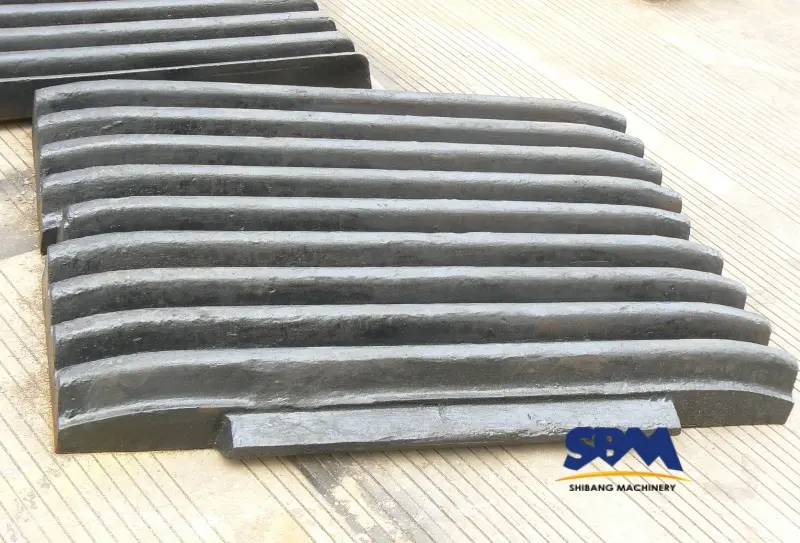
- Las trituradoras de mandíbulas utilizan compresión y están diseñadas específicamente para manejar materiales muy duros., Materiales resistentes como el granito., basalto y minerales duros en la etapa primaria.
- Aceptan piensos de gran tamaño., Tienen un alto rendimiento y menores costos de desgaste en roca dura abrasiva en comparación con las trituradoras de impacto., aunque el producto es más grueso y escamoso.
Cuando (y como) utilizar una trituradora de impacto?
- Las trituradoras de impacto dependen del impacto de alta velocidad y son mejores para materiales de dureza media a blanda., roca menos abrasiva como la piedra caliza, arcilla, y muchos materiales reciclados, donde dan una excelente forma cúbica y una alta relación de reducción.
- Usar una trituradora de impacto como máquina principal en trabajos muy duros., La roca abrasiva desgasta rápidamente las barras de impacto y los revestimientos., Aumenta considerablemente el coste de las piezas de desgaste y el tiempo de inactividad.; si se usa, Suele ser una etapa secundaria/terciaria después de una mandíbula o un cono para mejorar la forma..
Resumen de elección de hard rock
| Aspecto | Rompe mandíbulas (roca dura) | Trituradora de impacto (roca dura) |
|---|---|---|
| Principio de trituración | Compresión entre mandíbulas fijas y móviles | Barras de golpe de alta velocidad contra placas de impacto |
| Materiales adecuados | Muy duro, abrasivo (granito, basalto, minerales) | Generalmente de dureza media, menos abrasivo; Roca dura sólo en casos seleccionados con alto desgaste. |
| Posición típica | Trituradora primaria en plantas de roca dura | Secundario/terciario o conformación, no primaria principal para rock muy duro |
| Forma del producto | más grueso, más escamoso, menos cúbico | muy cúbico, buena gradación |
| Desgaste y OPEX en roca dura | Menor costo de desgaste, más económico en roca abrasiva | Alta tasa de desgaste y mayor costo por tonelada en roca abrasiva |
Combinaciones recomendadas de trituradoras
| tipo de roca & dureza | Alimentación máxima (milímetro) | Objetivo de capacidad (t/h) | Tamaño del producto principal (milímetro) | Configuración SBM recomendada | Notas a nivel de modelo |
|---|---|---|---|---|---|
| Granito / basalto (muy duro) | 600–700 | 120–180 | 0–31,5 | Primario: PE600×900 / PE750×1060 mandíbula + Secundario: cono HST160 + Terciario: HST160 (cabeza corta) si es necesario | Las mandíbulas de la serie PE son adecuadas para la trituración primaria de rocas duras como granito y basalto.; HST160 maneja roca dura secundaria/terciaria con alta eficiencia. |
| Granito / basalto (planta de alta capacidad) | 700–900 | 250–400 | 0–25 | Primario: Mandíbula PE900×1200 + Secundario: Cono multicilindro HPT300 + Terciario: HPT300 / HPT400 | Las mandíbulas de PE grandes aceptan un gran avance; SBM recomienda los conos HPT para la minería de roca dura con alto rendimiento y menor costo operativo. |
| cuarcita dura / mineral de hierro | 500–650 | 180–260 | 10–40 | Primario: PE750×1060 mandíbula + Secundario: cono HST250 | Las mordazas de PE de cámara profunda de SBM están diseñadas para rocas duras y minerales industriales; HST250 ofrece un control CSS preciso para productos de 10 a 40 mm. |
| Gneis / arenisca dura | 350–500 | 100–180 | 0–20 | Primario: PE600×900 mandíbula + Secundario: cono HST160 + Organización: Impacto CI5X (opcional) | Mandíbula + HST160 hace reducción principal; El impactador CI5X se utiliza únicamente como etapa de conformación para aumentar la cúbica cuando sea necesario.. |
| Caliza de dureza media | 500–700 | 180–280 | 0–25 | Primario: Mandíbula PE750×1060 o impacto primario CI5X + Secundario: Impacto CI5X | Para piedra caliza, SBM utiliza a menudo trituradoras de impacto como máquinas clave; La serie CI5X proporciona alta reducción y buena forma para los agregados. |
| Caliza de dureza media (productos más finos) | 300–450 | 80–150 | 0–10 | Impacto CI5X de una etapa o CI5X de dos etapas en circuito cerrado con pantalla | La trituradora de impacto CI5X se describe como eficiente, Equipos de bajo costo para rocas y agregados de dureza media., adecuado para la producción de finos altos. |
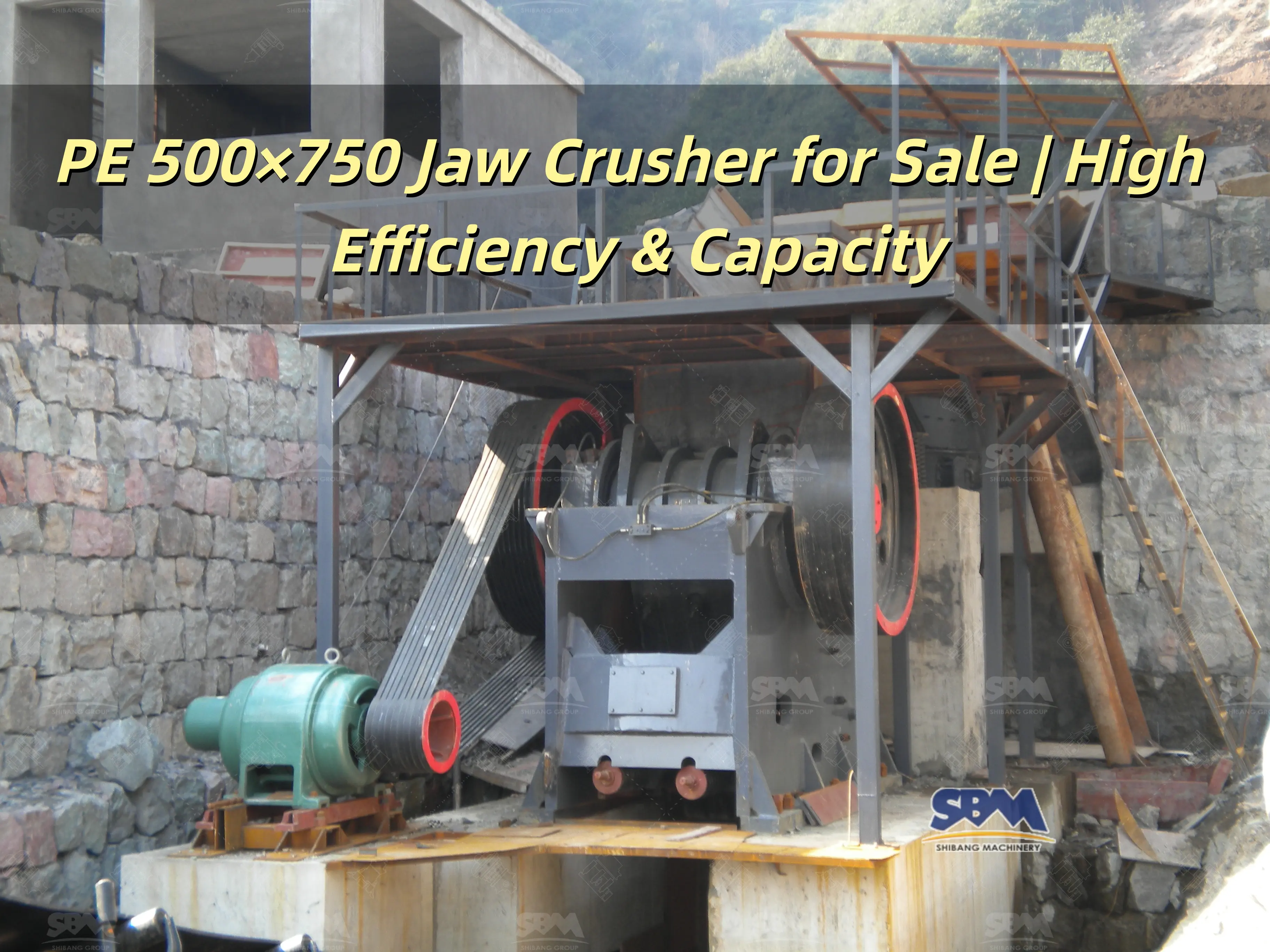
| Dolomita / arenisca blanda | 250–400 | 70–130 | 5–25 | Primario: PE500×750 mandíbula + Secundario: Impacto CI5X | PE500×750 tiene un 425 mm de avance máximo y capacidad de 45 a 100 t/h, ideal como primario compacto; El impacto secundario CI5X se refina a 5-25 mm. |
| guijarro de río / grava (abrasivo) | 300–500 | 120–200 | 0–20 | Primario: PE600×900 mandíbula + Secundario: cono HST160 + VSI6X opcional para dar forma | Mandíbula + HST160 maneja guijarros abrasivos; El impactador de eje vertical tipo VSI o similar de SBM se agrega solo para darle forma final y lijar.. |
| Caliza blanda / marga | 400–600 | 80–150 | 0–31,5 | Impacto simple CI5X con criba vibratoria | Para suave, piedra caliza poco abrasiva, SBM recomienda líneas centradas en el impacto; Un CI5X puede actuar como primario y secundario en una planta compacta.. |
| Hormigón reciclado con varillas. | 400–600 | 80–150 | 0–32 | Primario: PE600×900 mandíbula + Secundario: Impacto CI5X | La mandíbula de PE maneja barras de refuerzo y bloques grandes; CI5X mejora la forma de las partículas de agregado reciclado en base y concreto. |
| fresadoras de asfalto / RAP | ≤300 (premolido) | 80–150 | 0–16 | Impacto único CI5X en circuito cerrado | La trituradora de impacto es adecuada para asfalto y materiales similares de tipo blando o medio., con velocidad de rotor ajustable y espacios de cortina. |
| Mixto C&Residuos (concreto, ladrillo) | 300–500 | 80–150 | 0–40 | Primario: Mordaza PE500×750 o PE600×900 + Secundario: Impacto CI5X | Mordaza de PE compacta como primer triturador; CI5X secundario para tamaño controlado y mejor gradación; Se recomienda sistema de preclasificación. |
Planta trituradora recomendada de 50 a 100 t/h
| Rango de capacidad(≈50–100 t/h) | tipo de roca & dureza | Alimentación máxima (milímetro) | Producto objetivo (milímetro) | Configuración sugerida (Estilo SBM) | Notas |
|---|---|---|---|---|---|
| Pequeña cantera de roca dura | Granito / basalto (duro) | 350–450 | 0–25 | Primario: PE500×750 mandíbula + Secundario: HST100 / cono pequeño | PE500×750 (45–100 t/h) es una primaria pequeña clásica; El cono HST100 se refina a 0–25 mm para agregados de concreto. |
| Arenisca dura / gneis | Duro, moderadamente abrasivo | 300–400 | 0–20 | Primario: PE400 × 600 / PE500×750 mandíbula + Secundario: cono HST100 | La mandíbula compacta y el cono de un solo cilindro se adaptan a líneas de canteras pequeñas en el rango de 60 a 90 t/h. |
| Caliza de dureza media | Dureza media, baja abrasión | 300–400 | 0–25 | Impacto CI5X único o primario PE400 × 600 + Impacto CI5X | Para piedra caliza más blanda, El pequeño impactador CI5X puede realizar tareas primarias y secundarias.; La mandíbula es opcional si la alimentación es en bloques. |
| Dolomita / arenisca blanda | Medio | 250–350 | 5–25 | Primario: PE400 × 600 / PE500×750 mandíbula + Secundario: Impacto CI5X | La mandíbula proporciona control sobre el tamaño de alimentación; CI5X proporciona agregados cúbicos con un costo de desgaste modesto en este rango de capacidad. |
| C pequeña&D / reciclaje de concreto | Hormigón con barras de refuerzo | 250–350 | 0–32 | Primario: PE400 × 600 / PE500×750 mandíbula + Secundario: pequeño impacto CI5X | La mandíbula elimina barras de refuerzo y grumos grandes.; El impacto secundario mejora la forma y libera mortero a 50-100 t/h. |
Planta trituradora recomendada de 100 a 200 t/h
| Rango de capacidad(≈100–200 t/h) | tipo de roca & dureza | Alimentación máxima (milímetro) | Producto objetivo (milímetro) | Configuración sugerida (Estilo SBM) | Notas |
|---|---|---|---|---|---|
| Planta estándar de roca dura | Granito / basalto (muy duro) | 500–650 | 0–31,5 | Primario: PE600×900 / PE750×1060 mandíbula + Secundario: cono HST160 | PE600×900 y PE750×1060 cubren 80–180 t/h; El cono HST160 como secundario se adapta a una salida de 10 a 40 mm para base y hormigón. |
| Agregado de hormigón de alta calidad | Granito / gneis | 450–600 | 0–25 | Primario: PE750×1060 mandíbula + Secundario: HPT200 / cono HPT300 | Los conos multicilíndricos HPT están colocados para agregados de alta calidad; En 150-200 t/h dan buena forma y rendimiento. |
| 200 t/h caliza línea | Caliza de dureza media | 500–700 | 0–5 / 5–10 / 10–31,5 | Primario: Impacto primario PE750×1060 o CI5X + Secundario: Impacto CI5X + Cribas vibratorias | SBM 200 t/h cajas de piedra caliza utilizan primaria + Impacto secundario con pantallas multifracción de 0 a 5., 5–10, 10–31,5 mm. |
| guijarro de río / grava | Duro, abrasivo | 350–500 | 0–20 | Primario: PE600×900 mandíbula + Secundario: cono HST160 + Conformación VSI6X opcional | Mandíbula + abrasión del mango cónico; La etapa tipo VSI se agrega solo cuando se requiere arena y cúbica adicional. |
| Hormigón reciclado & asfalto | Dureza media | 350–500 | 0–25 / 0–32 | Primario: PE600×900 mandíbula + Secundario: Impacto CI5X (circuito cerrado) | 100–Las líneas de reciclaje móviles o estacionarias de 200 t/h suelen utilizar mandíbulas + HSI para equilibrar el rendimiento y la calidad del producto. |
Planta trituradora recomendada de 200 a 400 t/h
| Rango de capacidad(≈200–400 t/h) | tipo de roca & dureza | Alimentación máxima (milímetro) | Producto objetivo (milímetro) | Configuración sugerida (Estilo SBM) | Notas |
|---|---|---|---|---|---|
| Gran cantera de roca dura | Granito / basalto (muy duro) | 650–900 | 0–25 / 0–31,5 | Primario: PE900×1200 / mandíbula C6X110 + Secundario: HPT300 / Cono HPT400 + Terciario: Cabeza corta HPT300 si es necesario | Las mordazas C6X/PE grandes se utilizan para primaria de 200 a 400 t/h.; Conos HPT recomendados por SBM para gran minería de roca dura y agregados. |
| Asfalto de alta especificación & concreto | roca dura (granito, gneis) | 600–800 | 0–20 | Primario: mandíbula C6X110 + Secundario: cono HPT300 + Organización: Impacto VSI6X o CI5X | Mandíbula + El cono multicilíndrico proporciona clasificación.; La etapa de conformación final mejora el índice de descamación de las mezclas asfálticas premium. |
| 300–Planta de piedra caliza de 350 t/h | Caliza de dureza media | 600–800 | 0–5 / 5–10 / 10–20 / 20–31,5 | Primario: PE900×1200 o mandíbula C6X110 + Secundario: Impacto CI5X + Terciario: CI5X / fabricante de arena VSI6X | Las líneas de piedra caliza más grandes en los casos de SBM utilizan mandíbula + 2–impacto o impacto escénico + VSI para múltiples fracciones de áridos y arena fabricada a máquina. |
| Guijarro de río grande / grava dura | Duro, altamente abrasivo | 400–600 | 0–25 | Primario: C6X100 / mandíbula C6X110 + Secundario: HST250 / cono HPT300 + VSI6X opcional | Énfasis en la robusta mandíbula C6X y el cono de desgaste optimizado para 200–350 t/h; VSI se utiliza sólo donde la demanda de arena es alta. |
| C de alto volumen&D / reciclaje de concreto | Hormigón mixto, ladrillo, asfalto | 400–600 | 0–32 | Primario: C6X100 / Mandíbula PE900×1200 + Secundario: Impacto CI5X (2 unidades en paralelo si es necesario) | Para centros de reciclaje de 250 a 350 t/h, una mandíbula grande alimenta uno o dos impactadores CI5X en circuito cerrado con cribas de varias plataformas. |
Por favor cuéntanos un poco sobre tu proyecto – tipo de material, tamaño máximo de alimentación, capacidad requerida, tamaño objetivo del producto, y cualquier limitación del sitio o terreno. Basado en esta información, Nuestros ingenieros recomendarán rápidamente las trituradoras más adecuadas y una solución completa adaptada a sus necesidades..
Puedes contactarnos en cualquier momento, y nuestro equipo se comunicará con usted lo antes posible con una propuesta y cotización claras..
Preguntas frecuentes: Trituradora de mandíbula vs trituradora de impacto
Q1: ¿Cómo elijo entre una trituradora de mandíbulas y una trituradora de impacto para mi material??
A1: La elección depende principalmente de la dureza del material., abrasividad, y los requisitos de tamaño de su producto. por muy duro, roca abrasiva (granito, basalto, cuarzo), Una trituradora de mandíbulas suele ser la mejor máquina primaria., a menudo seguido por una trituradora de cono. Para dureza media o más blanda, materiales menos abrasivos (caliza, residuos de la construcción, asfalto), Una trituradora de impacto es ideal para lograr altos índices de reducción y una buena forma de las partículas..
Q2: ¿Qué información necesita para recomendar una solución de trituración adecuada??
A2: Para recomendar la configuración correcta, es importante saber: tipo de material y dureza, tamaño máximo de alimentación, capacidad de producción requerida (t/h), rango de tamaño de producto deseado, y cualquier sitio o limitaciones de movilidad. Con estos detalles, Los ingenieros pueden igualar la mandíbula adecuada., cono, y modelos de trituradoras de impacto y diseñar un completo, flujo de proceso eficiente.
Q3: ¿Puede un tipo de trituradora manejar tanto roca dura como desechos de construcción??
A3: en la mayoría de los casos, un solo tipo de trituradora no puede funcionar de manera óptima tanto para rocas de dureza extrema como para residuos de construcción mixtos. Para roca dura, Generalmente se prefiere una combinación de mandíbula y cono para mayor durabilidad y menores costos de desgaste.. Para reciclaje de construcción y demolición., configuración de trituradora de mandíbula más impacto (o un impactador primario) suele ser más eficiente para manipular barras de refuerzo, producir áridos reciclados con mejor forma, y cumplir con las especificaciones de la base del camino o del concreto.