E-mail: [email protected]

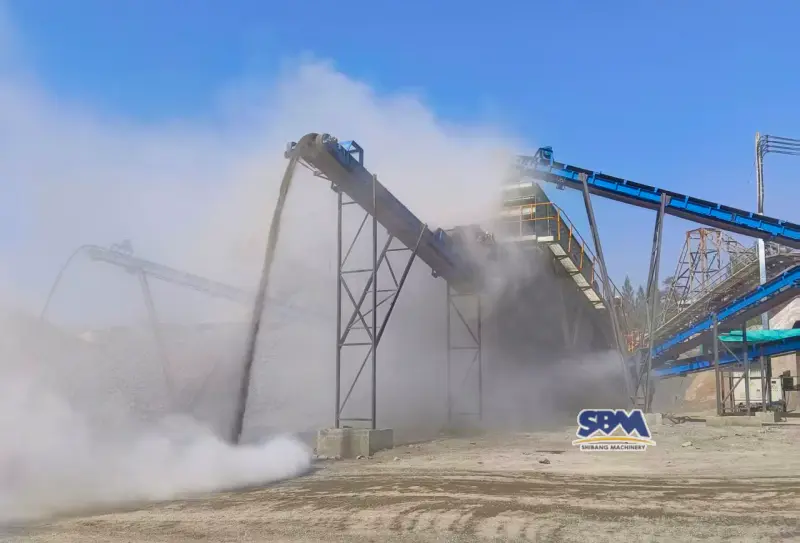
Choosing the best stone crusher does not mean choosing the largest machine or the lowest-price option. Plutôt, the right crusher should match your material type, taille de l'alimentation, capacité requise, taille du produit final, état des lieux, and maintenance plan.
For most quarry and mining projects, un jaw crusher for primary crushing is often the best starting point. Alors, use a cone crusher for hard, abrasive stone or an impact crusher for softer, less abrasive material. Mobile crushers work best where site flexibility matters, while stationary crushing plants suit long-term, high-capacity operations.
Quick Answer: What Is the Best Stone Crusher?
The best stone crusher depends on the material and production stage:
| Application | Best crusher type | Why it is commonly selected |
|---|---|---|
| Large hard rock at the primary stage | Concasseur à mâchoires | Handles large feed material and provides reliable primary reduction |
| High-capacity mine primary crushing | Concasseur giratoire | Supports continuous, high-throughput primary crushing |
| Hard and abrasive stone | Concasseur à cône | Provides efficient secondary or tertiary crushing with lower wear risk than impact crushing |
| Calcaire, béton, and softer rock | Concasseur à percussion | Produces a high reduction ratio and good particle shape |
| Manufactured sand production | Concasseur VSI | Produces fine material and improves particle shape |
| Remote, temporary, or changing sites | Concasseur mobile | Reduces material transport and can move between working areas |
The final selection should follow material testing and process design. Buyers should not select a crusher only by its published capacity because actual output changes with feed size, humidité, rock hardness, abrasion, réglage côté fermé, and the required final gradation.
What Is a Stone Crusher
A stone crusher reduces large rocks or mined material into smaller sizes. Par conséquent, it supplies aggregate for road construction, béton, exploitation minière, et production de sable manufacturé.
A complete crushing plant often includes:
- A feeder to control material flow
- A primary crusher for the first size reduction
- Secondary or tertiary crushers for further reduction
- Screens to separate finished sizes
- Conveyors to transfer material between stages
- Dust-control and electrical-control systems
For a broader overview of available equipment, explorer SBM crushing equipment.
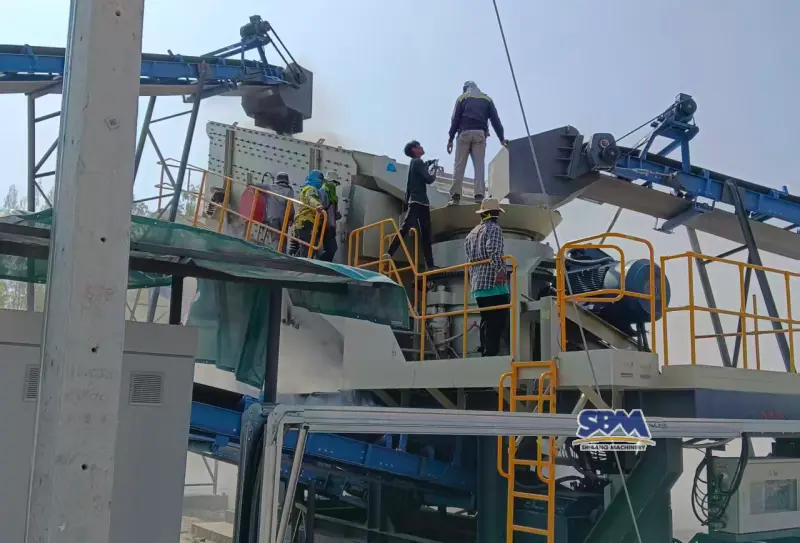
How to Choose the Best Stone Crusher
The best stone crusher for your project should meet six practical requirements.
Identify the Material Type
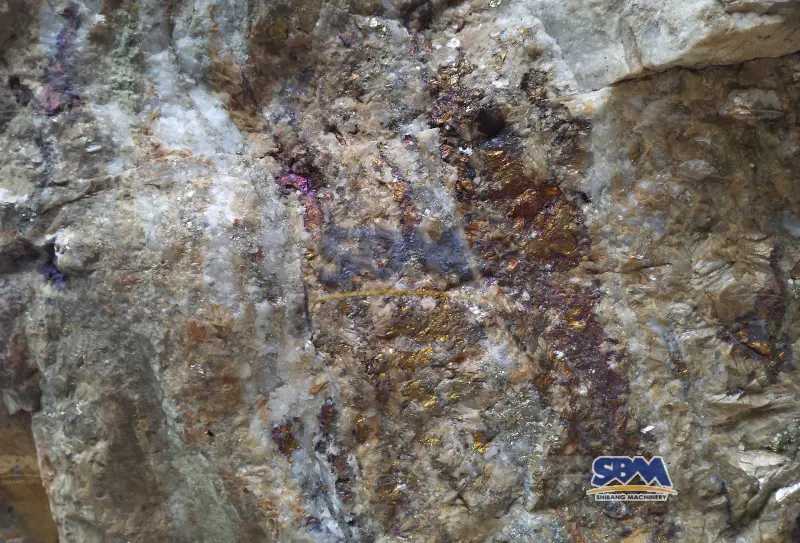
Start with the rock itself. Granit, basalte, pierre de rivière, minerai de fer, calcaire, and construction waste do not behave the same way during crushing.
Hard and abrasive materials usually require robust compression crushing, such as jaw and cone crushers. Des matériaux plus doux, including many limestone applications, may suit impact crushing because it can provide high reduction ratios and a well-shaped product.
Ask your supplier to evaluate:
- Material compressive strength
- Abrasivité
- Teneur en humidité
- Clay or fines content
- Taille maximale du flux
- Required final products
Define the Required Capacity
Capacity is commonly expressed in tonnes per hour, or TPH. Cependant, a crusher rated at a certain TPH will not deliver the same output in every application.
Par exemple, a plant designed for 200 TPH needs correctly matched feeders, broyeurs, écrans, et convoyeurs. If one stage becomes a bottleneck, the complete plant will produce less than the design target.
When comparing proposals, ask for capacity data based on:
- Your actual material
- Your maximum feed size
- Your target product sizes
- Your expected operating hours
- Your intended circuit configuration
Match the Crusher to the Crushing Stage
Most stone crushing plants use more than one crusher because each stage has a different job.
Écrasement primaire
Primary crushing receives the largest feed material from the quarry or mine.
- Concasseurs à mâchoires are common for primary crushing because they handle large feed sizes and offer a simple, proven structure.
- Broyeurs gyratoires are often selected for large mines that require very high throughput and continuous operation.
For large-scale primary crushing applications, see the Concasseur giratoire HGT.
Concassage secondaire et tertiaire
Après écrasement primaire, the plant further reduces material to the required aggregate or sand feed size.
- Rupture de cône are generally suitable for hard, abrasive rock and can produce controlled, sortie cohérente.
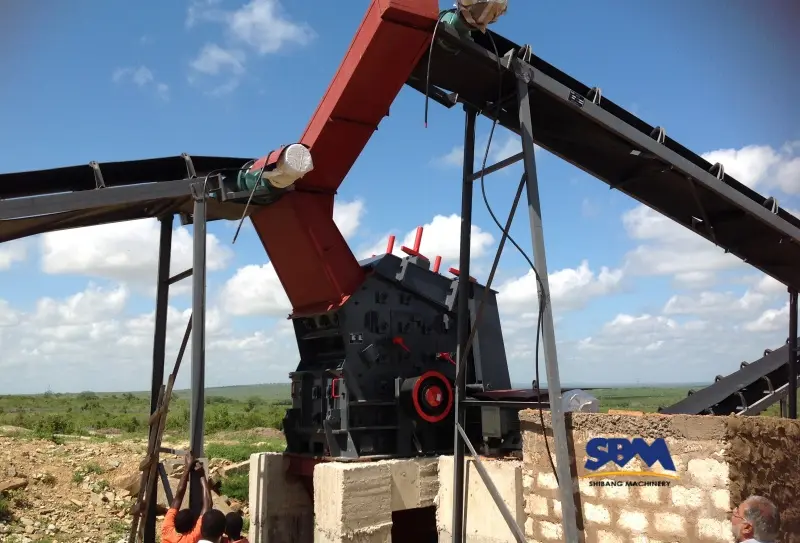
- Concasseurs à percussion are often suitable for softer or less abrasive material when the project needs a high reduction ratio and good particle shape.
- Concasseurs VSI are commonly used at the final crushing or shaping stage for manufactured sand.
Define the Required Final Product
The best crusher configuration depends on what you intend to sell or use. Les exemples incluent:
- 0–5 mm sable fabriqué
- 5–10 mm fine aggregate
- 10–20 mm agrégat
- 20–40 mm coarse aggregate
- Ballast ferroviaire
- Road-base material
- Ore for downstream grinding or beneficiation
If you need high-quality manufactured sand, a VSI crusher and a closed-circuit screening system may be necessary. The screen returns oversized material for further crushing and sends qualified material to storage, helping the plant maintain consistent product sizing.
Consider Mobile vs. Stationary Crushing
A mobile crusher is not automatically better than a stationary plant. The right choice depends on the project.
| Facteur | Mobile crushing plant | Stationary crushing plant |
|---|---|---|
| Mieux pour | Temporary, remote, or multi-site work | Long-term quarry and mining operations |
| Installation | Faster deployment | Requires more civil work and installation time |
| Mobilité | Can relocate as the working face changes | Fixed layout |
| Plage de capacité | Suitable for many medium-to-large projects | Often preferred for sustained high output |
| Transport de matériel | Can reduce haulage distance | Requires material transport to a fixed plant |
| Expansion | Modular and flexible | Can be expanded with planned engineering |
Compare Total Cost of Ownership
The lowest equipment purchase price does not always create the lowest long-term cost. Buyers should compare the total cost of ownership, y compris:
- Initial equipment cost
- Civil works and installation
- Consommation d'énergie
- Wear-part consumption
- Maintenance labor
- Temps d'arrêt imprévus
- Spare-parts availability
- Material transport costs
- Expected production and product yield
A reliable plant design reduces unnecessary recirculation, avoids bottlenecks, and makes maintenance access easier. These factors can affect operating cost more than the initial machine price.
Best Stone Crusher Types Compared
| Type de concasseur | Meilleure utilisation | Typical strengths | Key consideration |
|---|---|---|---|
| Concasseur à mâchoires | Écrasement primaire | Grande ouverture d'alimentation, robust design, proven operation | Usually needs secondary crushing for finer products |
| Concasseur giratoire | High-capacity mine primary crushing | Continuous operation and high throughput | Requires significant investment and engineered installation |
| Concasseur à cône | Hard rock secondary or tertiary crushing | Controlled size reduction and good reliability | Requires correct feed gradation and choke feeding |
| Concasseur à percussion | Softer stone and recycling | High reduction ratio and good particle shape | Wear costs can increase with abrasive materials |
| Concasseur VSI | Fabrication et façonnage du sable | Improves particle shape and produces fine material | Needs properly sized, controlled feed |
| Concasseur mobile | Flexible site operations | Fast relocation and reduced hauling | Must match site logistics and required output |
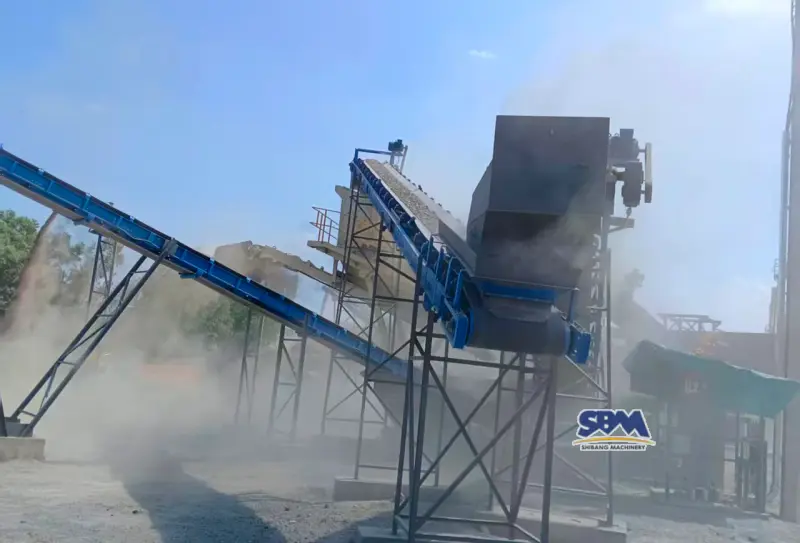
Recommended Crusher Configurations by Material
Best Stone Crusher for Granite and Basalt
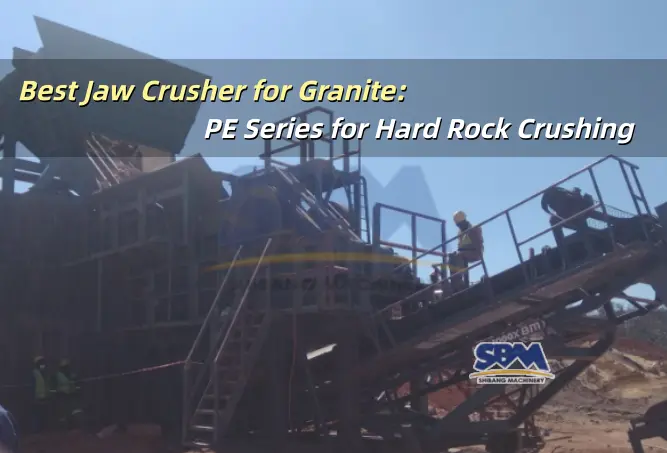
Pour dur, abrasive rock such as granite or basalt, a typical solution includes:
- Alimentateur vibrant
- Jaw crusher for primary crushing
- Cone crusher for secondary crushing
- Concasseur VSI, if sand shaping is required
- Vibrating screen for final separation
- Conveyors and dust-control equipment
This configuration uses compression crushing for the hard-rock stages and adds VSI shaping only when the finished sand or aggregate specification requires it.
Best Stone Crusher for Limestone
For limestone and other softer, matériaux moins abrasifs, a typical solution may include:
- Alimentateur vibrant
- Jaw crusher or impact crusher for primary reduction
- Impact crusher for secondary crushing
- Tamis vibrant
- Conveyors and dust-control equipment
Impact crushing can produce a high reduction ratio and a well-shaped final aggregate. Cependant, the final configuration must still account for feed size, humidité, teneur en argile, et les exigences du produit.
Best Stone Crusher for Manufactured Sand
Pour sable manufacturé, a typical process includes:
- Concasseur primaire
- Concasseur secondaire
- VSI sand-making machine
- Tamis vibrant
- Closed-circuit recirculation
- Optional washing or fines-recovery system
The VSI and screen work together to control gradation and improve particle shape. Your engineering team should select the VSI configuration based on material abrasiveness, taille de l'alimentation, sand ratio, and wear-cost targets.
Questions to Ask Before Buying a Stone Crusher
Before requesting a quotation, prepare the following information:
- What material will you crush?
- What is the maximum feed size?
- What capacity do you need in TPH?
- What finished sizes do you need?
- Is the material hard, abrasif, mouillé, or clay-rich?
- Do you need aggregate, sable manufacturé, or both?
- Will the plant be mobile or stationary?
- What power supply is available at the site?
- Do you need dust control or water treatment?
- What local service and spare-parts support do you require?
Providing this information helps the supplier design a solution based on your conditions instead of sending a generic machine list.
Why Process Design Matters More Than a Single Crusher
The best stone crusher is usually part of a complete process, not a standalone machine. Par exemple, even a high-quality crusher can underperform if the feeder is undersized, the screen cannot handle the load, the conveyor layout restricts flow, or the recirculation load is too high.
Donc, a properly engineered crushing plant balances every section of the process:
Feed→Primary Crushing→Secondary Crushing→Screening→Stockpiling
For manufactured sand production, the process may also add a VSI shaping stage and closed-circuit return flow:
Crushing→VSI Shaping→Screening→Qualified Sand / Recirculation
To see how these configurations vary by project, review SBM project cases, which show how material type, capacity targets, and site requirements influence plant design.
Work With an Experienced Crusher Supplier
A qualified supplier should do more than recommend a model. The supplier should review your material data, objectif de capacité, product requirements, site layout, conditions de puissance, and maintenance plan before proposing a plant.
SBM supports customers with equipment selection, process-flow design, disposition de l'usine, installation guidance, mise en service, formation des opérateurs, and after-sales support. Learn more about SBM’s manufacturing and engineering capabilities.
For a customized recommendation, contact SBM with your material information, taille maximale du flux, capacité requise, final product sizes, and site layout: Request a crushing solution.
Questions fréquemment posées
What is the best stone crusher for hard rock?
For hard and abrasive rock, a jaw crusher is commonly used for primary crushing, followed by a cone crusher for secondary or tertiary crushing. Add a VSI crusher when the project requires manufactured sand or improved particle shape.
What is the best stone crusher for limestone?
An impact crusher is often a strong option for limestone because it can provide high reduction ratios and good particle shape. The best choice still depends on feed size, required output, humidité, and the amount of abrasive material in the feed.
Is a jaw crusher or cone crusher better?
Neither is universally better because they serve different roles. A jaw crusher typically handles primary crushing and large feed material, while a cone crusher performs secondary or tertiary crushing for hard rock and controlled final sizing.
How do I choose stone crusher capacity?
Choose capacity based on your actual material, taille maximale du flux, required finished products, heures d'opération, and plant configuration. Ask the supplier to state whether the capacity is based on open-circuit or closed-circuit operation.
What is the best stone crusher for making sand?
A VSI crusher is commonly used for the final sand-making or shaping stage. It usually operates with upstream crushing equipment and a vibrating screen in a closed circuit.
How much does a stone crusher cost?
Stone crusher cost depends on crusher type, capacité, dureté du matériau, automation level, plant configuration, travaux de génie civil, convoyeurs, screening equipment, contrôle de la poussière, and freight. Request a configuration-based quote rather than relying on a single machine price.
Écrit par: SBM Technical Content Team
Industrial crushing and grinding content specialists.
Technically reviewed by: SBM Crushing Plant Engineer Reviewed for equipment selection, process flow, operating considerations, and technical accuracy.