E-mail: [email protected]

Jaw crusher capacity determines how much material a primary crushing stage can process within a given time. Cependant, for quarry, exploitation minière, and aggregate projects, buyers must evaluate more than the rated tonnes per hour (TPH). In particular, taille de l'alimentation, dureté du matériau, humidité, Réglage de côté fermé (CSS), crusher chamber design, and feeding consistency all affect actual output.
This guide explains how to evaluate jaw crusher capacity, estimate the right output size, and select a suitable model for your production target.
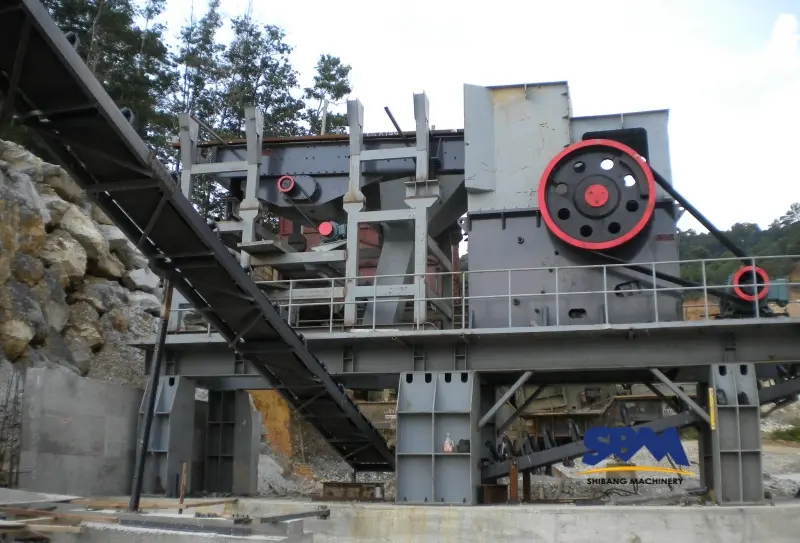
What Is Jaw Crusher Capacity?
Jaw crusher capacity is the amount of material a crusher can process in one hour under specified operating conditions. Par conséquent, manufacturers usually express this capacity in tonnes per hour (TPH).
Cependant, rated capacity is not a fixed guarantee. Actual production can vary because every site has different raw material, feed grading, teneur en humidité, heures d'opération, and discharge requirements.
When selecting a jaw crusher, use the rated capacity as a starting point. Alors, confirm the final configuration through material testing, feed-size analysis, and the required product specification.
What Affects Jaw Crusher Capacity?
Several operating factors directly influence jaw crusher throughput.
Feed Size and Feed Gradation
The maximum feed size must remain within the crusher’s permitted feed-opening range. Sinon, oversized rocks can reduce throughput, increase bridging risk, and accelerate wear on jaw plates.
En outre, a well-graded and evenly fed material stream helps the crusher maintain stable production. En revanche, intermittent feeding or excessive fine material can reduce crushing efficiency.
Material Hardness and Abrasiveness
Hard and abrasive materials such as granite, basalte, quartz, and some metal ores generally require more crushing force and cause faster wear than softer materials such as limestone.
As material hardness and abrasiveness increase, the actual TPH may decrease compared with the nominal capacity listed for easier-to-crush materials. Operators should also account for wear-part consumption when evaluating the total cost of ownership.
Réglage du côté fermé (CSS)
The closed side setting is the smallest distance between the fixed and moving jaw at the bottom of the crushing chamber. CSS has a direct relationship with both output size and capacity.
A wider CSS generally allows more material to pass through the chamber, increasing throughput but producing a coarser product. A smaller CSS produces a finer discharge size, but it usually reduces capacity and may increase energy demand and wear.
Humidité, Clay and Fines Content
Wet or clay-rich material can stick to the crushing chamber, reduce material flow, and create blockages. Excessive fines may also reduce effective chamber utilization.
For challenging feed conditions, operators should consider pre-screening, suitable feeder selection, and a process layout that allows efficient removal of undersize material before primary crushing.
Feeding Consistency
A jaw crusher performs best when a vibrating feeder supplies material continuously and evenly. Cependant, an inconsistent feed rate creates load fluctuations, which can reduce average TPH and increase mechanical stress.
For this reason, capacity planning should include the feeder, trémie, scalping screen, convoyeurs, and downstream equipment—not only the jaw crusher.
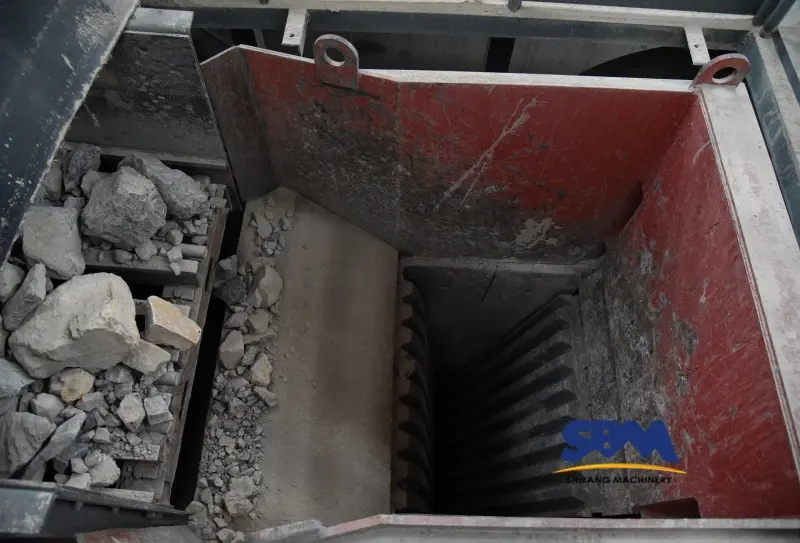
Jaw Crusher Capacity vs. Taille de sortie
Capacity and output size require a practical balance. Projects that need a smaller discharge size should expect lower throughput from the same crusher because the machine must reduce material further before it can leave the chamber.
| Operating factor | Effect on capacity | Effect on output size |
|---|---|---|
| Wider CSS | Usually increases TPH | Produces coarser material |
| Smaller CSS | Usually reduces TPH | Produces finer material |
| Alimentation plus grande | May reduce effective throughput | Can increase size variation |
| Harder rock | May reduce TPH | Depends on CSS and chamber settings |
| Consistent feeding | Supports stable TPH | Improves product consistency |
| Pre-screening fines | Can improve crushing efficiency | Reduces unnecessary crushing of fines |
Instead of choosing the smallest possible CSS, select a discharge setting that meets the feed requirements of the downstream crusher, écran, or mill. Par conséquent, the entire crushing circuit can operate more efficiently.
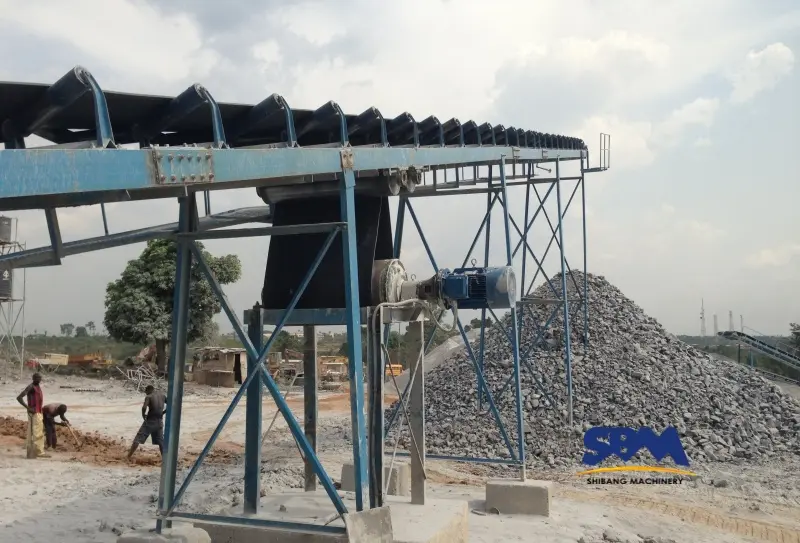
SBM Jaw Crusher Capacity Range
SBM offers jaw crusher models for a wide range of quarry and mining applications. For reference, the following examples show the published capacity ranges for selected C6X Jaw Crusher models. Actual production depends on material properties, CSS, feed grading, and site operating conditions.
| Modèle | Taille maximale du flux | Discharge opening range | Published capacity range |
|---|---|---|---|
| C6X80 | 420 millimètre | 60–150 mm | 80–290 TPH |
| C6X100 | 630 millimètre | 70–175 mm | 130–420 TPH |
| C6X110 | 720 millimètre | 80–200 mm | 160–550 TPH |
| C6X125 | 800 millimètre | 100–250 mm | 230–760 TPH |
| C6X145 | 920 millimètre | 125–275 mm | 320–950 TPH |
| C6X160 | 1,020 millimètre | 150–300mm | 410–1,150 TPH |
| C6X200 | 1,200 millimètre | 175–300mm | 610–1,510 TPH |
For complete technical data, visit the Concasseur à mâchoires C6X.
How to Select a Jaw Crusher by Capacity
Use the following process to identify the right jaw crusher for your project.
Define Your Required TPH
Start with the target hourly output, then consider the required annual production and planned operating hours. Par exemple, if a quarry needs 200,000 tonnes per year and operates 2,000 hours annually, the average required production rate is 100 TPH.
Cependant, do not select a crusher with an exact 100 TPH rating. Material variation, maintenance du concasseur, and production peaks require a reasonable capacity margin.
Confirm the Maximum Feed Size
Measure the largest expected raw material entering the primary crushing stage. Alors, select a crusher that can accept the maximum feed size without frequent bridging or manual intervention.
Par exemple, a quarry processing material up to 700 mm should choose a machine with a feed opening and maximum feed-size rating suitable for that range.
Define the Required Discharge Size
Determine the target size for material leaving the jaw crusher. This depends on the next process stage, such as secondary crushing, dépistage, affûtage, or stockpiling.
A primary jaw crusher often supplies material to a cone crusher, concasseur à percussion, or screening system. Donc, match the jaw crusher discharge size to the maximum feed requirement of the downstream equipment.
Evaluate Material Characteristics
Provide details about rock type, résistance à la compression, abrasive, humidité, teneur en argile, and bulk density. Par conséquent, these factors affect the crusher configuration, wear-part selection, power requirement, and realistic production range.
Review the Whole Crushing Circuit
A jaw crusher cannot achieve its expected output if the feeder, convoyeur, écran, or downstream crusher becomes a bottleneck. Review the full process flow before finalizing the equipment selection.
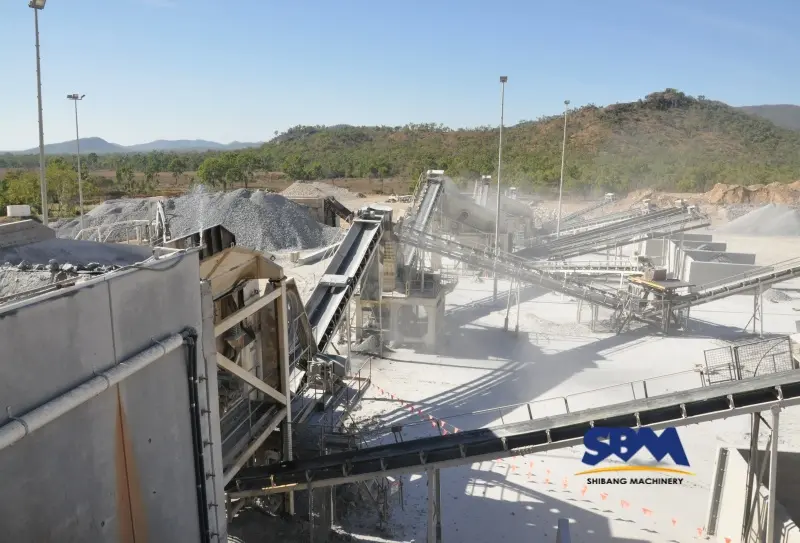
For larger production lines, SBM can help configure an integrated crushing equipment solution based on capacity, matériel, and final-product requirements.
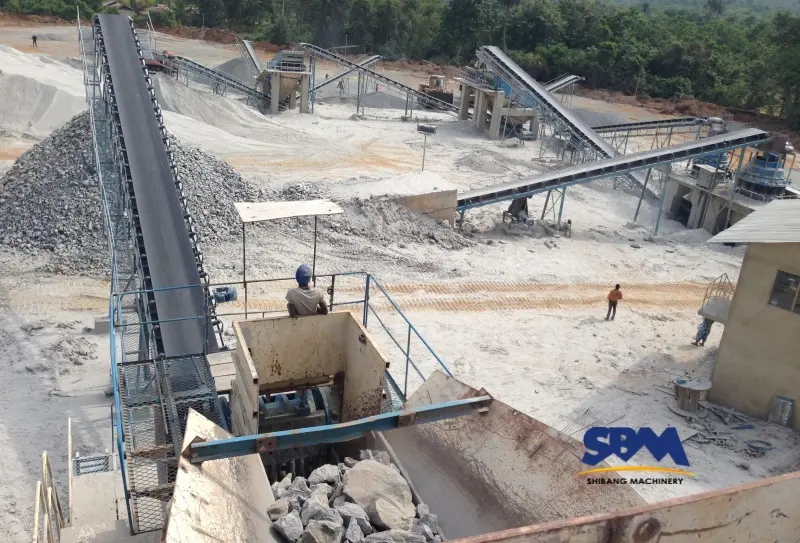
How to Improve Jaw Crusher Output
Operators can often improve production stability without changing the crusher model.
- Feed material evenly with a correctly sized vibrating feeder.
- Remove excessive fines with a scalping screen when appropriate.
- Keep the crusher chamber full without overfeeding it.
- Check CSS regularly and adjust it according to the required product size.
- Inspecter les plaques de mâchoire, joues, roulements, and toggle components on a planned schedule.
- Replace worn jaw plates before wear affects product size and chamber performance.
- Verify that discharge conveyors can handle peak material flow.
- Train operators to identify abnormal vibration, bruit, blockage, and uneven feeding early.
For maintenance guidance, read our article on how to adjust jaw crusher discharge particle size.
Common Capacity Planning Mistakes
Selecting by TPH Alone
A listed capacity range does not replace a complete equipment selection process. Buyers must also consider feed size, rock characteristics, CSS, taille du produit, and the performance of supporting equipment.
Using an Unrealistically Small CSS
A smaller CSS may produce a finer product, but it can also restrict material flow and reduce hourly output. Always confirm whether the required discharge size is necessary for the next processing stage.
Ignoring Wear in Production Planning
Jaw plates and other wear parts gradually change the crushing chamber profile. Par conséquent, as wear increases, output size and capacity can change. Donc, a planned inspection and replacement schedule helps maintain consistent performance.
Overlooking Moisture and Clay
High moisture or sticky fines can reduce material flow and cause blockages. Projects with difficult feed conditions should evaluate pre-screening, la lessive, or alternative process arrangements before equipment selection.
Choose the Right Jaw Crusher for Your Application
The right jaw crusher balances required capacity, taille de l'alimentation, discharge size, material properties, coût d'exploitation, and downstream process needs. Par conséquent, a well-matched primary crusher helps stabilize the entire plant and supports reliable aggregate or ore production.
With this in mind, SBM provides jaw crushers for quarrying, exploitation minière, recyclage, and aggregate applications. Our engineering team can recommend a suitable model after reviewing your material type, taille maximale du flux, capacité cible, taille du produit final, and site layout.
Contact SBM to request a customized jaw crusher selection and crushing plant proposal.
FAQ
What is jaw crusher capacity?
Jaw crusher capacity is the amount of material a crusher can process per hour, usually expressed in tonnes per hour. Actual output depends on material characteristics, taille de l'alimentation, CSS, feeding consistency, and crusher configuration.
How do I choose a jaw crusher capacity?
Choose a jaw crusher by evaluating your target TPH, taille maximale du flux, required discharge size, rock hardness, teneur en humidité, and the capacity of downstream equipment. Select a machine with an appropriate operating margin instead of matching only the minimum target TPH.
Does a smaller CSS reduce jaw crusher capacity?
In most crusher project cases, Oui. A smaller closed side setting restricts material flow through the crushing chamber and usually produces a finer output, which can reduce throughput.
What is the maximum feed size for a C6X Jaw Crusher?
Selon le modèle, C6X Jaw Crushers handle maximum feed sizes from 420 mm à 1,200 millimètre. Check the C6X Jaw Crusher specifications to select the appropriate model.