E-mail: [email protected]

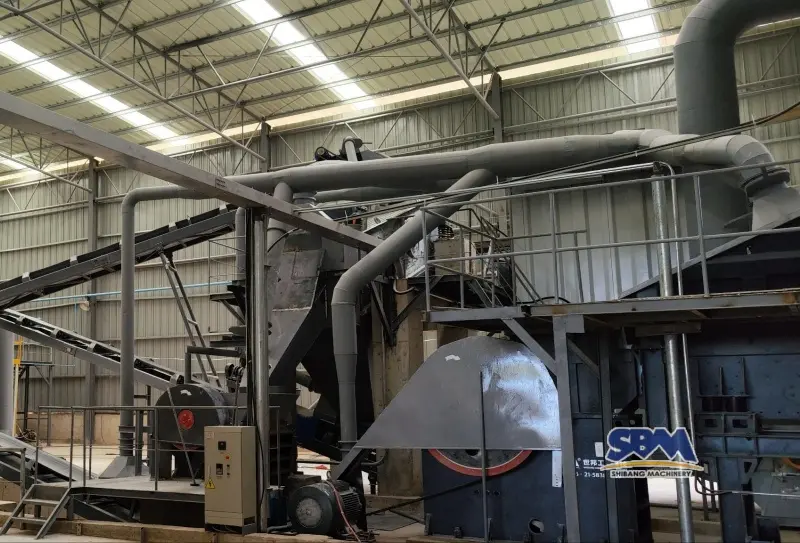
Dans les usines modernes de traitement des minéraux, le processus de broyage des minéraux est un élément essentiel, étape très énergivore. Il se situe entre le minerai tout-venant et la production du concentré final.. Lorsque le circuit de broyage est bien conçu et exploité, vous obtenez une libération minérale stable et une récupération élevée. Vous bénéficiez également de coûts d’exploitation compétitifs sur l’ensemble du concentrateur. Si le circuit fonctionne mal, même les technologies avancées de flottation ou de lixiviation ne peuvent pas compenser entièrement. En tant que fournisseur d'équipements et de solutions, nous ne considérons pas le meulage comme une seule machine isolée. Nous traitons le processus de broyage des minéraux comme un processus complet, système intégré à l’échelle de l’usine. Cela va du concassage et de la préparation des aliments aux broyeurs et aux étapes de classification.. Il comprend également un contrôle en temps réel et une optimisation continue dans l'usine de broyage..
Quel est le processus de broyage des minéraux?
Dans le traitement des minéraux, le processus de broyage des minéraux intervient après l'étape de concassage. Il réduit encore la taille du minerai à une taille de particule cible spécifique.. Cette réduction de taille permet aux minéraux précieux d'être libérés de la gangue environnante..
Cette libération permet une séparation en aval — par flottation, pesanteur, magnétique, ou d'autres méthodes — techniquement réalisables et économiquement attractives.
Le broyage s’inscrit dans le cadre plus large de la comminution, qui comprend à la fois le concassage et le broyage ainsi que les opérations de réduction de la taille des particules.
Poignées de concassage, réduction de taille plus grossière avec mâchoire, cône, ou broyeurs gyratoires. Le processus de broyage des minéraux utilise ensuite des broyeurs tels que des broyeurs à boulets., AFFAISSEMENT, tige, ou moulins agités. Ces broyeurs produisent des particules fines et parfois ultrafines pour le traitement en aval..
Pourquoi le broyage est si important?
Plusieurs facteurs expliquent pourquoi le broyage reçoit autant d'attention de la part des ingénieurs d'usine et des investisseurs.:
- Libération et récupération – Les minéraux précieux sont souvent finement disséminés; ils doivent être libérés jusqu'à une certaine taille avant que la séparation ne soit efficace.
- Part d'énergie – La comminution peut consommer plus de 50% de l’énergie totale d’une plante, et le broyage en représente généralement la plus grande partie.
- Économie globale de l’usine – Un broyage excessif gaspille de l’énergie et génère des slimes qui nuisent à la récupération; le sous-broyage laisse un minéral précieux enfermé dans la gangue, baisse du rendement.
De nombreuses usines suivent désormais une «, moins de meulage » dans leur conception. Ils se concentrent également sur l'optimisation des circuits et les systèmes de contrôle avancés.. Ensemble, ces stratégies contribuent à réduire la consommation d'énergie spécifique par tonne dans le processus de broyage des minéraux.
Principales étapes du processus de broyage des minéraux
Bien que chaque gisement soit différent, la plupart des processus de broyage de minéraux suivent une séquence de haut niveau similaire.
1. Préparation et broyage des aliments
Avant que le minerai n’atteigne le broyeur, il passe par des concasseurs primaires et secondaires. Ces broyeurs réduisent la taille des particules à une plage adaptée aux broyeurs.. Dans de nombreux circuits de broyage de minéraux, cette fourchette est souvent autour 6 pour 25 millimètre.
Bonne préparation des aliments (taille supérieure correcte, surdimensionné minimal, élimination du fer tramé) est la base d'une performance de meulage stable.
2. Broyage primaire
Le broyage primaire est généralement effectué dans des broyeurs SAG, Broyeurs AG, ou de grands broyeurs à boulets. Le choix exact dépend de la compétence en matière de minerai et de la conception globale du processus de broyage des minéraux dans l'usine..
- AFFAISSEMENT / Broyeurs AG utilisent une combinaison de minerai lui-même et de médias ajoutés pour le broyage et sont courants dans les usines à grand débit.
- Broyeurs à boulets utilisent des billes d'acier comme moyen de broyage et sont largement utilisées pour le broyage primaire et secondaire lorsqu'une taille de produit plus contrôlée est requise.
L'objectif du processus de broyage des minéraux est d'atteindre une taille de particule appropriée pour la libération.. A cette taille, la plupart des grains minéraux sont sur le point d'être libérés de la gangue. Vous laissez également une marge pour une étape de broyage secondaire si besoin.
3. Secondaire / Broyage fin
Lorsque la taille du produit requise est très fine, une deuxième étape du processus de broyage des minéraux est généralement ajoutée. Ceci est courant lorsque la valeur P80 cible est inférieure à environ 75 à 150 microns., en fonction du minerai et du circuit. Cela peut inclure:
- Broyeurs à boulets en circuit fermé avec cyclones.
- Broyeurs (moulins agités, moulins à tour, Broyeurs horizontaux de type IsaMill) pour un broyage fin et ultrafin.
Le broyage fin est particulièrement important dans les minerais complexes où les minéraux précieux se présentent sous forme de très petites granulométries..
4. Classification et charge circulante
Les circuits de broyage dans le traitement des minéraux comprennent presque toujours une étape de classification. Cette étape utilise souvent des hydrocyclones, écrans, ou classificateurs en spirale comme équipement principal. Ces appareils séparent le produit fini fin des particules grossières qui doivent revenir pour un broyage ultérieur..
- Les amendes vont de l'avant à l'introduction en bourse, séparation magnétique, ou lessivage.
- La fraction grossière retourne au broyeur, formant une charge en circulation pouvant représenter plusieurs fois la nourriture fraîche.
L'équilibre entre la charge du broyeur, charge en circulation, et la taille des coupes est l'un des principaux leviers d'efficacité et de capacité..
Humide vs. Processus de broyage de minéraux secs
Le broyage peut être effectué en mode humide ou sec, et le choix a des implications significatives pour la sélection de l'équipement, contrôle de la poussière, et traitement en aval.
- Broyage humide suspend les particules dans l'eau, ce qui réduit les frottements, améliore la dissipation de la chaleur, et aide à la classification avec des cyclones ou des écrans.
Il est largement utilisé pour les minerais tels que le cuivre, or, fer, où les processus en aval basés sur les boues (flottation, séparation magnétique humide) sont appliqués. - Broyage à sec repose sur l'air comme support et est utilisé là où l'eau n'est pas souhaitable, par exemple dans le ciment, calcaire, quelques applications du charbon, ou lorsque les procédés en aval nécessitent un produit sec.
Les circuits de broyage à sec doivent gérer les émissions de poussières et peuvent nécessiter des classificateurs d'air et des systèmes de dépoussiérage..
Du point de vue du processus, le broyage humide offre généralement une meilleure libération des minéraux et un contrôle de classification plus strict. Le broyage à sec simplifie la gestion de l'eau et la gestion de la poussière dans le processus de broyage des minéraux. Il est souvent préférable dans les régions où l’eau est rare ou dans certains projets miniers industriels..
Configurations de circuits dans le broyage de minéraux
Différentes configurations de circuits sont utilisées en fonction des propriétés du minerai, taille de produit requise, et la capacité de l'usine. Les configurations typiques incluent:
- Meulage en circuit ouvert – Le minerai passe une fois par le broyeur; simple mais moins de contrôle sur la taille finale, utilisé lorsque la tolérance de taille du produit est large.
- Meulage en circuit fermé – Mill fonctionne avec un classificateur; les fines sont éliminées et les surdimensionnés sont renvoyés au broyeur, améliorer la consommation d’énergie et la cohérence des produits.
- Broyage en une seule étape – Une usine gère la réduction complète jusqu'à la taille cible; convient aux minerais plus tendres et de finesse modérée.
- Broyage en deux étapes – Broyeurs primaires et secondaires en série, souvent avec des supports et des vitesses différents, pour des minerais plus durs ou des cibles plus fines.
Pour certains minerais et plantes, rouleaux de broyage haute pression (Hpgr) sont intégrés soit avant le broyeur, soit dans le cadre d'un circuit de broyage hybride pour améliorer l'efficacité énergétique.
Facteurs clés de conception dans un processus de broyage de minéraux
Concevoir un processus de broyage de minéraux robuste nécessite de comprendre à la fois le minerai et les objectifs commerciaux.. Dans notre travail de projet, nous considérons généralement au moins les aspects suivants:
- Dureté et broyabilité du minerai – Mesuré via des tests tels que le Bond Work Index, Essais de broyage du broyeur SAG, ou d'autres, cela dicte la puissance et la taille du moulin.
- Taille de la libération – La taille des particules à laquelle les minéraux précieux sont suffisamment exempts de gangue pour être récupérés de manière économique.
- Distribution de la taille des aliments – Provenant du circuit de concassage; un mauvais contrôle entraîne souvent une instabilité et une consommation d'énergie plus élevée dans l'usine.
- Débit requis – L’objectif en tonnes par heure ou en tonnes par jour définit la puissance installée et le nombre de lignes de broyage.
- Exigences du processus en aval – Flottation, pesanteur, ou les étapes de lixiviation peuvent spécifier une plage granulométrique étroite ou des limites sur la teneur en fines.
- Bilan hydrique et contraintes environnementales – Disponibilité de l’eau, gestion des résidus, limites de poussière et de bruit, et les coûts énergétiques influencent tous la sélection du circuit.
Le circuit le plus efficace est rarement celui avec le les plus grands moulins, mais celui qui atteint la libération requise à l'énergie spécifique la plus basse et à un CAPEX/OPEX acceptable.
Efficacité énergétique et « plus de broyage, Moins de broyage »
Parce que le broyage peut consommer 40 à 60 % ou plus de l’énergie d’un concentrateur, même de petites améliorations de l’efficacité ont un impact économique et environnemental important.
Plusieurs tendances de l’industrie soutiennent cet objectif:
- Plus d'écrasement, moins de broyage – Intégration d’étapes de concassage supplémentaires ou HPGR pour produire des aliments plus fins, ce qui réduit le travail requis dans les usines en aval.
- Broyeurs à haut rendement – Adoption des broyeurs agités et haute intensité broyeurs horizontaux pour un broyage fin et ultrafin, améliorer le transfert d’énergie et la qualité des produits.
- Meilleur classement – Optimisation de la conception des cyclones, ouvertures d'écran, et contrôle de la taille de coupe pour réduire le sur-meulage et la charge de circulation.
- Contrôle et automatisation des processus – Un contrôle réglementaire avancé du SAG et des broyeurs à boulets peut stabiliser la charge, réduire l'énergie spécifique, et augmenter le débit.
Des études de cas industriels montrent que le HPGR combiné à des circuits de broyage optimisés peut réduire considérablement la consommation d'énergie.. Dans de nombreux projets, des réductions d'environ un tiers sont signalées par rapport aux circuits SABC conventionnels pour des tailles de produits similaires.
Contrôle des processus et numérisation dans le broyage
Les processus modernes de broyage de minéraux s'appuient de plus en plus sur l'automatisation et les outils numériques pour gérer la variabilité du minerai et des conditions d'exploitation.. Les éléments typiques comprennent:
- Mesure granulométrique en ligne – La diffraction laser ou d'autres capteurs surveillent la taille du produit en temps réel et ajustent l'ajout d'eau ou les paramètres du broyeur..
- Contrôle basé sur un modèle et contrôle réglementaire avancé – Systèmes qui stabilisent la charge du broyeur, optimiser la vitesse d'alimentation, et maintenir la consommation d'énergie souhaitée.
- Maintenance prédictive – Surveillance des vibrations, températures des roulements, et les données d'entraînement du broyeur pour planifier la maintenance avant que des pannes ne surviennent.
Ces outils aident les opérateurs à maintenir le processus de broyage proche des conditions optimales malgré les fluctuations de la dureté du minerai., taille de l'alimentation, ou perturbations des plantes.
Problèmes courants lors du broyage des minéraux (et comment les aborder)
À partir des audits d’usine et des commentaires des clients, certains problèmes récurrents apparaissent encore et encore dans les circuits de meulage:
- Charge de broyeur instable et déplacements fréquents – Souvent lié à une taille d’alimentation variable, mauvais contrôle de l'ajout d'eau, ou une automatisation inadéquate.
- Charge de circulation élevée avec une faible capacité – Peut indiquer un mauvais fonctionnement du cyclone, broyage excessif des fines, ou taille de coupe de classification inappropriée.
- Consommation d'énergie excessive – Fréquent lorsque le produit cible est plus fin que nécessaire, ou lorsque la variabilité du minerai n'est pas adaptée à des stratégies d'exploitation flexibles.
- Mauvaise reprise en aval – Parfois provoqué soit par une libération insuffisante (trop grossier) ou trop de particules ultrafines (trop de slimes) d'un broyage excessif.
Diagnostic systématique — combinant les données de l'usine, campagnes d'échantillonnage, et simulation — est généralement le moyen le plus rapide d'identifier quelle partie du processus de meulage offre le meilleur potentiel d'amélioration..
Comment nous (SBM) Approche des solutions de processus de broyage de minéraux?
De notre point de vue en tant que fournisseur d’équipements et de solutions, le succès dans un projet de broyage de minéraux commence du point de vue du processus, pas en poussant un seul modèle de machine. Notre approche typique avec les clients comprend:
- Analyse du minerai et des besoins – Comprendre le type de minerai, dureté, taille du produit cible, schéma de traitement en aval, et les contraintes locales telles que l'eau et l'électricité.
- Schéma conceptuel et sélection de circuits – Choisir entre SAG‑ball, Boule HPGR, broyeur à boulets à plusieurs étages, ou des itinéraires basés sur des broyeurs verticaux selon le projet.
- Dimensionnement et sélection des équipements – Correspondance avec des types de broyeurs spécifiques, puissance motrice, doublures, et équipement de classification au schéma de traitement.
- Stratégie de contrôle et d'optimisation – Planification de l’instrumentation, boucles de contrôle de base, et intégration possible d'un contrôle avancé à mesure que la production s'accélère.
- Considérations relatives au cycle de vie – Évaluer la stratégie des pièces d’usure, trajectoire énergétique, et flexibilité pour gérer les futurs changements de minerai ou les augmentations de capacité.
L'objectif n'est pas seulement de livrer du matériel de broyage, mais de concevoir un procédé de broyage de minéraux qui reste robuste et rentable tout au long de la durée de vie de la mine.
Quand devriez-vous réévaluer votre processus de broyage?
Même une usine existante peut souvent bénéficier d’un nouveau regard sur son processus de broyage de minéraux.. Les points de déclenchement typiques incluent:
- Changements importants dans la dureté ou la teneur du minerai au fil du temps.
- Goulots d'étranglement persistants dans le circuit de broyage limitant le débit global de l'usine.
- Hausse des coûts de l’énergie ou des médias qui érode les marges.
- Exigences environnementales ou ESG exigeant une énergie spécifique inférieure ou des émissions réduites.
A ces moments-là, des options comme l'ajout de pré-concassage, mise à niveau HPGR, mise à niveau des classificateurs, ou l'adoption d'usines et de systèmes de contrôle plus efficaces devrait être envisagée..
Comment travailler avec nous sur un projet de broyage de minéraux?
Si vous envisagez une nouvelle installation ou la mise à niveau d'une ligne existante, la qualité de vos données d'entrée influencera directement la qualité de toute conception de processus de meulage. Pour obtenir le meilleur résultat, nous demandons généralement aux clients de clarifier au moins:
- Type de minerai(s) et minéralogie de base.
- Taille d'alimentation attendue du circuit de concassage.
- Débit cible (t/h ou t/j).
- Taille du produit requise (Par exemple, P80 en microns) et processus en aval.
- Électricité et eau disponibles, et toutes contraintes environnementales.
Avec ces informations, nous pouvons évaluer différentes options de processus de broyage de minéraux pour votre projet. Nous pouvons également estimer la consommation d’énergie attendue pour chaque option. Nous vous aidons ensuite à sélectionner des équipements et des stratégies de contrôle qui correspondent à vos objectifs techniques et financiers..
FAQ sur le processus de broyage des minéraux
Q: Qu'est-ce que le processus de broyage des minéraux et pourquoi est-il si important dans une usine de traitement des minéraux?
UN: Le processus de broyage des minéraux réduit davantage le minerai broyé afin que les minéraux précieux soient libérés de la gangue pour la flottation., pesanteur, séparation magnétique, ou lessivage.
Parce que le broyage consomme souvent la plus grande part de l’énergie des installations, sa conception a un impact direct sur la récupération, coût d'exploitation, et l'économie globale du projet.
Q: Comment puis-je améliorer l'efficacité du circuit de broyage de mon broyeur à boulets sans une reconstruction complète de l'usine?
UN: Vous pouvez améliorer l'efficacité du broyeur à boulets en réduisant la taille de l'alimentation, optimisation de la charge des billes et de la densité de la pulpe, et maintenir le broyeur en marche à une charge stable.
La mise à niveau de la classification et l'ajout d'un contrôle de processus de base ou avancé augmentent souvent le débit et réduisent la consommation d'énergie spécifique sans une reconstruction complète de l'usine..
Q: Pour une nouvelle installation de broyage, dois-je choisir un broyeur SAG ou un circuit de broyeur à boulets conventionnel?
UN: Les broyeurs SAG traitent des aliments beaucoup plus grossiers et combinent une partie du concassage et du broyage dans une seule machine., ce qui est idéal pour les usines à très haut débit.
Les broyeurs à boulets fonctionnent avec une alimentation plus fine et permettent un contrôle plus strict de la taille du produit, de nombreux projets utilisent une combinaison SAG-and-ball basée sur la dureté du minerai, capacité, et cible P80.
Q: De quelle taille de mouture ai-je besoin pour une bonne récupération par flottation, et que se passe-t-il si je broie trop finement ou trop grossièrement?
UN: La meilleure taille de mouture est spécifique au minerai, mais de nombreux circuits de flottation des sulfures fonctionnent efficacement à un P80 de l'ordre des dizaines de microns, où les minéraux les plus précieux sont libérés.
Un broyage trop grossier laisse les minéraux bloqués et nuit à la récupération., tandis qu'un broyage excessif gaspille de l'énergie et crée des boues qui peuvent mal flotter ou consommer plus de réactifs..