E-mail: [email protected]

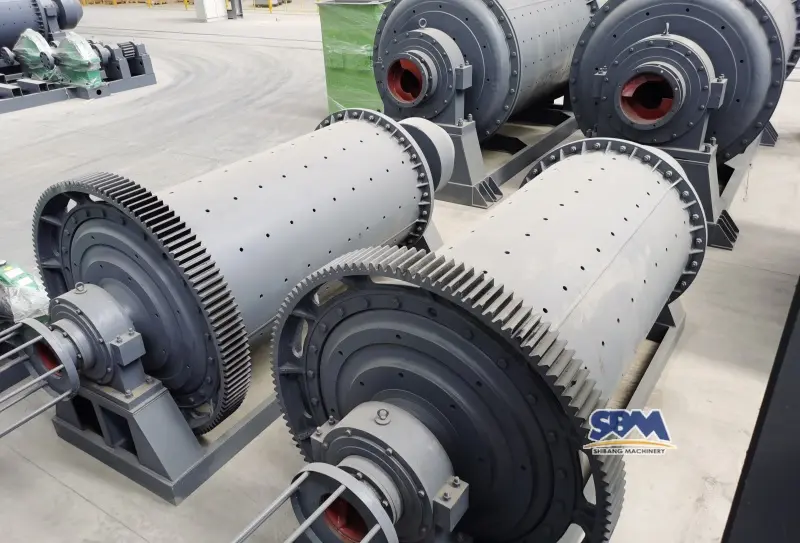
Việc lựa chọn giữa máy nghiền bi và máy nghiền que phụ thuộc chủ yếu vào độ cứng của quặng, kích thước hạt mục tiêu, và các yêu cầu của quá trình tiếp theo, không chỉ về giá. Máy nghiền thanh thường tạo ra sản phẩm đồng đều hơn, sản phẩm thô hơn, while ball mills achieve finer grinding for downstream separation stages.
What Is the Difference Between a Ball Mill and a Rod Mill?
A rod mill uses long steel rods as grinding media, producing a more selective, coarser grind with fewer fines. A ball mill uses steel balls as grinding media, which allows finer and more uniform particle reduction, making it suitable for later-stage grinding before flotation or leaching.
Why Grinding Media Selection Matters for Recovery?
Why Grinding Media Selection Matters for RecoveryThe type of grinding media directly affects particle size distribution, which in turn affects mineral liberation and recovery rate. Overgrinding wastes energy and can generate excess fines that reduce flotation efficiency, while undergrinding can leave valuable minerals locked inside gangue.
When to Use a Rod Mill?
- Ore requires primary grinding before finer secondary grinding.
- Feed size is relatively coarse and uniform product size is critical.
- Overgrinding must be minimized to protect downstream recovery.
- Circuit design uses rod mill as first stage before ball milling.
When to Use a Ball Mill?
- Target product size is finer than what a rod mill typically achieves.
- Ore requires liberation for flotation, tách từ, hoặc rửa trôi.
- Circuit design already includes a primary crushing or rod milling stage.
- Continuous fine grinding is needed for high-recovery downstream processes.
Practical Selection Comparison
| Nhân tố | Máy nghiền que | BALL BALL |
|---|---|---|
| Grinding media | Steel rods | Steel balls |
| Kích thước sản phẩm | thô hơn, more uniform | Finer, wider range |
| Typical circuit position | Primary or first-stage grinding | Secondary or final-stage grinding |
| Fines generation | Thấp hơn | Cao hơn |
| Common ore types | Coarse metal ores requiring uniform sizing | Ores requiring fine liberation for separation |
How SBM Approaches Mill Selection?
Selecting between a ball mill and a rod mill should always start with ore testing. Do not rely on assumptions based on similar past projects.
Mill selection works best when it accounts for several factors. These include ore hardness, Độ ẩm, and feed size distribution. It should also match the liberation size needed for recovery. Grinding equipment should never be treated as an isolated purchase decision.
For plants that already use a metal ore crushing process with controlled feed size, the next step is choosing the right mill. The decision usually comes down to a rod mill or ball mill. If you are still finalizing upstream equipment, reviewing how to choose crusher for metal ore Đầu tiên. This ensures crushed product size matches your planned grinding stage. For teams comparing overall grinding equipment options, see our broader guide. Các metal ore grinding mill selection guide covers hardness, độ mịn, and capacity in depth.
If your plant is still working through overall circuit efficiency, check our strategies. Của chúng tôi grinding circuit optimization guide helps reduce energy waste and improve throughput. For iron ore operations specifically, our guide covers key selection factors. Nhìn thấy iron ore crushing equipment selection for hardness, Sự chậm trễ, and product size requirements.
For a complete view of how crushing, mài, and separation work together, you can also explore our metal ore processing solution.
Câu hỏi thường gặp
What is the main difference between a ball mill and a rod mill?
A ball mill uses steel balls to produce a finer, more varied particle size, while a rod mill uses steel rods to produce a coarser, more uniform product.
Which is better for primary grinding, a ball mill or a rod mill?
A rod mill is generally better for primary grinding because it produces a more controlled, uniform product size with fewer fines.
Can a rod mill and ball mill be used together in one circuit?
Đúng, many circuits use a rod mill for primary grinding followed by a ball mill for finer secondary grinding to balance particle size and energy use.
Why does overgrinding reduce recovery in metal ore processing?
Overgrinding creates excess fine particles that can be difficult to recover in flotation or separation, lowering overall plant efficiency.
How does ore hardness affect the choice between ball mill and rod mill?
Harder ores generally require more energy and wear-resistant grinding media, and hardness testing helps determine which mill type and design fit better.
What ore types are best suited for rod mills?
Rod mills are commonly used for coarse, uniform ores such as certain metal ores that require controlled particle size before finer grinding stages.
What ore types are best suited for ball mills?
Ball mills are commonly used for ores that need finer liberation, such as those processed through flotation, tách từ, hoặc rửa trôi.
How do I know if my grinding circuit needs a ball mill or a rod mill?
The best approach is to test your ore’s hardness, kích thước thức ăn, and target liberation size, then match those results to the mill type designed for that range.