Email: [email protected]

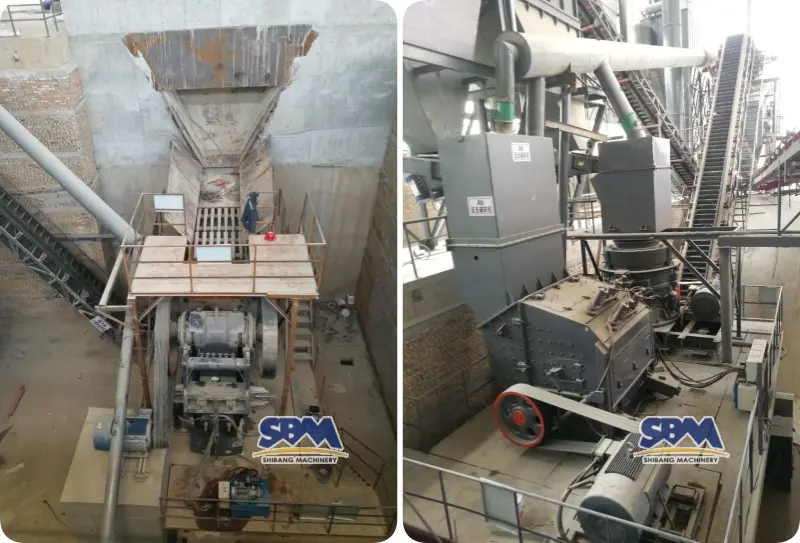
Best crusher for concrete recycling jaw or impact is a key question for many Southeast Asian contractors, and the honest answer is: it depends on your material, capacity, and final product requirements. For most concrete recycling projects in Southeast Asia, impact crushers are generally more flexible for producing good-quality recycled aggregates, while jaw crushers shine as primary machines for tough, mixed demolition material.
Basic roles of jaw and impact crushers in Concrete Recycling
In most recycling plants, the jaw crusher is used as a primary crusher to accept large, mixed concrete blocks with steel bars, bricks, and stones. The impact crusher usually works as a secondary or even primary-secondary machine to shape the material, remove weak particles, and generate good-quality recycled aggregates.
- Jaw crusher:
- Mainly for primary crushing of large, hard concrete and natural stone.
- Produces more flaky and elongated particles but is robust and relatively simple.
- Impact crusher:
- Uses high-speed rotor and impact plates to break concrete and separate mortar from aggregates.
- Produces more cubical aggregates with better grading, which many ready-mix plants prefer.
So when people ask “best crusher for concrete recycling jaw or impact,” they actually need to think about where in the process each machine will work and what final product they want.
Concrete recycling needs in Southeast Asia
Southeast Asian contractors usually face several typical scenarios:
- City center demolition with limited space and strict noise/dust rules.
- Highway or railway expansion where the old pavement and bridges must be milled and recycled on site.
- Industrial zone redevelopment, with tons of reinforced concrete foundations and structures.
In these jobs, project owners are asking for:
- Stable, repeatable aggregate quality for new concrete or base course.
- High mobility of crushing equipment due to scattered sites and bad access roads.
- Low operating cost under high humidity, heavy rain, and high temperatures.
Because of this, mobile jaw crushers and mobile impact crushers have become very popular in countries like Indonesia, the Philippines, Thailand, and Vietnam. In many cases, contractors operate a mobile primary jaw followed by a mobile impact crusher or screening station, so they can move easily between job sites.
Key decision factors: jaw or impact?
When deciding the best crusher for concrete recycling, jaw or impact, Southeast Asian customers should consider:
- Feed material size and hardness
- Level of reinforcement (rebar, mesh)
- Required capacity (tph)
- Desired product size and shape
- Mobility and site conditions
- Investment budget and operating cost
If the concrete is very large, with thick rebar and mixed rubble, a strong jaw crusher as the primary machine is almost always necessary. If the target is to produce high-quality recycled aggregates with good shape for new concrete or asphalt, an impact crusher is usually the better choice, at least in the secondary stage.
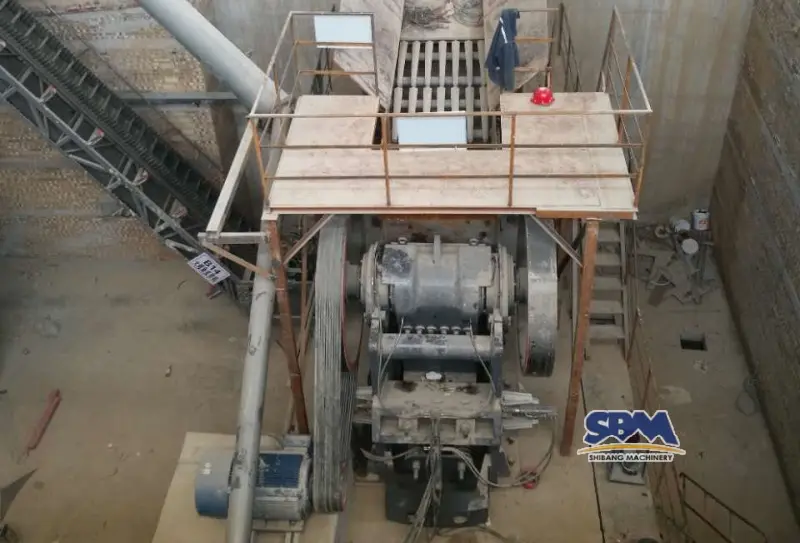
Jaw crushers for concrete recycling
How jaw crushers work?
Jaw crushers use a fixed jaw and a moving jaw to crush material through compression. Concrete blocks enter the crushing chamber and are reduced as the moving jaw presses them against the fixed jaw, usually in a V-shaped cavity.
This compression mechanism makes jaw crushers suitable for:
- Large feed size
- Hard material
- Heavily reinforced concrete
Jaw crushers are simpler in structure, easier to maintain, and generally have lower wear cost than impact crushers when used for primary crushing. That is why many Southeast Asian contractors still choose a jaw as the first step in the best crusher for concrete recycling jaw or impact setup.
Advantages of jaw crushers in Southeast Asia
For concrete recycling in this region, jaw crushers offer several strong advantages:
- High tolerance for dirty or mixed feed (concrete with soil, bricks, stones).
- Strong capability to handle large blocks and thick rebar, especially with a hydraulic wedge or automatic jaw setting.
- Lower sensitivity to uncrushable objects compared to high-speed impact machines.
Many modern jaw crushers also support:
- Hydraulic adjustment of discharge opening
- Overload protection
- Integrated pre-screening to remove fines
These features are important where power supply may be unstable and operators may not have advanced technical training.
Limitations of jaw crushers
Jaw crushers are not perfect for every job:
- Product shape is usually more elongated and flaky, which is not ideal for high-grade concrete.
- The output often needs a secondary crusher or a strong screening process to reach required grading.
- Jaw crushers are typically heavier and may be less flexible when very fine or precisely shaped aggregates are needed.
Because of these limitations, in many Southeast Asian recycling projects the best crusher for concrete recycling jaw or impact is actually a combination: jaw for primary, impact for secondary.
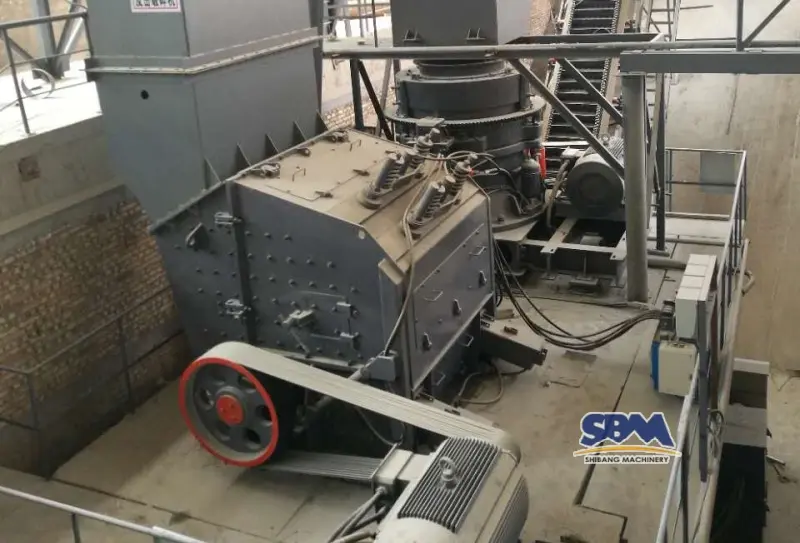
Impact crushers for concrete recycling
How impact crushers work?
Impact crushers use a high-speed rotor with blow bars that throw the material against impact plates (aprons), breaking it by impact and attrition. Concrete and mortar break away from the coarse aggregates, resulting in a cleaner, more cubical final product.
This makes the impact crusher very popular as the best crusher for concrete recycling jaw or impact when:
- Final product quality is a priority
- You need flexible control of product size and shape
- You want good liberation of steel and mortar
Modern impact crushers, such as high-efficiency models in the CI series, are designed with heavy-duty rotors, optimized crushing chambers, and hydraulic adjustment systems.
Advantages of impact crushers in Southeast Asia
Impact crushers bring some key benefits for concrete recycling in this region:
- Excellent product shape, suitable for recycled concrete aggregates and asphalt.
- Good liberation of embedded steel, making metal separation easier with magnets.
- Adjustable aprons and rotor speed allow flexible control of product size.
For many ready-mix producers and asphalt plants in Southeast Asia, an impact crusher is the best crusher for concrete recycling jaw or impact because it delivers a product that behaves more like natural aggregate.
Limitations of impact crushers
However, impact crushers also have their own limits:
- Higher wear rate when crushing very hard or abrasive concrete with high silica content.
- Feed size and percentage of fines need more control to avoid over-crushing and excessive wear.
- Operators must pay more attention to rotor speed, feed control, and maintenance.
In regions with highly variable material quality and less experienced operators, some contractors prefer to start with a jaw, then add an impact unit once they gain more experience.
Environmental and site considerations
Concrete recycling in Southeast Asia must also follow stricter environmental rules in urban areas. Crushing plants need to control dust, noise, and vibration, especially when operating near residential zones or in busy city centers.
- Jaw crushers usually generate less fine dust but higher noise at the crushing stroke.
- Impact crushers may produce more fine material but can be equipped with better sound insulation and dust suppression.
Mobile plants with built-in dust suppression systems, enclosure covers, and variable-speed fans are often preferred as the best crusher for concrete recycling jaw or impact solutions in cities like Singapore and Kuala Lumpur.
Typical configuration options
Option 1: Jaw-only mobile plant
For small contractors starting in concrete recycling with limited budget:
- Primary mobile jaw crusher with vibrating feeder
- On-board or separate vibrating screen
- Magnetic separator on the discharge belt
Pros:
- Lower investment and simple operation
- Ideal for large concrete pieces and rough base course production
Cons:
- Lower quality of recycled aggregates
- May need external screening and shaping if customers demand higher-grade material
Option 2: Jaw + impact combination
This is a common “best crusher for concrete recycling jaw or impact” layout:
- Mobile jaw crusher as primary
- Mobile impact crusher as secondary
- Screening station with 2–3 decks
- Magnetic separation for steel
Pros:
- Balanced performance on capacity, product quality, and flexibility
- Suitable for big projects like highway reconstruction and commercial demolition
Cons:
- Higher investment
- Requires better coordination and scheduling between two machines
Option 3: Impact-only mobile plant
For some jobs with controlled feed size (for example, milled concrete or pre-broken material), a single mobile impact crusher with an integrated screen can be enough. This configuration is very popular where the contractor’s main goal is high-quality recycled aggregates.
Example parameter ranges (indicative)
Below is an illustrative table with typical ranges for modern jaw and impact crushers used in Southeast Asian concrete recycling plants.
| Crusher type | Typical feed size (mm) | Capacity range (t/h) | Final product size (mm) | Main application in recycling |
|---|---|---|---|---|
| Primary jaw crusher | 0–700 | 80–600 | 0–150 (adjustable) | Primary crushing of large, reinforced concrete |
| Secondary jaw crusher | 0–350 | 50–300 | 0–80 (adjustable) | Further size reduction, simple base course |
| Primary/secondary impact crusher | 0–600 | 80–600 | 0–40 (controlled with aprons) | High-quality recycled aggregates, shaping |
| Mobile impact crusher with screen | 0–400 | 70–400 | Multiple fractions 0–5, 5–10, 10–20, 20–31.5 | On-site recycling with multiple final products |
Exact parameters depend on model, configuration, and manufacturer, but the table shows why both jaw and impact crushers have clear roles in the best crusher for concrete recycling jaw or impact decision.
Operating tips for Southeast Asian conditions
To maximize performance of the best crusher for concrete recycling jaw or impact under Southeast Asian conditions:
- Ensure proper pre-sorting to remove wood, plastics, and excessive soil before crushing.
- Use an efficient magnet and, if possible, a pre-screen to protect crushers and reduce wear.
- Monitor moisture content; high humidity and rain can cause sticking and clogged screens.
For jaw crushers:
- Keep the jaw plates properly tightened and adjust the discharge opening regularly.
- Avoid continuous feeding of very fine material that could cause packing.
For impact crushers:
- Take care of blow bar and liner selection according to concrete hardness and abrasiveness.
- Adjust rotor speed and aprons to balance capacity, product size, and wear cost.
Cost and profitability considerations
When choosing the best crusher for concrete recycling jaw or impact, many Southeast Asian customers focus only on purchase price, but operating cost and product value are often more important. Impact crushers may have higher wear part costs, but they can produce higher-value material that can be used directly in ready-mix or asphalt plants.
Main cost factors:
- Fuel or electricity consumption
- Wear parts (jaw plates, blow bars, liners)
- Labor and maintenance
- Transport and setup
Main profit drivers:
- Price difference between landfill disposal and selling recycled aggregates
- Ability to win “green” projects that require recycling
- Flexibility to supply multiple sizes from one plant
Often, a well-balanced plant that uses both jaw and impact crushers offers the best lifecycle profit, especially on large, long-term projects.
Which is better: jaw or impact?
There is no one-size-fits-all answer, but some general guidelines can help decide the best crusher for concrete recycling jaw or impact in Southeast Asia:
- Choose a jaw crusher if:
- Feed is large, very hard, and heavily reinforced.
- Budget is limited and the target product is mainly base course or subgrade.
- Simplicity and low primary wear cost are top priorities.
- Choose an impact crusher if:
- You need high-quality, cubical recycled aggregates for concrete or asphalt.
- Feed size is controlled, or a primary jaw is already installed.
- You value product flexibility and better liberation of steel.
- Choose a combination of jaw + impact if:
- You handle wide-ranging materials and project types.
- You run larger projects where the investment can be recovered quickly.
- You want both strong primary capacity and excellent final product quality.
Practical recommendations for Southeast Asian customers
For a typical contractor in Southeast Asia building roads, bridges, and commercial projects, a mobile plant that combines jaw and impact crusher is usually the most reliable long-term choice. It can deal with large demolition concrete now and still produce good-quality recycled aggregates if local rules become stricter or new markets appear.
If budget is tight, starting with a robust mobile jaw crusher and leaving space to add an impact crusher later can be a practical step-by-step strategy. For specialized recycling companies that already get broken concrete or milled pavement, buying a high-capacity mobile impact crusher with a built-in screen can increase product value.
By carefully studying local material conditions, project types, and customer needs, any contractor in Southeast Asia can find the best crusher for concrete recycling, jaw or impact, for their business and turn concrete waste into a steady new source of profit.
Q & A
Q1: Which is better for concrete recycling, a jaw crusher or an impact crusher?
It depends on the job. A jaw crusher is better for large, hard, and heavily reinforced concrete as a primary crusher, while an impact crusher is better for producing high-quality, well-shaped recycled aggregates, usually as a secondary or sometimes primary machine.
Q2: Why is a mobile jaw + impact crusher plant a good choice for Southeast Asia?
A mobile plant that combines jaw and impact crushers can handle large demolition concrete on different sites and still produce quality recycled aggregates. This flexibility suits Southeast Asia’s fast urbanization, changing regulations, and varied project locations.
Q3: What should contractors do if they have a limited budget but want to start concrete recycling?
Contractors with a tight budget can start with a strong mobile jaw crusher and leave space to add an impact crusher later. This step-by-step approach reduces initial investment but keeps the door open for higher-quality products in the future.