Email: [email protected]

Meta description: Discover how an SBM 200 TPH sand making plant in Guinea converts crushed stone into high-quality manufactured sand. Explore the process flow, equipment configuration, output targets, and project support.
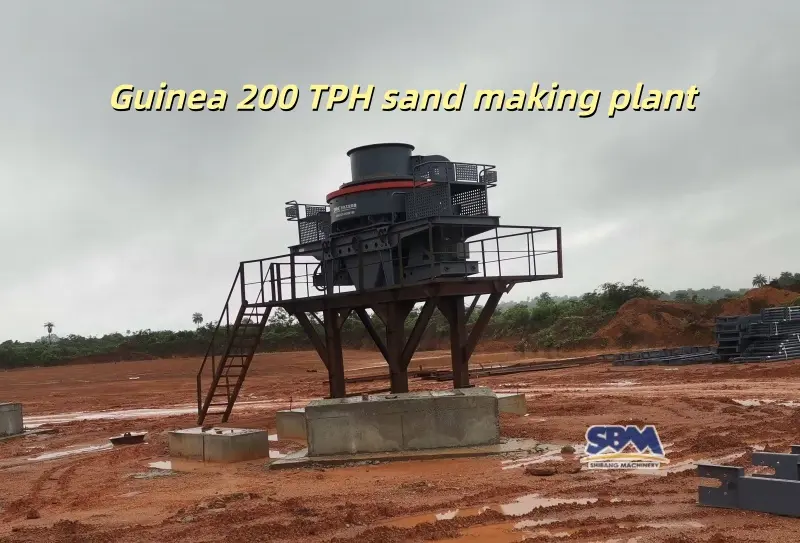
Guinea 200 TPH Sand Making Plant Project Overview
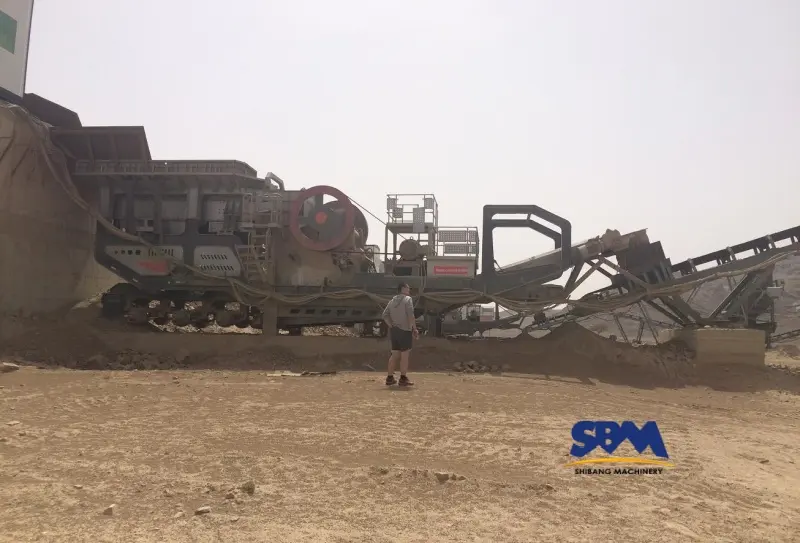
To support local construction and infrastructure applications, this 200 TPH sand making plant was designed for a customer in Guinea seeking a reliable solution for converting crushed stone into high-quality manufactured sand.
The customer required a production line capable of delivering stable output, consistent particle shape, and flexible finished-product grading while operating under challenging site conditions. SBM designed the project around the customer’s raw-material characteristics, target capacity, available site layout, and required sand specifications.
Project location: Guinea
Designed capacity: 200 TPH
Application: Manufactured sand and aggregate production
Raw material: Granite
Feed size: 0–500 mm
Final products: 0–5 mm manufactured sand
Operation status: Commissioned and operating normally
For projects that require dependable size reduction before sand shaping, the process typically combines feeding, primary crushing, secondary crushing, sand making, screening, and material recirculation. This arrangement helps control final particle size and supports stable production.
Customer Requirements
Before equipment selection, the SBM engineering team evaluated the customer’s production objectives and practical operating conditions. The main requirements included:
- A nominal capacity of 200 tonnes per hour
- Stable production of manufactured sand for construction use
- Good particle shape and controlled gradation
- A compact process layout suitable for the available installation area
- Equipment that is straightforward to operate and maintain
- Flexible adjustment for different finished-product specifications
- Reliable technical support during installation, commissioning, and subsequent operation
The project was not approached as a “standard machine sale.” Instead, the configuration was developed as an integrated crushing, shaping, screening, and conveying system. Equipment selection is especially important in sand and aggregate plants because rock properties, process flow, and the chosen machines must work together to meet quality and capacity goals.
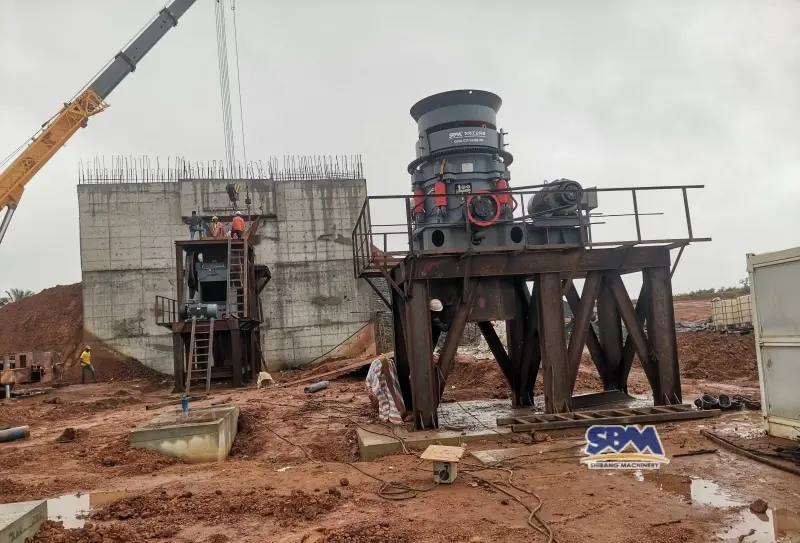
Recommended Plant Configuration
The final crushing equipment list should be aligned with the actual signed configuration. A typical 200 TPH Guinea sand making plant may include the following equipment:
| Process section | Recommended equipment | Main function |
|---|---|---|
| Feeding | Vibrating feeder | Delivers raw material evenly to the crushing stage |
| Primary crushing | Jaw crusher | Reduces large raw stone to manageable sizes |
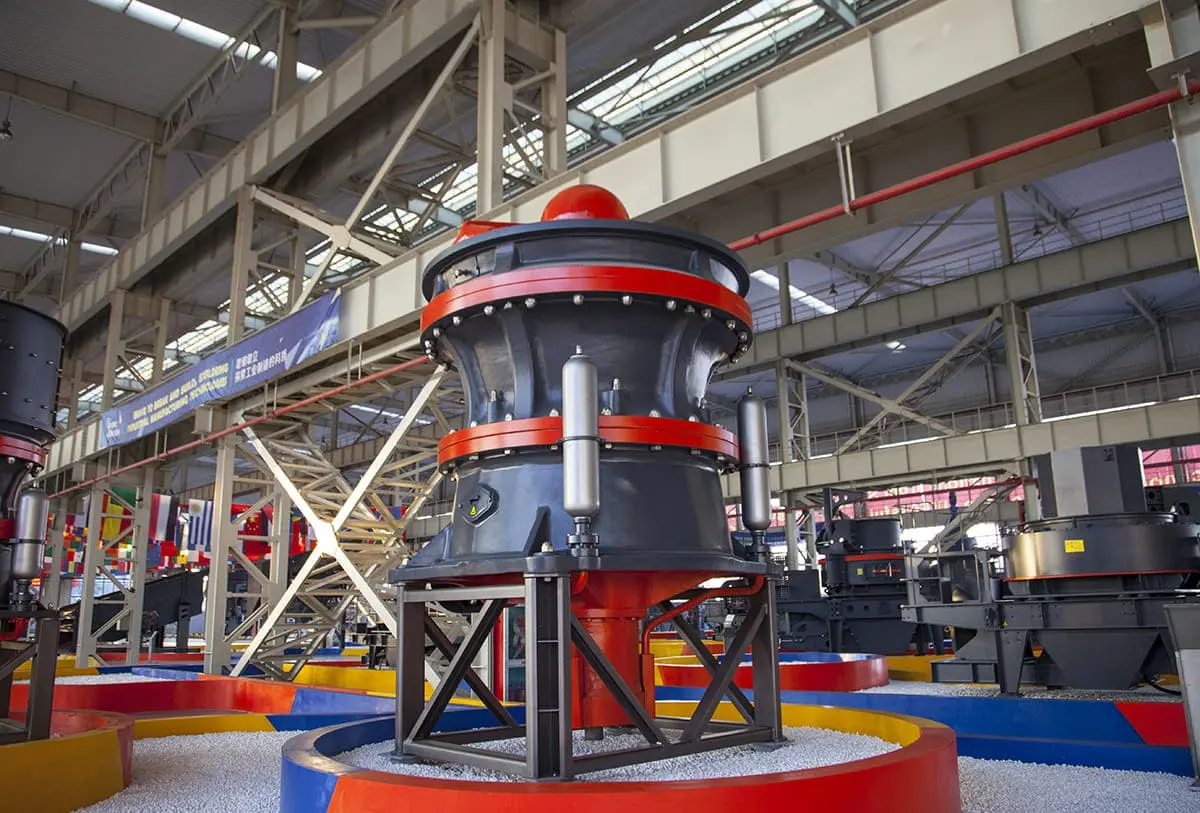
| Secondary crushing | Cone crusher or impact crusher | Produces smaller and more uniform aggregate for sand making |
| Sand making and shaping | VSI sand making machine | Produces manufactured sand and improves particle shape |
| Screening | Vibrating screen | Separates material into required finished sizes |
| Recirculation | Belt conveyors | Returns oversized material to the appropriate crushing or sand-making stage |
| Dust control | Dust collection / water spray system | Helps manage airborne dust according to site requirements |
| Electrical control | Centralized control cabinet | Supports coordinated plant operation and monitoring |
For hard and abrasive materials, we typically use a cone crusher for secondary crushing. Alternatively, for softer or less abrasive stone, we may choose an impact crusher based on the target gradation and overall plant economics. Before making the final decision, our engineers test the material, analyze feed size, and review the customer’s finished-product requirements.
Process Flow for the 200 TPH Plant
The plant follows a closed-circuit crushing and sand making process designed to maximize usable product and reduce oversized material in the final sand.
1. Raw Material Feeding
Raw stone is delivered to the vibrating feeder, which regulates the feed rate and sends material evenly to the primary crusher. Controlled feeding is essential because unstable feed can reduce crushing efficiency and affect downstream product quality.
2. Primary Crushing
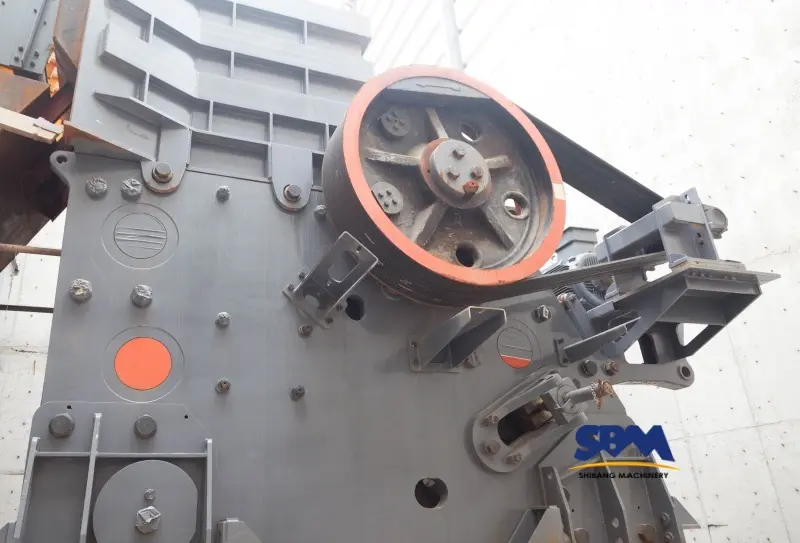
The jaw crusher handles the first reduction of large material. Its purpose is to reduce the feed to a size suitable for the secondary crushing stage while maintaining reliable throughput.
3. Secondary Crushing
After primary crushing, the material enters the cone crusher or impact crusher for further size reduction. As a result, this stage prepares the feed for the VSI sand making machine and improves the consistency of material entering the shaping process.
4. Sand Making and Particle Shaping
The VSI sand making machine is the key unit for producing manufactured sand. Through high-speed impact crushing and material-on-material or material-on-liner crushing, it further reduces fine aggregate and improves the shape of the finished sand.
VSI technology is widely used when manufactured-sand production requires high-quality particle shape. Accordingly, our engineers adjust the machine selection and rotor configuration based on rock abrasiveness, feed size, the desired sand ratio, and operating-cost targets.
5. Screening and Recirculation
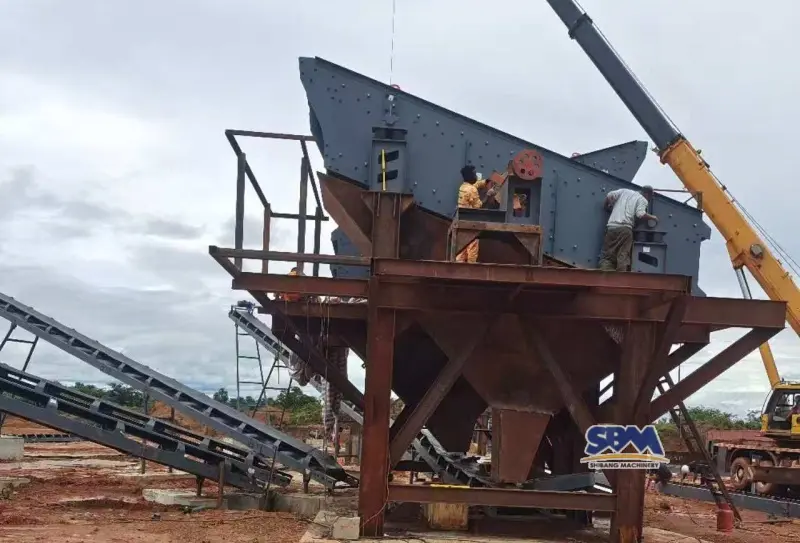
After sand making, a vibrating screen separates the material into the specified size ranges. Then, the system sends qualified sand to stockpiles or storage, while it returns oversized material to the sand-making stage for additional crushing.
This closed-circuit design helps maintain a more consistent final gradation and improves the utilization of raw material.
Why This Solution Fits the Guinea Project?
Capacity Designed Around the Customer’s Target
The line is designed around a 200 TPH production target rather than simply selecting the largest available machine. Correct capacity matching helps balance equipment loads across the feeder, crushers, VSI, screen, and conveyors.
Flexible Finished Sand Specifications
By adjusting screen meshes, crusher settings, VSI operating parameters, and recirculation flow, the plant can be adapted to produce different sand and aggregate specifications. As a result, this flexibility is especially valuable for construction projects that require multiple material grades.
Better Particle Shape
The VSI stage is intended to improve the cubic shape of the finished material and reduce the proportion of elongated or flaky particles. Good particle shape can support downstream applications such as concrete production, road base preparation, and general construction aggregate.
Designed for Practical Operation
A successful sand plant must be maintainable as well as productive. Therefore, the system design should provide accessible service points, clear conveyor routing, practical stockpile locations, and replaceable wear parts for high-wear components.
Engineering and Service Support
From early-stage project consultation to after-sales service, SBM supports customers with plant layout, equipment selection, installation guidance, commissioning, and operator training. Meanwhile, visit About SBM to learn more about the company’s manufacturing and engineering capabilities.
Project Performance and Results
The following section should be completed only with verified operational data from the project owner, commissioning report, or onsite production records.
After commissioning, the Guinea 200 TPH sand making plant achieved the following project outcomes:
- Actual operating capacity: 100–300 TPH
- Finished sand specification: 0–5 mm
- Raw material type: Granite quarried locally in Guinea
- Plant availability: 93%
- Commissioning date: May, 2026
- Customer feedback: “The plant has operated steadily since commissioning. SBM’s team provided clear installation guidance and responsive support during startup. The final sand quality meets our project requirements.”
- Key operating result: Achieved stable operation after commissioning, producing manufactured sand with consistent particle shape and controlled gradation for the customer’s intended application.
Do not publish unverified figures for availability, yield, energy consumption, or downtime. In B2B mining and aggregate equipment marketing, precise and documented project data is more credible than broad performance claims.
What Buyers Should Confirm Before Choosing a 200 TPH Sand Making Plant
A 200 TPH capacity label alone is not enough for equipment selection. Buyers should confirm the following items before finalizing a solution:
- Material type and hardness: Granite, basalt, limestone, river stone, and recycled material require different crushing strategies
- Maximum feed size: Determines the required primary and secondary crushing arrangement
- Moisture and clay content: May affect screening efficiency, dust-control needs, and final sand quality
- Required output sizes: Defines screen configuration and product-stockpile arrangement
- Required sand gradation: Important for concrete, mortar, road construction, or other end uses
- Power supply and site conditions: Affect motor selection, control-system design, and overall plant layout
- Wear-part budget: High-abrasion material can significantly influence operating cost
- Installation and service plan: Determines how quickly the plant can be commissioned and maintained
For a tailored recommendation, SBM engineers can review your material sample, capacity target, final-product requirements, and site layout before preparing a configuration proposal.
Request a Customized Sand Making Solution
Planning a 200 TPH sand making plant in Guinea, West Africa, or another market? Send SBM your material type, feed size, required capacity, target product sizes, and site information.
Our team can provide:
- Equipment selection recommendations
- Process-flow design
- Plant layout support
- Budgetary quotation
- Installation and commissioning guidance
- Wear-part and maintenance support
Contact SBM now to discuss your 200 TPH sand making project.
FAQs
What is the capacity of this Guinea sand making plant?
The plant is designed for a nominal capacity of 200 tonnes per hour. Actual output depends on raw-material properties, feed size, moisture content, equipment settings, and final-product requirements.
What equipment is used in a 200 TPH sand making line?
A typical line includes a vibrating feeder, primary crusher, secondary crusher, VSI sand making machine, vibrating screen, belt conveyors, electrical controls, and dust-control equipment.
Can the plant produce different sizes of sand and aggregate?
Yes. Screen configuration, crusher settings, VSI operating conditions, and recirculation flow can be adjusted to meet different product-size requirements.
Is a VSI crusher necessary for manufactured sand?
A VSI sand making machine is commonly used when the project requires additional fine crushing, better particle shape, and controlled manufactured-sand production.
How can I get a quote for a 200 TPH sand making plant?
Send SBM your raw material, maximum feed size, capacity target, required product sizes, power conditions, and site layout through the contact page.