Email: [email protected]

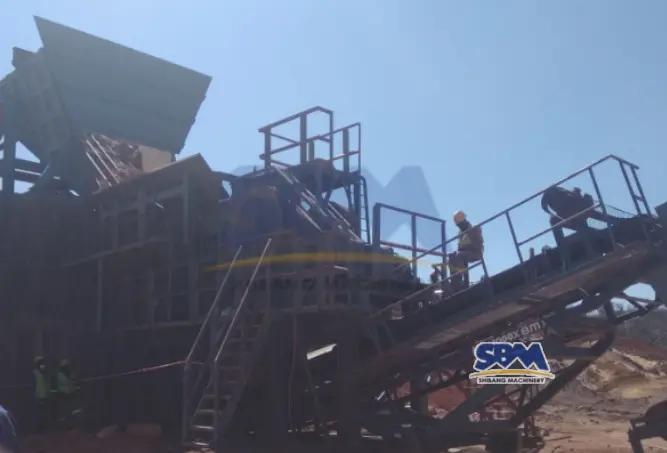
Granite is a hard and abrasive stone widely used in construction. Choosing the right jaw crusher is vital for plant performance and cost. The ideal jaw crusher for granite handles large, tough rocks with ease. It delivers stable capacity and controls wear costs effectively. PE series jaw crushers excel in these demanding granite applications.
This guide explains why jaw crushers are the top choice for granite. It shows what to check when selecting a PE series jaw crusher. You will learn how to match the right model for a 100–500 tph plant. It also explains how the right jaw crusher lowers operating costs. A proper selection improves efficiency and boosts project profitability.
Why Granite Is So Demanding
Granite is a hard, dense, crystalline rock with high compressive strength and strong abrasion on any crushing chamber. Because of this, not every crusher type is suitable as a primary machine for granite, especially when feed sizes are large and capacities are high.
In practical quarry operations, granite often comes as blasted rock with large, irregular blocks and sharp edges, which put high stress on the crusher’s liners and bearings. For global producers, the challenge is to process this tough material efficiently without excessive downtime or wear part consumption.
Why Jaw Crushers Are the First Choice for Granite
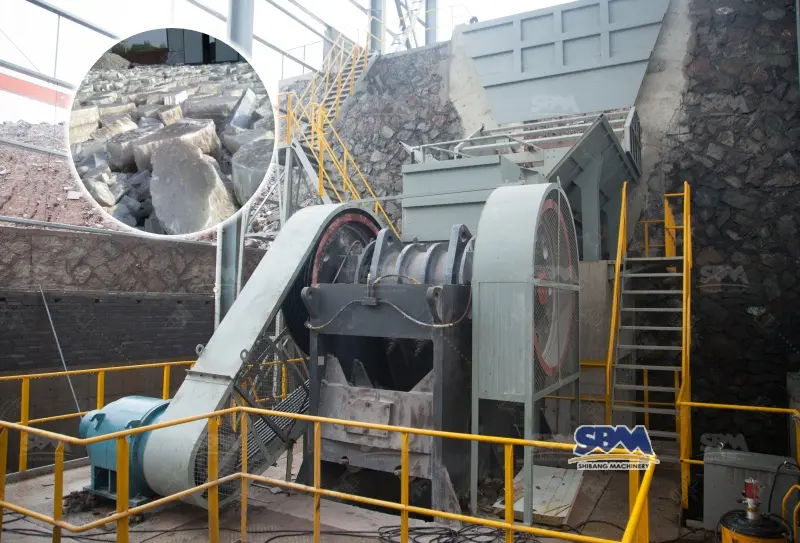
Jaw crushers work on a compression principle, squeezing the rock between a fixed and a moving jaw, which suits hard and abrasive materials like granite. This reduces the direct high‑speed impact on metal surfaces, leading to lower wear compared with pure impact crushing on such hard stone.
A jaw crusher can accept very large feed sizes and deliver a controlled output suitable for secondary cone or impact crushers. For granite quarries, this makes the jaw crusher the natural primary machine in flowsheets such as feeder → jaw → cone/impact → screen.
Why PE Series Jaw Crushers Fit Granite
PE series jaw crushers are used as primary crushers in many mining and aggregate plants. They handle hard stones like granite and basalt efficiently worldwide. These crushers feature a simple, strong structure with large feed openings. Reliable bearings support continuous and heavy-duty crushing operations.
For granite, PE jaw crushers offer high crushing ratio and low wear cost. The fixed and swing jaw plates maintain durability during tough operations. Producers value standardized parts that simplify sourcing and replacement. Easy maintenance keeps plant operation stable and predictable globally.
Key Specs That Matter for Granite Jaw Crushers
When selecting the best jaw crusher for granite, several specifications matter more than others, especially for PE series machines. Focusing on these parameters ensures that the crusher matches both the rock conditions and the required production capacity.
1. Feed Opening Size
- A large feed opening allows the crusher to accept bigger granite blocks from the blasting face or dump trucks.
- For 100–500 tph granite plants, PE jaw crushers offer various feed opening sizes. Typical sizes range from about 600×900 mm to around 1,200×1,500 mm, depending on model and manufacturer.
2. Capacity Range
- The rated capacity in t/h should meet peak production demands. It must include a safety margin for feed size and hardness changes.
- For a 200 tph granite plant, choose a PE jaw exceeding 200 t/h capacity. This prevents overloading and ensures smooth, stable crusher operation.
3. CSS (Closed Side Setting) and Product Size
- The CSS controls output size distribution and affects downstream crushing and screening loads. It influences how cone or impact crushers and screens perform later.
- For granite, operators select a CSS that balances capacity and product size. It ensures ideal feed for secondary crushers, usually in the 20–40 mm range.
4. Power and Eccentric Shaft Design
- Adequate motor power and a strong eccentric shaft ensure that the crusher can handle the high resistance of hard granite without stalling.
- A well‑designed flywheel and toggle system also help keep energy consumption stable and reduce peak loads.
Example PE Series Jaw Crusher Options for Granite
| Granite plant capacity | Typical PE jaw role | Key selection focus |
|---|---|---|
| Around 100 tph | Primary crusher in small granite quarry or contractor plant. | Moderate feed opening, flexible CSS for 0–80 mm output to cone or impact. |
| Around 200 tph | Main primary crusher in standard medium‑size granite plant. | Larger feed opening, higher power, stable output for secondary cone. |
| 300–500 tph | Heavy‑duty primary crusher in large fixed granite quarry. | Very large feed opening, robust frame, long wear life under continuous hard rock duty. |
PE Jaw Crusher in a Granite Flowsheet
A PE series jaw crusher rarely works alone in granite; it is part of a full crushing line that may include cone, impact, and screening stages. The jaw’s job is to take raw blasted rock and turn it into a manageable size and shape for downstream machines.
Typical global 200 tph granite flowsheets use a sequence such as vibrating feeder → PE jaw crusher → cone crusher → vibrating screen, with optional impact or VSI for final shaping. For higher capacities, similar flowsheets are used with larger PE jaws and additional secondary or tertiary stages.
Operating Cost and Wear Life in Granite
One of the main reasons to choose a jaw crusher for granite is its relatively low wear cost per ton compared with impact crushers in the same duty. Compression crushing spreads the load over a larger contact area, so jaw plates wear more slowly even under abrasive granite.
PE series jaw crushers are designed for easy jaw plate replacement and straightforward maintenance, which reduces downtime and keeps plants running longer between major services. For global operators, this translates into a more predictable maintenance schedule and lower total operating cost over the life of the quarry.
How to Choose the Best PE Jaw Crusher for Your Granite Project
When selecting the best PE jaw crusher for granite, it helps to start from your specific project data rather than from the catalog alone. At minimum, the following information is needed:
- Raw material details: granite type, abrasiveness, and maximum feed size.
- Required capacity: design capacity in t/h, and whether production is continuous or in shifts.
- Final products: sizes you want to produce, such as 0–5 mm, 5–10 mm, 10–20 mm, and main applications like concrete or asphalt.
- Site conditions: fixed plant or mobile, available power, and local climate and dust regulations.
With this information, PE jaw models and matching secondary machines can be sized precisely, whether for a compact 100 tph granite line or a large multi‑stage plant above 300 tph. Correct sizing avoids both under‑capacity bottlenecks and over‑sized equipment that wastes capital.
Need help choosing the best PE jaw crusher for your granite project? Share your feed size, capacity, and final product requirements, and an engineering team can prepare a customized PE jaw + complete granite plant solution within 24 hours.
FAQs
FAQ 1: What makes a PE jaw crusher ideal for granite?
PE series jaw crushers are built for high compressive strength materials like granite, which is extremely hard and abrasive. The compression-type crushing action reduces wear compared to impact machines, while the simple structure ensures long service life and easy maintenance—making it ideal for global granite quarries and aggregate producers.
FAQ 2: Which PE jaw crusher model should I choose for a 200 TPH granite plant?
For around 200 tons per hour, a PE750×1060 or similar model is typically recommended. It offers a large feed opening, reliable capacity margin, and smooth operation under hard-rock conditions. The exact model should be confirmed based on feed size, output size targets, and your secondary crusher setup.
FAQ 3: How long do jaw plates last when crushing granite?
Jaw plate life depends on rock abrasiveness, feed size consistency, and crusher settings. In granite applications, high-quality manganese steel plates may last several hundred operating hours before requiring replacement. Using proper feed control, avoiding fines buildup, and flipping jaw plates at midlife can significantly extend wear life.