Email: [email protected]

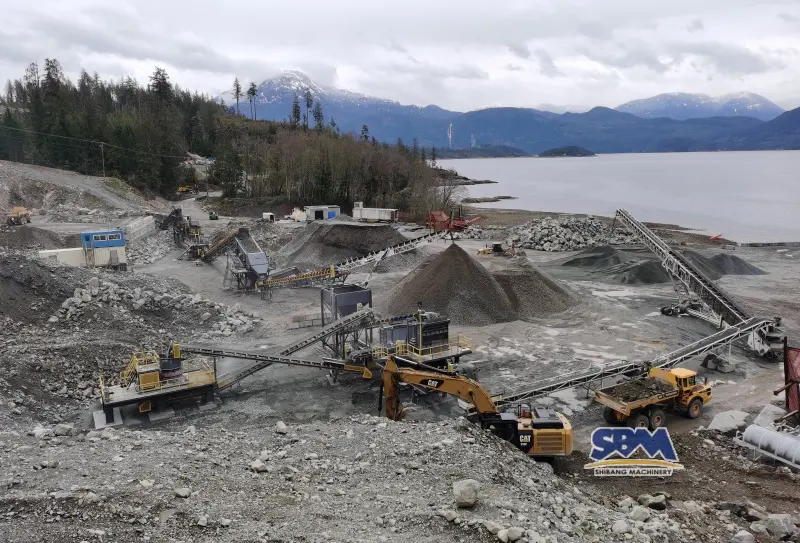
Highway and expressway projects place strict demands on aggregate quality. Using granite as a raw material is a big advantage because it is hard and durable, but only if your crushing plant can produce cubical, well‑graded stone with low flakiness and good adhesion with asphalt and concrete. Many operators find that their granite is “very strong” but still fails high‑grade highway specs due to poor shape, high fines, or unstable gradation. This guide explains how to design and operate granite crushing equipment specifically for highway and road aggregates, while focusing on the end-use requirements, not just the equipment.
What Highway Projects Need from Granite Aggregates?
Before choosing crushers, you must understand what highway engineers and asphalt/concrete plants actually want from your granite:
- Good particle shape (low flakiness and elongation)
- Cubical or slightly rounded particles improve compaction, stability, and surface performance.
- Controlled gradation (well‑graded curves)
- Correct ratio of coarse, medium, and fine fractions is needed for dense asphalt concrete and base layers.
- Clean, dust‑controlled material
- Excessive dust affects binder adhesion and mix design; some fines are needed, but too many are harmful.
- Mechanical strength and durability
- Granite is strong, but poor crushing practices can produce weak, micro‑cracked particles.
A highway‑oriented granite plant must therefore consider shape + gradation + cleanliness, not just tonnage.
Recommended Crusher Roles for Highway Granite Aggregates
Unlike general building aggregate production lines, highway aggregates are more sensitive to particle shape, so the focus of equipment roles is also different.
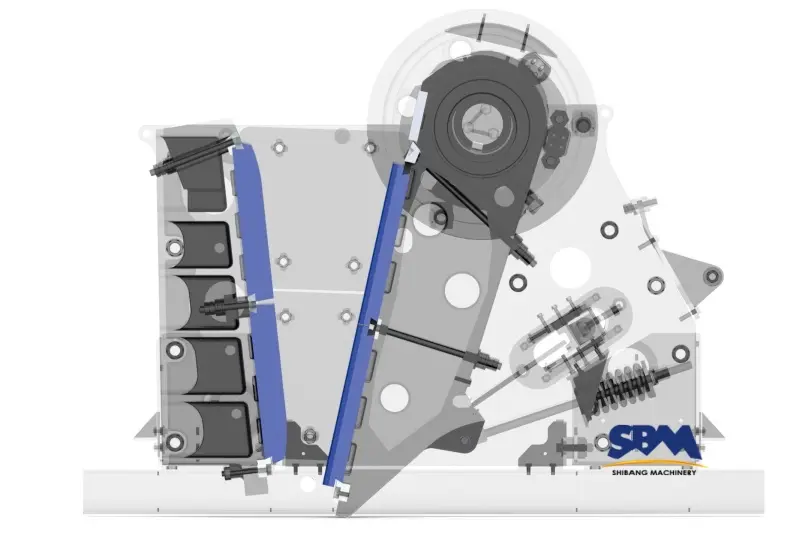
Primary: PE Jaw Crusher – Strength and Capacity
- Handles large, hard granite boulders and delivers stable production.
- Sets the basic reduction ratio and prepares feed for shape‑oriented machines.
- Key for long‑term strength and low cost per ton.
You can refer to Best Jaw Crusher for Granite for information on how to select the main crusher model and parameters.
Secondary: Cone Crusher – Controlled Reduction and Gradation
- Provides laminated compression crushing, which is better for crack control and consistent size.
- Helps to produce a good intermediate product (e.g., 0–40 mm) with relatively low flakiness compared with jaw‑only crushing.
- Ideal as the main workhorse before final shaping.
If you want to see examples of different cavity types and production line configurations, you can read Granite Crusher Machine and 200 TPH Granite Crushing Plant Design
Tertiary / Shaping: Impact or VSI – Highway‑Grade Shape
- Horizontal shaft impact (HSI) and vertical shaft impact (VSI) crushers are used to improve cubical shape and fine tuning of gradation.
- For highway and asphalt top layers, a shaping stage often makes the difference between ordinary and premium aggregates.
- Must be sized and used carefully in granite, to avoid extreme wear and excessive fines production.
How can we reduce wear and cost while maintaining particle shape? The answer is How to Reduce Wear and Cost Per Ton.
Typical Granite Crushing Flowsheets for Highway Aggregates
1. Highway Base and Sub‑Base (Focus on Strength and Gradation)
Target products:
- 0–31.5 mm or 0–40 mm graded crushed stone for base and sub‑base layers.
Typical flowsheet:
- Vibrating feeder → PE jaw crusher → cone crusher → vibrating screen → recirculating cone → final stockpiles.
Key points:
- Jaw and cone do most of the work; shaping stage may not be necessary if specs allow higher flakiness.
- Focus on controlling gradation via screen selection and cone CSS, keeping dust within spec.
2. Highway Surface Course and Asphalt (Focus on Shape and Adhesion)
Target products:
- 5–10 mm, 10–20 mm, 10–25 mm premium aggregates for asphalt and concrete surface layers.
Typical flowsheet:
- Vibrating feeder → PE jaw → cone crusher → vibrating screen → VSI or HSI shaping → final screen → stockpiles.
Key points:
- Use cone to create a well‑graded intermediate product.
- Send selected fractions through VSI/HSI to improve shape; avoid passing all material through shaping stage to control wear and fines.
- Strictly control filler and dust ratio (e.g., 0–3 mm) to match asphalt mix design needs.
3. Combined Highway + General Construction Market
Target products:
- Mix of premium asphalt aggregates and normal concrete/base aggregates.
Typical flowsheet:
- Similar to case 2, but with bypass options: certain fractions can skip shaping and go directly to construction markets, while only high‑value fractions pass through VSI/HSI.
Key points:
- Use gates and dedicated conveyors to direct different sizes to specific stockpiles.
- Allow flexibility to change what goes to shaping based on market demand and price levels.
How to Tune Your Granite Plant for Highway Specs?
Many clients have a question: “I already have a granite production line, but the grain shape and gradation never meet highway requirements.” We can provide an actionable optimization plan:
- Adjust CSS and chamber types
- Slightly tighter cone CSS can improve shape but may increase fines; find a balance by testing different settings.
- Consider changing cone chamber from very coarse to medium or fine for better control in highway aggregate ranges.
- Selective shaping
- Only send certain size ranges (like 8–16 mm, 10–20 mm) through impact/VSI; bypass others to reduce wear and avoid over‑crushing.
- Screen optimization
- Fine‑tune screen apertures, deck inclinations and vibration parameters to achieve smooth gradation curves and reduce “steps” in the size distribution.
- Dust and filler management
- Use dust collectors or dedicated sand production lines to control how much 0–3 mm enters the main products.
- Excess filler can be sold separately or used in specific mix designs if quality allows.
Highway Project Case: From General Granite Plant to Highway‑Grade Line
- Initial situation:
- Existing granite plant: jaw + cone + screen.
- Produces mainly 0–5, 5–20, 20–40 mm aggregates for general construction, but flakiness is too high for expressway contracts.
- Upgrade actions:
- Add one VSI as shaping stage for 5–20 mm fraction.
- Adjust cone CSS and replace screen meshes to refine gradation.
- Implement better pre‑screening and dust control.
- Result:
- Reduced flakiness index in key sizes.
- Able to produce premium asphalt aggregates and win higher‑value highway orders without changing the primary jaw.
FAQs About Granite Crushing for Highway and Road Aggregates
1. Do I always need a VSI or impact crusher to produce highway-grade granite aggregates?
Not always. For base and sub‑base layers, a well‑designed jaw + cone + screen setup can meet many specifications. However, for top asphalt and high‑grade concrete layers requiring very low flakiness and excellent shape, a VSI or HSI shaping stage is often necessary to achieve consistent quality.
2. Can I use the same granite plant to supply both highway projects and normal construction markets?
Yes. By designing flexible screening and bypass paths, you can send some fractions through shaping for premium highway aggregates while selling other sizes directly as general construction stone. This mixed strategy helps you maximize total plant utilization and revenue.
3. What is the biggest mistake when designing a granite plant for highway aggregates?
A common mistake is focusing only on total tons per hour and ignoring shape, gradation, and dust control. This leads to a plant that looks powerful on paper but cannot pass highway quality tests. It is better to design from the required end products backwards—defining target sizes, flakiness limits, and mix designs first, then selecting jaw, cone, impact/VSI, and screens accordingly.