Email: [email protected]

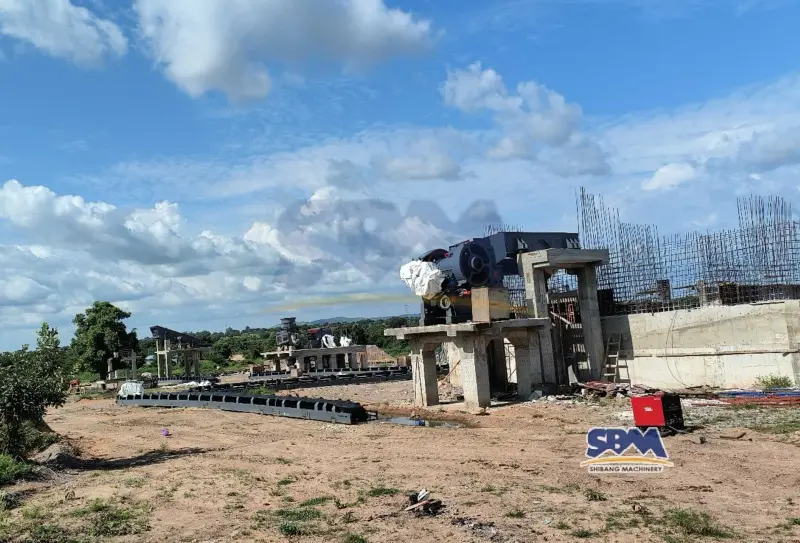
A 200 TPH granite crushing plant is a sweet spot for many global quarries and contractors, offering enough capacity for commercial concrete and asphalt markets without extreme CAPEX. At this scale, granite’s high hardness demands a robust primary crusher (typically a PE series jaw), backed by a cone crusher for secondary reduction and shaping.
Granite Characteristics and Design Implications
Granite typically has high compressive strength and abrasiveness, which makes it more demanding than softer rocks like limestone. These properties drive three design decisions at 200 TPH:
- Primary must be compression‑type: PE jaw is preferred to handle large, hard feed and reduce wear costs.
- Secondary should be cone‑based: for laminated crushing, stable gradation, and long liner life.
- Screening must be efficient: to separate 0–5, 5–10, 10–20, and 20–40 mm fractions for high‑spec concrete and road aggregates.
If you have not yet chosen your jaw model, revisiting the “Best Jaw Crusher for Granite” article first will help lock in the correct PE primary before finishing this 200 TPH design.
Typical 200 TPH Granite Flowchart
A classic 200 TPH granite plant uses a three‑stage process with one main crushing line.
Basic process:
- Feeding & pre‑screening
- Dump truck → hopper → vibrating grizzly feeder to remove fines and small soil before the jaw.
- Primary crushing (PE jaw crusher)
- PE series jaw crusher takes 500–700 mm granite and reduces it to about 0–150 mm for secondary.
- Secondary crushing (cone crusher)
- Single‑ or multi‑cylinder cone crusher further reduces material to 0–40 mm.
- Screening and recirculation
- Vibrating screen classifies into desired sizes (e.g., 0–5, 5–10, 10–20, 20–40 mm); oversize returns to cone.
- Optional shaping (impact/VSI)
- For high‑value concrete/asphalt, a small impact or VSI unit can improve particle shape on selected fractions.
This flow directly extends the machine roles explained in your “Granite Crusher Machine” article, but anchored around a 200 TPH capacity target.
Example Equipment List for a 200 TPH Granite Plant
Below is a typical fixed‑plant configuration for about 200 TPH granite, illustrating how each machine contributes to the total capacity.
| Stage | Equipment type | Key role at 200 TPH |
|---|---|---|
| Feeding | Hopper + vibrating grizzly feeder | Smooth feeding, soil/fines removal before jaw. |
| Primary | PE series jaw crusher (e.g., ~750×1060 class) | Takes large granite blocks and crushes to ≤150 mm. |
| Secondary | Cone crusher | Further reduces to 0–40 mm, handles hard, abrasive granite. |
| Tertiary (optional) | VSI or impact crusher | Shapes 0–20 mm aggregates for premium concrete/asphalt. |
| Screening | 3‑deck vibrating screen | Separates 0–5, 5–10, 10–20, 20–40 mm fractions. |
| Conveying | Belt conveyors | Transfers material between all stages and to stockpiles. |
| Control | Central electrical system | Coordinates motors, interlocks, and safety systems. |
Specific model numbers and power ratings can then be chosen using the jaw and machine selection logic already discussed in your earlier two cluster articles.
Layout and Space Planning Considerations
Plant layout has a huge impact on uptime, maintenance safety, and energy consumption.
Key layout principles at 200 TPH include:
- Short, straight material paths: reduce conveyor length and power consumption.
- Elevation design: placing the primary and secondary higher allows gravity‑assisted flow to screens and stockpiles.
- Maintenance access: platforms, stairs, and clear crane paths around jaw and cone crushers to change jaw plates and liners safely.
- Separate dirty and clean zones: positioning primary crushing and dustier areas away from control rooms and offices.
Many reference 200 TPH layouts from suppliers show the jaw and cone in a linear arrangement with the screen offset, forming a compact “L” shape that minimizes footprint while still allowing truck access to stockpiles.
CAPEX and OPEX: Where Costs Go
For a 200 TPH granite plant, major costs break down into equipment, civil works, power, wear parts, and labor.
- Equipment & civil CAPEX: primary and secondary crushers, screens, feeders, conveyors, and foundations typically dominate initial investment.
- Operating cost drivers: power consumption, jaw and cone wear parts, and downtime for liner changes.
Using a PE jaw as primary reduces wear cost per ton versus putting an impact crusher in that position, especially with hard and abrasive granite. Cone crushers then balance durability with shape, while optional impact or VSI units are used only where the price premium for cubical aggregates justifies the extra wear.
FAQs About 200 TPH Granite Crushing Plant Design
1. Why is a PE jaw crusher usually chosen as the primary for a 200 TPH granite plant?
PE series jaw crushers are designed for high compressive strength materials and can handle large granite feed sizes while keeping wear costs under control. At 200 TPH, they provide a stable, efficient primary stage that prepares ideal feed for cone crushers downstream.
2. Can a 200 TPH granite plant use an impact crusher instead of a cone crusher?
It is possible to use an impact crusher as secondary, but in hard, abrasive granite this normally increases blow‑bar and liner consumption significantly. Most producers prefer cone crushers for the main secondary role and reserve impact or VSI units for selective shaping only.
3. What final sizes can a typical 200 TPH granite plant produce?
Common output sizes are 0–5 mm, 5–10 mm, 10–20 mm, and 20–40 mm aggregates, which cover most concrete and road base specifications. A well‑designed 3‑deck screen and proper crusher settings can adjust the proportion of each size to match local market demand.