Email: [email protected]

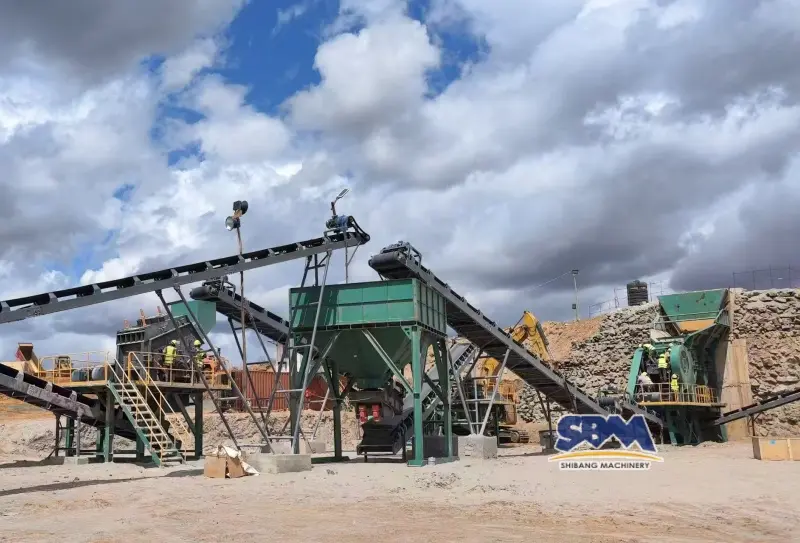
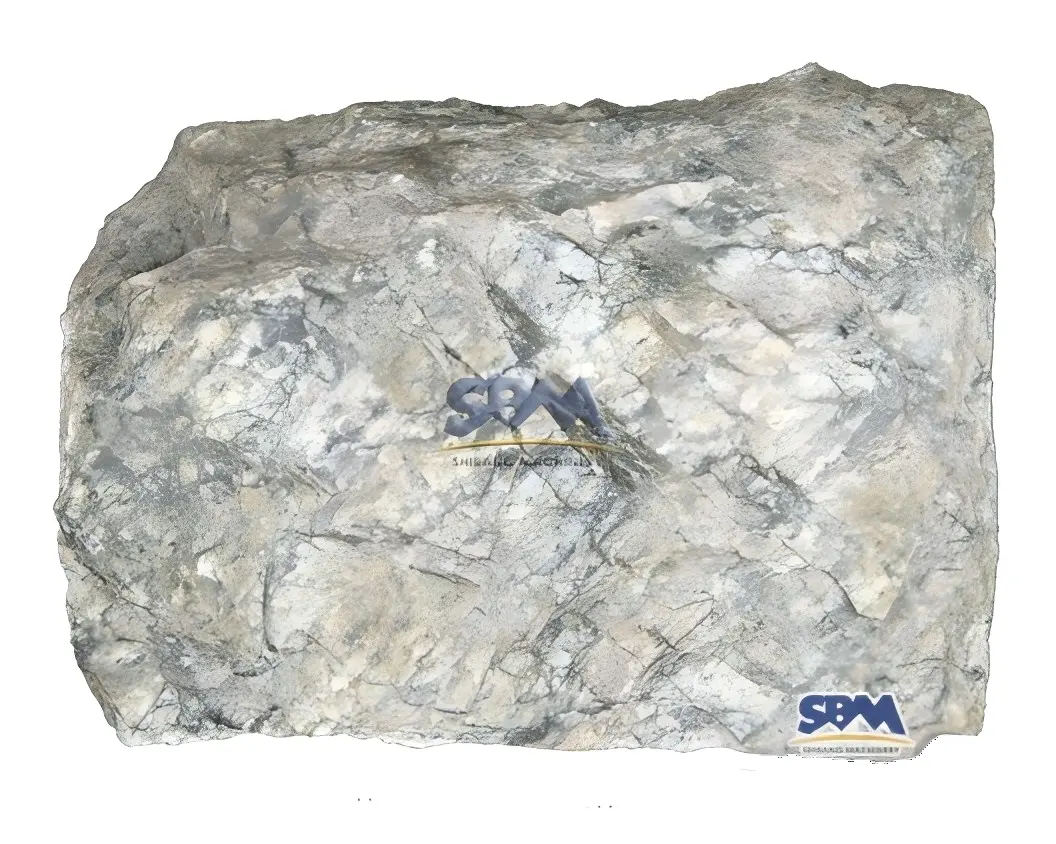
Granite is one of the world’s most durable, high‑strength stones. Crushing it efficiently requires the right combination of machines — not just power, but design built for abrasion resistance and long life. A granite crusher machine is any crushing equipment engineered to process this tough material into aggregates for construction, concrete, and road base applications .
If you’ve already read our guide on the Best Jaw Crusher for Granite, you know why a strong primary unit like the PE series jaw crusher is essential. In this article, we’ll go deeper — exploring every crusher type used in granite crushing plants and how to configure them for 100–500 TPH operations globally.
Why Granite Requires Specialized Crushing Equipment
Granite’s high compressive strength (120–200 MPa) and silica content make it extremely abrasive. That means only certain types of crushers — those designed with compression or laminated crushing principles — can deliver long wear life and consistent product quality .
Granite crushing lines face two main challenges:
- Hardness and wear: causes high stress and fast liner erosion on impact crushers.
- Shape and gradation demands: concrete producers prefer cubical aggregates, requiring secondary shaping.
So, a well‑balanced granite crusher machine setup typically combines multiple stages: jaw + cone (+ impact/VSI for shaping).
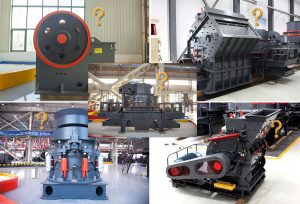
Common Granite Crusher Machine Types
| Crusher type | Working principle | Typical role in granite line | Key advantage | Limitation |
|---|---|---|---|---|
| Jaw crusher (e.g., PE series) | Compression between fixed & moving jaws | Primary | Handles very hard granite, large feed sizes | Flaky product shape |
| Cone crusher | Laminated compression between cone and mantle | Secondary | High reduction ratio, durable in hard rock | Higher capital cost |
| Impact crusher (HSI) | High‑speed impact and shearing | Secondary / shaping | Excellent particle shape | High wear in abrasive granite |
| VSI (sand maker) | Rock‑on‑rock impact | Final shaping / sand making | Cubical aggregates | Limited feed size |
| Mobile crusher combination | Portable jaw/impact/cone on tracks | On-site flexibility | Fast setup, relocation | Lower capacity per unit |
If you’re currently researching granite crushers, start by reading the earlier article “Best Jaw Crusher for Granite” for understanding the crucial primary stage, then continue here for complete plant configuration details.
Recommended Granite Crusher Configurations
1. 100–150 TPH Compact Granite Plant
- Primary: PE600×900 jaw crusher
- Secondary: Single-cylinder cone (e.g., HST or equivalent)
- Final Shaping (optional): VSI sand maker
- Use Case: Small quarries, contractors, or regional aggregate suppliers
2. 200 TPH Standard Granite Crushing Line
- Primary: PE750×1060 jaw crusher
- Secondary: Multi-cylinder cone crusher
- Screening: 3‑deck vibrating screen for 0–5 mm, 5–10 mm, 10–20 mm fractions
- Note: Detailed layout and CAPEX analysis available in our related article “200 TPH Granite Crushing Plant Design.”
3. 300–500 TPH High‑Capacity Granite Plant
- Primary: PE900×1200 or PE1200×1500 jaw crusher
- Secondary: Two-stage cone system (coarse + fine)
- Tertiary: VSI for premium shape aggregates
- For: Highway, railway, and large construction aggregate production
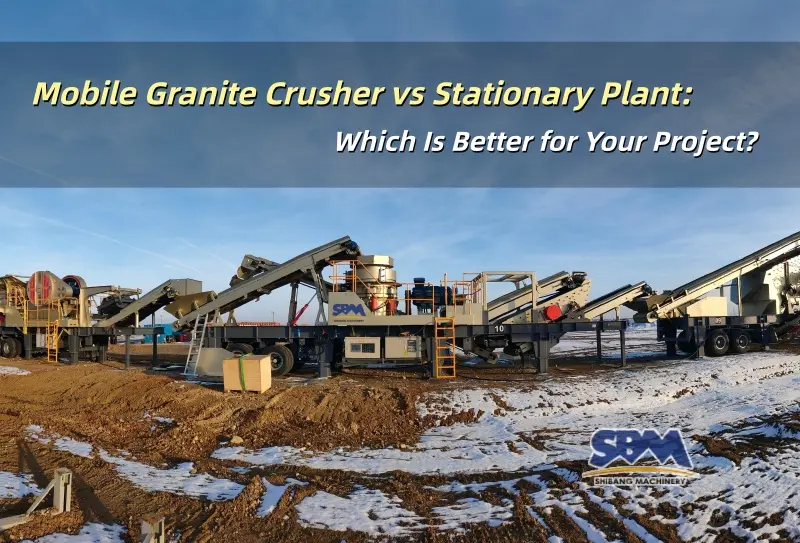
Stationary vs. Mobile Granite Crusher Machines
| Aspect | Stationary plant | Mobile / portable plant |
|---|---|---|
| Capacity | 100–1000 TPH | 50–300 TPH typical |
| Investment | Higher initial CAPEX | Lower initial, higher OPEX |
| Maintenance | Easier for large-scale, centralized teams | Quick service but frequent part changes |
| Ideal use | Big quarries, long‑term operations | Short projects, multi‑site contractors |
Global projects often use hybrid setups — for example, a stationary PE jaw + cone plant combined with a mobile impact or VSI unit for secondary shaping.
How to Choose the Right Granite Crusher Machine
When evaluating crusher options, focus on these key questions:
- Feed size: What’s the maximum block size from the quarry?
- Required capacity: How many tons per hour must be achieved constantly?
- Final product: What end sizes and shapes are required?
- Budget: Are you optimizing for lowest cost per ton or maximum product shape value?
A qualified supplier can calculate the best combination once these are defined. For example, a 200 TPH plant with 800 mm feed granite might pair PE750×1060 jaw as primary and HPT300 cone as secondary for balanced performance.
Cost and Maintenance in Granite Crushing
Granite crushing is not just about throughput — wear and downtime define profitability.
- Jaw crushers: lowest wear cost for primary stage.
- Cone crushers: moderate wear but high durability.
- Impact/VSI crushers: good shape, higher wear per ton.
For long‑term reliability, most global operators prefer compression crushers for granite. Regular jaw plate and mantle liner rotation can extend life 20–30 %.
FAQs About Granite Crusher Machines
1. Which type of crusher is most suitable for granite?
Jaw crushers, especially the PE series, are ideal for the primary stage due to their strength and wear resistance. Cone crushers follow for secondary reduction, and impact/VSI units can refine shape or make manufactured sand.
2. Can a single machine crush granite effectively?
While a single jaw crusher can handle coarse granite crushing, most high‑quality aggregate producers use at least two stages (jaw + cone/impact) to ensure good particle shape and consistent sizing.
3. How do I maintain a granite crusher machine to reduce wear?
Keep feed uniform, ensure even liner contact, and replace jaw plates or mantles before deep wear grooves form. Good lubrication, dust sealing, and timely inspections can reduce spare part costs by up to 25 % in granite applications.