Email: [email protected]

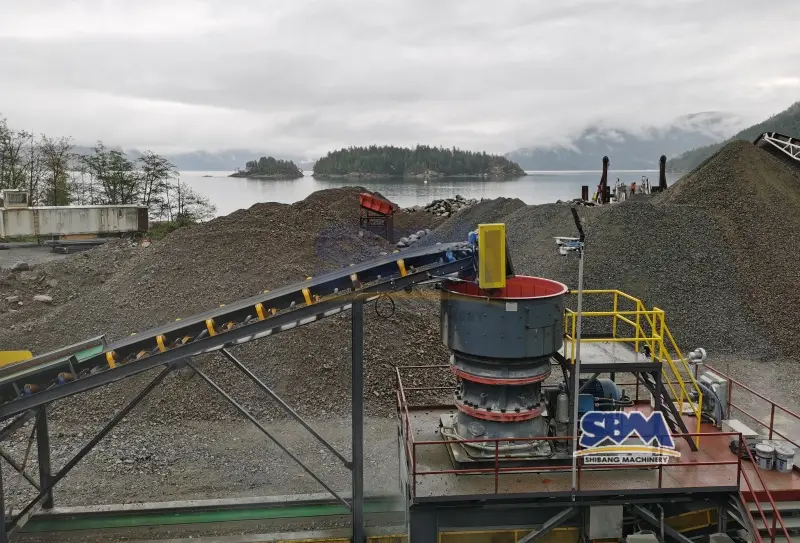
Many quarry owners accept high granite crushing costs as “normal” just because the rock is hard. In reality, cost per ton can be reduced significantly with better equipment selection, plant design and daily operation. A granite crushing line that uses the right jaw, cone and optional impact/VSI configuration can deliver the same output with less wear, fewer shutdowns and lower energy use.
What Drives Granite Crushing Cost per Ton?
For granite, cost per ton is typically made up of four main components:
- Wear parts cost: jaw plates, cone liners, blow bars, rotor tips, belts, screen media.
- Energy consumption: kWh per ton for all crushers, screens and conveyors.
- Labor and maintenance: planned service plus unplanned downtime and emergency repairs.
- Capital recovery: depreciation and interest on your jaw, cone, impact/VSI, feeder, screen and civil works.
Because granite is highly abrasive, wear and downtime usually dominate. We should reach a consensus:
- PE series jaw crusher for primary crushing
- Medium crushing cone
- Use impact crusher/VSI crusher shaping equipment with caution
How to Estimate Your Granite Crushing Cost per Ton?
This is a simple framework. Taking a typical 200TPH granite production line as an example. You can settle directly using:
- Calculate total monthly production (tons).
- Example: 200 TPH × 10 h/day × 26 days ≈ 52 000 tons/month.
- Track monthly direct costs:
- Wear parts (jaw plates, liners, blow bars, screens).
- Power bill for the crushing plant.
- Overtime and maintenance labor related to the plant.
- Add a portion of fixed costs:
- Depreciation of major equipment.
- Interest or leasing costs, if any.
- Divide total monthly cost by tons produced.
- Cost per ton = (Wear + Power + Maintenance + Depreciation share) / Total tons.
We recommend that you first work out the “cost of status quo”. Then use the suggestions in this article to optimize and calculate again to form a comparison.
How Equipment Choice Affects Granite Cost
Jaw Crusher Choice: The Cost of the First Break
Using a PE series jaw crusher as the primary for granite brings down cost per ton because:
- Compression crushing spreads the load over a large area, reducing abrasive wear.
- Large feed opening avoids secondary blasting or extra breaking of big boulders.
- Simple structure and robust design keep unplanned downtime low.
If you are using a main crusher that is “unsuitable for granite”, such as an ordinary counterattack breaker that eats aniseed, we think the disadvantages of this are:
- Higher blow bar consumption
- More frequent downtime
- Higher unit cost
So how to solve it? You can check out the article “Best Jaw Crusher for Granite” for a solution.
Cone vs Impact: The Price of Shape
At the secondary/tertiary stage:
- Cone crushers
- Better for long‑term cost per ton in hard granite.
- Lower wear per ton, more stable over time.
- Impact / VSI crushers
- Higher wear but better shape and sand production.
- Should be used strategically for high‑value fractions only.
Tips: Do not let the impact crusher or VSI crusher “handle all materials”. Instead, only process the particle sizes that require high particle size premiums, and bypass the rest. Sell the basic aggregate directly. This will reduce the overall wear cost.
Operational Levers to Lower Granite Crushing Cost
- Stable, continuous feed
- Smooth feed reduces power peaks and mechanical shocks, extending the life of bearings and motors.
- Correct CSS and chamber settings
- If CSS is too tight, you get more fines and higher recirculation, burning extra kWh and liners.
- A slightly larger CSS often yields similar sellable tonnage with lower cost per ton.
- Planned liner changes
- Changing jaw plates and cone liners on schedule prevents catastrophic failures and production interruptions of 2–3 days.
- Recording “how many tons are produced per set of lining plates” is key data for long-term optimization.
- Effective pre‑screening and scalping
- Removing soil and unnecessary fines upfront reduces unnecessary grinding inside crushers.
- Less useless crushing = less wear and less power.
Example: Cost Impact of a Better Granite Setup
- Scenario A:
- Old plant uses under‑sized jaw and impact as secondary for all material.
- Frequent blow bar changes, unplanned stops, high power peaks.
- Result: high wear cost and unstable production, cost per ton stays high.
- Scenario B:
- Upgraded plant uses correctly sized PE jaw + cone, impact/VSI only on selected fractions.
- Longer wear life, fewer breakdowns, smoother energy curve.
- Result: lower cost per ton, higher effective output, easier to win bids with better prices.
FAQs About Granite Crushing Cost and Price
1. Why is my granite crushing cost per ton higher than expected?
Common reasons include using an unsuitable primary crusher, relying too much on impact crushing for very hard stone, running with the wrong CSS or chamber profile, and lacking proper pre‑screening. All of these increase wear, power consumption, and downtime, which push up your cost per ton.
2. Is it better to buy a cheaper granite crusher to save money?
A low‑priced crusher that wears out quickly or stops frequently often costs more in the long run. For hard, abrasive granite, it is usually smarter to invest in robust PE jaw and cone machines with good wear parts support, so your cost per ton stays low over many years.
3. How can I know if a new plant design will really reduce my cost per ton?
Ask your supplier to estimate wear part life, kWh per ton and expected uptime for your specific granite and capacity. Then compare those numbers with your current plant by calculating cost per ton before and after. If the new line reduces wear and energy enough, the savings will normally pay back the upgrade within a reasonable period.