Surel: [email protected]

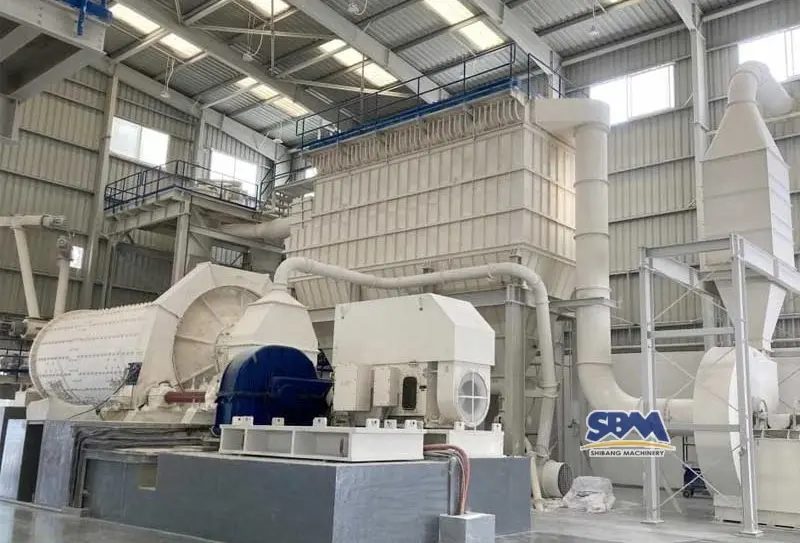
A metal ore grinding circuit plays a central role in mineral processing because it determines how effectively the plant can liberate valuable minerals and prepare them for recovery. In many operations, grinding also accounts for a large share of total energy consumption, which means even small improvements in circuit performance can have a meaningful impact on both recovery and operating cost. Optimizing a metal ore grinding circuit is not the same as simply making the mill run harder or faster. The real goal is to balance liberation, keluaran, classification efficiency, and energy use so the plant can achieve stable recovery at the lowest practical cost per ton. Dalam pengolahan bijih logam, improving recovery usually starts with the full flowsheet, dari metal ore crushing process to grinding and final separation.
Di MBS, we treat grinding circuit optimization as a full process task. That means we look at ore characteristics, feed stability, mill performance, classification efficiency, and downstream recovery together rather than focusing on one machine in isolation.
Grinding circuit optimization
The grinding circuit controls the final size reduction before separation. If the ore remains too coarse, valuable minerals may stay locked inside gangue and reduce recovery. If the ore becomes too fine, the plant may waste energy and create excessive slimes, which can also reduce separation efficiency. Di banyak tanaman, grinding circuit optimization is the key to reducing energy waste and improving throughput at the same time.
A well-optimized circuit gives the plant the right balance between liberation and efficiency. It helps stabilize the process, reduce unnecessary recirculation, and improve the consistency of the product that reaches flotation, pemisahan magnetik, gravity concentration, atau pencucian.
Start with feed stability
The first step in optimizing a grinding circuit is to make sure the feed stays as stable as possible. A mill performs best when the feed size, flow rate, and moisture level remain relatively consistent.
If the feed changes too often, the circuit may become harder to control. The mill load may fluctuate, the classification stage may lose efficiency, and the product size distribution may shift away from the target. Dalam praktiknya, this often means the plant needs better blending, better feeder control, or improved pre-screening before the mill.
Feed stability is one of the simplest things to overlook and one of the most important things to fix. Dalam banyak kasus, improving the feed can deliver better results than replacing the mill itself.
Check the classification stage
Classification is a critical part of grinding circuit performance because it determines which particles return for further grinding and which particles move forward to recovery. If the classification stage performs poorly, the circuit may build up excessive circulating load or send too much coarse material downstream.
A high circulating load can reduce throughput and increase power consumption. Di samping itu, weak classification can allow oversized particles to escape the circuit, which lowers liberation and reduces recovery.
To improve classification, the plant should review screen condition, cyclone operation, cut size, and overall circuit balance. Dalam banyak kasus, a small adjustment in classification efficiency can produce a noticeable improvement in the whole grinding circuit.
Review mill operating parameters
Once feed and classification are under control, the next step is to review mill operating parameters. These include mill speed, grinding media charge, slurry density, draw power, and feed rate.
Each of these variables affects how the mill transfers energy to the ore. If the mill runs outside its best operating window, it may consume more energy without producing the right particle size. If the media charge or slurry density is not suitable, the mill may also lose grinding efficiency and create a less useful product distribution.
The best operating point depends on the ore and the process target. That is why a grinding circuit should never rely only on a fixed setting copied from another project. The circuit must match the actual ore body and plant conditions.
Balance energy use and liberation
One of the biggest challenges in grinding circuit optimization is finding the right balance between energy use and mineral liberation. Dalam banyak proyek, operators assume that finer grinding always improves recovery. Pada kenyataannya, that is not always true. A suitable metal ore grinding mill can help achieve the target particle size more efficiently while supporting stable downstream recovery.
If the ore becomes too fine, the plant may use too much energy and create too many slimes. Those slimes can hurt downstream separation and reduce the value of the recovered product. If the grind stays too coarse, recovery may also suffer because the minerals remain locked in gangue.
The best circuit is the one that delivers enough liberation for the downstream process without unnecessary overgrinding. That balance usually requires testing, sampling, and process monitoring rather than guesswork.
Use process data and control systems
Modern grinding circuit optimization depends heavily on data. Online power readings, density measurements, pressure signals, flow rates, and particle size information all help operators understand what the circuit is doing in real time.
When plant teams use this data well, they can identify bottlenecks earlier and respond more quickly to changes in ore hardness or feed conditions. Automation and control systems can also help maintain a more stable load, improve recovery consistency, and reduce operator dependence.
For many plants, the biggest gains come not from one major change, but from many small control improvements that keep the circuit closer to its target operating range.
Look at the whole circuit, not one machine
A grinding circuit does not work as a set of independent units. The mill, pump, penggolong, layar, and downstream recovery section all influence each other. If one part of the circuit becomes unbalanced, the entire system may lose performance.
That is why the optimization process should always look at the full flow. A problem that appears to belong to the mill may actually start in the feeder or classifier. A recovery issue that appears to come from flotation may actually begin with poor grinding size control.
Di MBS, we focus on circuit-wide performance because that approach produces better long-term results than trying to fix one symptom at a time.
How SBM approaches grinding circuit optimization?
Our optimization process starts with ore characteristics and plant data. We review feed size, kekerasan, keluaran, beban sirkulasi, ukuran produk, and recovery performance to understand where the circuit gains or losses occur.
Dari sana, we identify the most practical improvement path. Dalam beberapa kasus, the solution involves adjusting operating parameters. In other cases, it requires better classification, a revised circuit layout, or upgraded grinding equipment.
The goal is always the same: improve recovery, reduce wasted energy, and make the plant more stable and predictable over time.
Optimizing a metal ore grinding circuit requires more than increasing power or running the mill harder. The best results come from stable feed, efficient classification, suitable mill settings, and a strong balance between liberation and energy use.
A good grinding circuit supports recovery, reduces unnecessary wear, and lowers operating cost. When the circuit works as a system, the plant can achieve better performance with less risk and more consistency.
For a more complete view of the process, you can also review the metal ore processing solution to see how the whole system works together.
If your project needs a more efficient grinding solution, the best starting point is to evaluate the current circuit data and identify where the largest performance gains can be made.
FAQ
What is a grinding circuit in metal ore processing?
A grinding circuit is the section of the plant that reduces crushed ore to a finer size so valuable minerals can liberate for downstream recovery.
Why does grinding circuit efficiency affect recovery?
Grinding circuit efficiency affects recovery because particle size controls how well valuable minerals separate from gangue. If the size is too coarse or too fine, recovery can drop.
What causes high circulating load in a grinding circuit?
High circulating load often comes from poor classification, incorrect cut size, unstable feed, or inefficient mill operation.
How can I reduce energy consumption in grinding?
You can reduce energy consumption by stabilizing feed, improving classification, optimizing mill settings, and avoiding unnecessary overgrinding.
Should I improve classification or mill settings first?
Dalam banyak kasus, classification deserves first attention because poor classification can make the mill appear inefficient even when the mill itself runs properly.
What data do I need to optimize a grinding circuit?
You should collect feed size, kekerasan bijih, keluaran, mill power, beban sirkulasi, ukuran produk, and recovery data before making major changes.
Can automation improve grinding circuit performance?
Ya. Automation can help stabilize load, improve control response, reduce manual variation, and keep the circuit closer to its optimal operating range.