Email: [email protected]

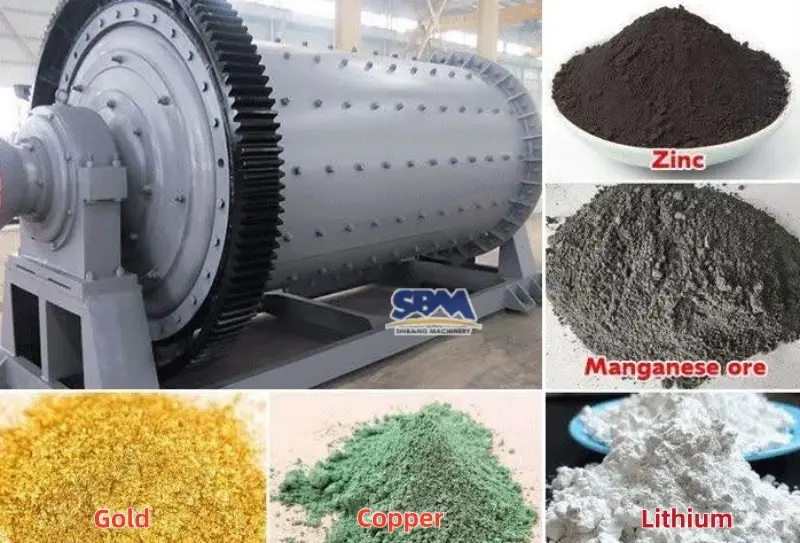
Choosing the right metal ore grinding mill is a critical decision in any mineral processing project. The grinding stage determines the degree of mineral liberation, the plant’s energy consumption, and the stability of downstream recovery performance.
Unlike general-purpose industrial grinding equipment, operators must select a metal ore grinding mill according to ore characteristics, target fineness, plant capacity, and the requirements of the beneficiation circuit. A mill that works well for one ore may perform poorly for another, even if the two projects look similar on paper.
At SBM, we treat grinding as a process decision, not just an equipment purchase. The right solution starts with the ore itself, then moves to the required product size, and finally to the mill type and circuit configuration that can deliver consistent performance in real production.
The grinding stage
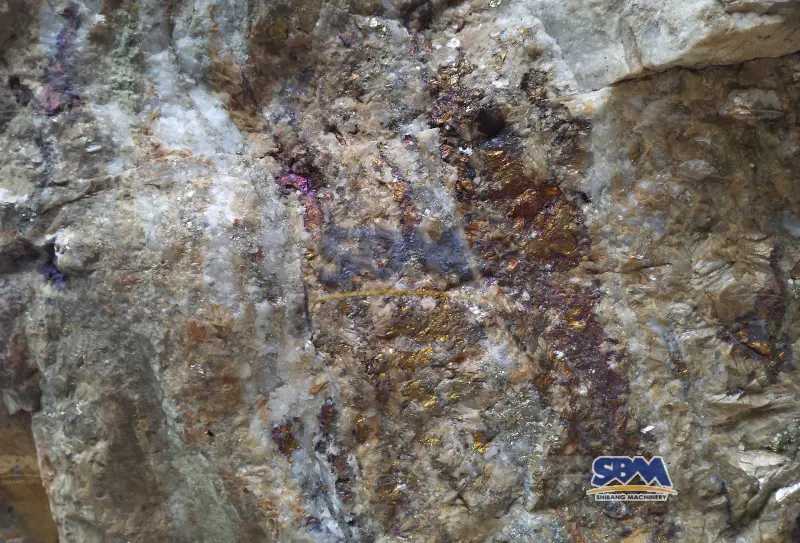
Grinding further reduces crushed ore so valuable minerals can liberate for recovery. In many metal ore projects, this step has a direct impact on overall plant efficiency because it affects not only particle size, but also downstream separation performance.
If the ore remains underground, valuable minerals may stay locked in larger particles and become harder to recover. If the ore becomes too fine, the plant may consume excess energy and produce excessive slimes, which can also reduce separation efficiency. The goal is to find the right balance between liberation and energy use.
This balance is one of the main reasons why metal ore grinding mill selection must be based on process data, not assumptions. The mill should match the ore, the feed size, and the target product size required by the rest of the circuit.
Common metal ore grinding mill types
There is no single grinding mill that suits every metal ore project. The most common options include ball mills, rod mills, SAG mills, and stirred mills, each with different strengths depending on the application.
Ball mills play a wide role in fine grinding and closed-circuit operation. They are a common choice when the plant needs a stable and controllable final product size.
Rod mills often suit applications that require a coarser and more uniform product. They also work well in circuits that need to limit excessive fines.
SAG mills typically serve large-tonnage operations that require primary grinding. They can handle high throughput and are often part of a larger comminution circuit.
Stirred mills usually suit applications that require very fine or ultra-fine grinding. They are especially relevant when the downstream process requires finer liberation than a conventional mill can provide efficiently.
How to choose the right grinding mill?
The first factor to consider is ore characteristics. Hard, abrasive ores require a more robust circuit and stronger wear protection. Softer ores may allow a simpler configuration, but operators still need to evaluate them carefully before making the final selection.
The second factor is target fineness. The mill must be able to produce the particle size required by the next stage of processing. If the downstream process requires fine liberation, the grinding circuit must achieve that size consistently.
The third factor is capacity. A small operation and a large mine do not need the same type of grinding solution, even if they process the same mineral. Throughput target, operating hours, and expansion plans all influence the final choice.
The fourth factor is the beneficiation route. Flotation, magnetic separation, gravity separation, and leaching all have different expectations for grind size and particle distribution. The grinding circuit should be designed to support the recovery method, not work against it.
Ball mills in metal ore grinding
Ball mills remain one of the most common grinding solutions in mineral processing. They are widely used because they are versatile, proven, and effective for producing fine material in closed-circuit systems.
In a metal ore plant, a ball mill is often selected when the goal is to achieve controlled fine grinding after primary or secondary crushing. When paired with proper classification equipment, it can deliver a stable product size that supports downstream recovery.
However, ball mill performance depends heavily on feed stability, circuit design, and media management. If the feed is too coarse, too variable, or too wet, the mill may lose efficiency and consume more energy than necessary. That is why the ball mill should always be evaluated within the full grinding circuit.
Rod mills and when they make sense
Rod mills are less common than ball mills in some modern circuits, but they still play an important role in specific metal ore applications. They are useful when the process calls for a coarser grind and a narrower size distribution.
Because rod mills tend to produce fewer ultra-fines than ball mills, they may be preferred in cases where the downstream process is sensitive to excessive slimes. This can be valuable in certain beneficiation flowsheets where a more uniform intermediate product is needed.
The choice between rod milling and ball milling should be based on ore behavior and process goals. In some cases, the best design uses rod milling as a first grinding step and ball milling as a later stage.
SAG mills for large-tonnage projects
SAG mills are a strong option for large-scale metal ore projects where high throughput is a priority. They are designed to handle a mix of ore and grinding media and can be an efficient solution when the circuit must process large volumes of material.
A SAG mill is often used when the plant wants to reduce the number of separate crushing and grinding steps, or when the ore characteristics make primary grinding more practical in a larger mill. The final decision depends on ore competency, target size, and total circuit economics.
For large mining operations, SAG-based circuits may deliver flexibility and throughput advantages. At the same time, they require careful design and process control to maintain stable performance.
Stirred mills and fine grinding
Stirred mills are often used when the project requires fine or ultra-fine grinding. They are especially useful when mineral liberation occurs at a very small particle size and conventional grinding becomes less efficient.
These mills can be valuable in regrinding applications or in circuits where the ore contains fine disseminated valuable minerals. In those cases, fine grinding can improve liberation and support better recovery in downstream separation.
Although stirred mills are not the first choice for every project, they are an important part of the modern metal ore grinding mill landscape. Their role becomes more significant as ore bodies become more complex and finer liberation is required.
What data you should prepare before selection?
Before choosing a metal ore grinding mill, it is important to prepare the right technical data. The more complete the input information, the more accurate the mill recommendation will be.
You should ideally prepare:
- Ore type and mineralogy.
- Ore hardness and abrasiveness.
- Feed size from the crushing stage.
- Target throughput.
- Required product fineness.
- Downstream process type.
- Water availability and site conditions.
With these details, it becomes much easier to determine whether the project needs ball milling, rod milling, SAG milling, stirred milling, or a combination of grinding stages.
How SBM approaches grinding mill selection?
At SBM, we look at metal ore grinding mill selection as part of a complete process solution. We do not start with the machine alone. We start with the ore, the process target, and the real operating environment.
This process-first approach helps us recommend a solution that is technically sound and practical for long-term operation. It also helps customers avoid common problems such as under-sizing, over-sizing, unstable product size, or excessive energy use.
In practice, the best grinding mill is not always the one with the highest installed power. It is the one that best balances liberation, energy efficiency, wear life, and downstream recovery.
Selecting the right metal ore grinding mill is a decision that affects the full performance of the plant. The best choice depends on ore properties, target fineness, capacity, and the beneficiation method used downstream.
Ball mills, rod mills, SAG mills, and stirred mills each serve different roles in metal ore processing. A good solution matches the mill type to the ore and the process, rather than forcing one machine to do everything.
If your project data is ready, the next step is to evaluate the grinding circuit that can deliver the right fineness with stable performance and manageable operating cost.
FAQs About Metal Ore Grinding Mill
What is the main purpose of a metal ore grinding mill?
The main purpose of a metal ore grinding mill is to reduce crushed ore to a finer size so that valuable minerals can be liberated for downstream recovery.
Which grinding mill is best for metal ore?
There is no single best grinding mill for all metal ore projects. Ball mills, rod mills, SAG mills, and stirred mills are used for different ore types, capacities, and fineness targets.
Why is ore hardness important in mill selection?
Ore hardness is important because it affects power demand, wear life, grinding efficiency, and circuit stability. It is one of the first factors to evaluate before choosing a grinding mill.
What is P80 in grinding?
P80 is the particle size at which 80 percent of the grinding product passes. It is commonly used in mineral processing to define the target grind fineness.
Can one grinding mill handle all metal ores?
No single grinding mill can efficiently handle all metal ores. Different ores respond differently to grinding, so mill selection should be based on ore characteristics, testing, and process requirements.
Why should grinding mill selection consider downstream recovery?
Because the grind size directly affects liberation. If particles are too coarse or too fine, recovery in flotation, magnetic separation, or leaching can suffer.