Email: [email protected]

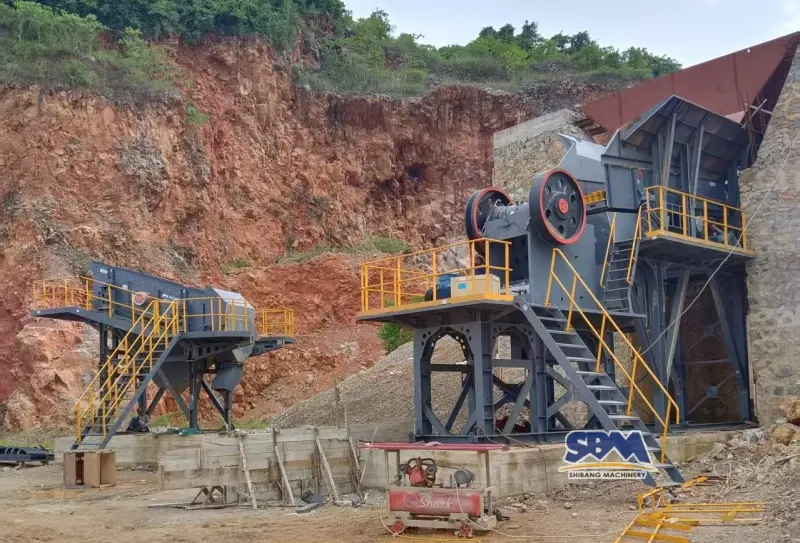
A sand and stone quarry is more than a place where rock is broken into smaller pieces. It is a complete production system that turns raw stone into saleable aggregate, sand, and other construction materials for roads, concrete, asphalt, drainage, and general building use. If you are planning a quarry project, the biggest challenge is not only choosing machines. It is designing a process that can handle your raw material, produce the right product mix, and keep operating costs under control. A good quarry plan should balance capacity, quality, wear life, and market demand.
What a Sand and Stone Quarry Produces?
A quarry can supply several types of products, depending on the local market and plant design:
- Coarse aggregates for concrete and asphalt.
- Road base and sub-base stone.
- Railway ballast.
- Manufactured sand.
- Screened stone for drainage or backfill.
- Special size fractions for local construction use.
This flexibility is one reason many investors choose quarry businesses. The same site can serve multiple markets if the crushing and screening line is designed correctly.
What Makes a Quarry Successful?
A profitable sand and stone quarry usually depends on four things:
1. Stable raw material supply
The quarry must have enough reserves and a consistent rock type or material mix. If the feed changes too much, product quality and wear cost can become unpredictable.
2. Proper crushing and screening layout
A quarry should not rely on one machine alone. Most successful plants use a system such as:
- Feeder.
- Primary crusher.
- Secondary crusher.
- Screening system.
- Optional shaping or sand-making stage.
3. Strong product planning
The quarry should know exactly what it wants to sell. Different customers may need different sizes and quality levels. A plant that only thinks about tons per hour may miss the more profitable product mix.
4. Good operating control
Even a well-designed quarry can lose money if feed is uneven, screens are poorly maintained, or the wrong crusher settings are used.
Typical Sand and Stone Quarry Layout
A typical quarry crushing and screening line may include:
- Vibrating feeder.
- Primary jaw crusher or gyratory crusher.
- Secondary cone crusher or impact crusher.
- Vibrating screens.
- Recirculation conveyors.
- Optional sand-making unit.
- Stockpile conveyors and finished product yards.
This kind of layout allows the quarry to produce both stone and sand in different fractions. It also gives the operator flexibility to adjust output based on market demand.
Choosing the Right Crusher for a Quarry
The best crusher setup depends on the raw material and the final products.
For hard rock quarries
If the quarry processes hard rock such as granite, basalt, or similar stone, the usual logic is:
- Jaw crusher for primary reduction.
- Cone crusher for secondary reduction.
- Optional VSI or impact crusher for shaping or sand production.
For medium-hard or softer stone
If the quarry processes softer material, impact crushers may play a larger role, especially when good particle shape is needed.
For mixed sand and stone production
A quarry that wants both coarse aggregate and manufactured sand should include:
- Screening control.
- A shaping or sand-making stage.
- Fine product handling and washing if needed.
How to Make a Quarry More Profitable?
A sand and stone quarry becomes more profitable when it can produce the right products at the lowest practical cost per ton.
Here are some ways to improve profitability:
- Reduce waste by turning fines into saleable sand.
- Improve screening efficiency to protect product quality.
- Control wear parts and maintenance schedules.
- Match crusher settings to actual market demand.
- Keep stockpiles organized so different grades do not mix.
- Reduce truck haul distances inside the quarry site.
The best quarry operators think like product managers, not just machine operators.
Common Problems in Sand and Stone Quarries
Many quarry projects face similar issues:
- Too much fine material in the final product.
- Poor particle shape.
- Excessive wear on crusher parts.
- Low screening efficiency.
- Unstable production due to uneven feeding.
- Limited flexibility when market demand changes.
These problems are often caused by poor plant design, weak maintenance, or choosing the wrong type of crusher for the material.
FAQs About Sand and Stone Quarries
1. What is a sand and stone quarry?
A sand and stone quarry is a site where raw rock or stone is extracted, crushed, screened and processed into construction materials such as aggregates, road base, and manufactured sand.
2. What equipment is usually needed in a quarry?
Most quarries need a feeder, primary crusher, secondary crusher, vibrating screens, conveyors, and sometimes a sand-making or washing system depending on the final products.
3. Can one quarry produce both sand and stone?
Yes. Many quarries are designed to produce both coarse aggregates and manufactured sand by combining crushing, screening and sand-making equipment in one production line.