Email: [email protected]

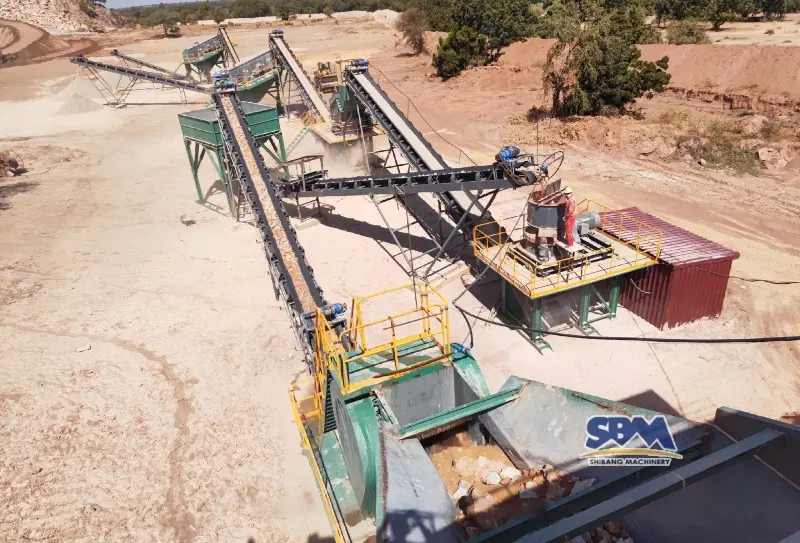
If you are searching for a granite crusher plant for sale, you are probably past the early research stage and now need a practical solution you can actually buy and run profitably. The challenge is that granite is hard, abrasive, and demanding, so not every plant that looks good on paper will perform well in real quarry conditions. This guide helps you compare different granite crusher plant options, understand which configuration suits your project best, and avoid the common buying mistakes that lead to high wear, poor product quality, or unnecessary cost.
Why Granite Crusher Plant Buyers Need a Different Approach?
A granite crushing plant is not the same as a plant for limestone or softer rock. Granite requires stronger primary crushing, better wear resistance, and more careful process design. If you choose the wrong plant, you may face:
- Excessive liner and wear part consumption.
- Lower capacity than promised.
- Poor product shape or too many fines.
- Higher downtime and maintenance cost.
- A plant that is difficult to expand later.
That is why buyers searching for a granite crusher plant for sale should compare solutions based on application, capacity, and product quality, not only on the lowest quoted price.
What Kind of Granite Crusher Plant Do You Need?
Before comparing offers, you should know what your plant is supposed to produce.
1. For road base and general construction
If your target market is road base or general aggregate, the plant can usually focus on capacity and cost efficiency.
Typical setup:
- Vibrating feeder.
- PE jaw crusher.
- Cone crusher.
- Vibrating screen.
This kind of plant is practical, reliable, and widely used for granite crushing.
2. For highway aggregates
If you want to supply highway or expressway projects, particle shape and grading matter more.
Typical setup:
- PE jaw crusher.
- Cone crusher.
- Screen.
- Optional shaping stage.
In this case, the plant may cost a little more, but the aggregate quality is usually much better.
3. For railway ballast
Railway ballast requires strong, angular, low-fines stone.
Typical setup:
- Jaw crusher.
- Cone crusher.
- Heavy-duty screening.
- Careful oversize return control.
This is a more specialized market, so the crusher plant should be designed to protect ballast shape and avoid over-crushing.
4. For concrete or asphalt plants
If your target is ready-mix concrete or asphalt, the plant may need tighter control over size fractions and more consistent product quality.
Typical setup:
- Jaw crusher.
- Cone crusher.
- Screen.
- Optional VSI or impact crusher for shaping.
5. For manufactured sand
If you want to produce granite sand, the plant should include sand-making equipment.
Typical setup:
- Jaw crusher.
- Cone crusher.
- VSI sand maker.
- Screening and optional washing.
Stationary or Mobile Granite Crusher Plant for Sale?
One of the first decisions buyers face is whether to choose a stationary plant or a mobile solution.
Stationary granite crusher plant
A stationary plant is usually the better choice if:
- Your granite source is long-term.
- You want lower cost per ton.
- You need higher capacity.
- You have enough site space and a stable project location.
Mobile granite crusher plant
A mobile plant makes more sense if:
- You work on multiple sites.
- The project life is short or uncertain.
- You need fast relocation.
- You want lower civil construction requirements.
For many buyers, the right answer is not “mobile or stationary” in general, but which one fits the business model.
What to Look for When Comparing Granite Crusher Plant Offers?
Not all quotations are equal. Two offers may both say “200 tph granite crusher plant”, but they may include very different scope and performance.
Check these points carefully:
- Actual scope of supply
- Is it only the crushers, or the whole line?
- Are feeder, screen, conveyors, electrical system, and steel structure included?
- Capacity under granite conditions
- Some quoted capacities are based on softer rock.
- Make sure the plant is designed for hard, abrasive granite.
- Wear part support
- Ask about jaw plates, cone liners, and other consumables.
- Confirm spare parts availability and lead time.
- Product size range
- Confirm the output sizes match your market requirements.
- Installation and commissioning
- Check whether technical support is included.
- Upgrade potential
- Can the plant be expanded later if demand grows?
These details matter much more than a simple “cheap” or “expensive” label.
Common Mistakes When Buying a Granite Crusher Plant
Buyers often make the same mistakes when looking for a granite crusher plant for sale.
Mistake 1: Choosing by price only
A low initial price can hide weak design, poor wear life, or missing components. The result is often a higher total cost over time.
Mistake 2: Ignoring final product requirements
A plant that produces acceptable stone for road base may not be suitable for highway or asphalt use. Always start from the end product.
Mistake 3: Underestimating feed size
If the raw granite blocks are too large for the plant, capacity will suffer and wear will rise.
Mistake 4: No spare parts strategy
If critical liners or other parts are not available when needed, even a good plant can stop for days.
Mistake 5: No future expansion plan
Some buyers buy a plant that fits current demand but leaves no room for growth. Later expansion becomes expensive and difficult.
How a Granite Crusher Plant Becomes a Profit Center?
A well-chosen granite crusher plant is not just an equipment purchase. It is a revenue system.
It can generate income through:
- Road base aggregates.
- Highway aggregates.
- Railway ballast.
- Concrete aggregates.
- Asphalt aggregates.
- Manufactured sand.
The more flexible the plant, the more market opportunities it can capture. That is why many serious buyers prefer a complete granite crusher plant rather than a single crusher machine.
Related Contents:
FAQs About Granite Crusher Plant for Sale
1. What is the best granite crusher plant for sale for a new quarry?
For most new granite quarries, a stationary plant with a PE jaw crusher, cone crusher, and screening system is the most practical choice. It usually offers the best balance of capacity, durability, and long-term operating cost.
2. Can a granite crusher plant for sale include manufactured sand production?
Yes. Many granite crusher plants can be configured to produce both coarse aggregates and manufactured sand. This usually requires a VSI sand maker or similar shaping unit in addition to the jaw and cone crushers.
3. How do I know if a granite crusher plant quotation is fair?
Compare the full scope of supply, machine configuration, capacity under granite conditions, wear part support, and service package. A fair quotation should clearly explain what is included and how the plant will perform in your specific application.