Email: [email protected]

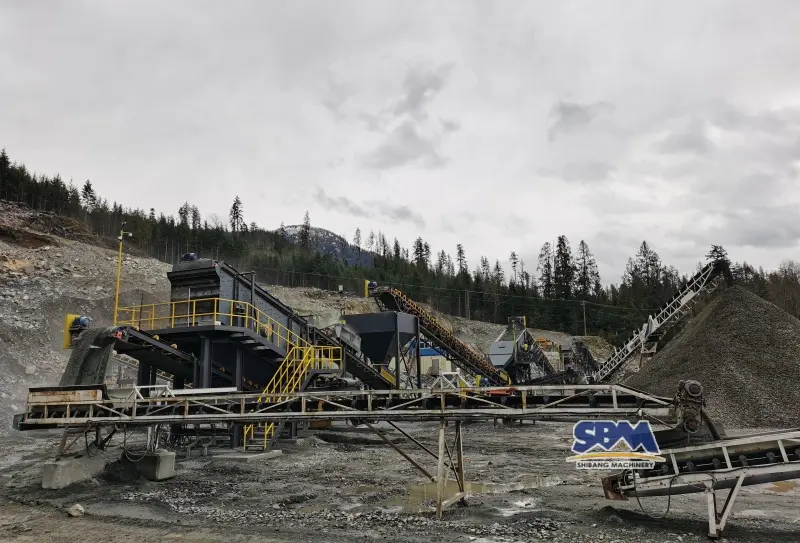
When you search for a granite crusher quote, you’re not just asking “how much does a crusher cost?” You actually need a complete solution: the right machine, a realistic layout and a price you can trust. You may feel at a loss because different suppliers’ quotes for “200 tons/hour granite factory” vary greatly, and the proposals are full of technical jargon. This guide focuses on the quoting process itself: what information you should prepare, how suppliers calculate prices, and how to compare different granite crushing plant quotes so that you can avoid common pitfalls and choose a solution that is truly right for your project.
Why Granite Crushing Plant Quotes Differ So Much?
For the same “200 tph granite plant”, you might receive quotations with surprisingly different prices. This is usually not only about “expensive” or “cheap”, but about what is actually included and how suitable the design is for hard granite.
Key factors that change the price:
- Scope of supply
- Only crushers vs full package including feeders, screens, conveyors, steel structures, electricals, and installation support.
- Machine types and quality
- PE jaw + cone vs jaw + impact vs multi-stage including VSI shaping.
- Heavy-duty designs and brand reputation also affect price.
- Automation and control level
- Simple local control panels vs integrated PLC systems with protections and interlocks.
- After‑sales support and spare parts
- Local service, training, and part availability are “hidden value” inside the quotation.
Understanding these differences helps you see why a higher quote may actually have better long‑term value, especially in hard, abrasive granite applications.
Information You Must Provide to Get a Useful Granite Plant Quotation
If you just write “I want a granite crusher 200 tph, send best price” when you inquire, you will receive a bunch of “unreliable” quotes. At least the following should be included in your consultation:
- 1. Raw material details
- Rock type: granite (and whether mixed with basalt, river stone, or recycled material).
- Maximum feed size from blasting or loading (e.g., 500 mm, 700 mm).
- Approximate moisture and how clean the material is (soil, clay content).
- 2. Capacity requirements
- Target capacity in tons per hour (e.g., 150 tph, 200 tph, 300 tph).
- Working hours per day and days per year, to size equipment reliably.
- 3. Final product sizes and uses
- Required size ranges (0–5 mm, 5–10 mm, 10–20 mm, 20–40 mm, etc.).
- Main application: highway, asphalt, ready‑mix concrete, base layer, etc.
- 4. Site and layout constraints
- Fixed plant or mobile; available power supply; terrain conditions.
- Any limits on height, noise, dust, or environmental regulations.
- 5. Budget and preference
- Whether you prioritize lowest initial investment or lowest long‑term cost per ton.
- Whether you prefer PE jaw + cone, want to consider VSI shaping, or are open to supplier recommendation.
How Suppliers Usually Build a Granite Crushing Plant Quote?
- Main crushing equipment
- Primary PE jaw crusher (for hard granite).
- Secondary cone crusher(s) and optional impact/VSI for shaping.
- Feeding and screening
- Vibrating feeder with grizzly bars.
- One or more vibrating screens with appropriate decks.
- Conveyors and steel structures
- Belt conveyors between each stage.
- Platforms, chutes, support frames, and walkways.
- Electrical and control system
- Motors, cables, control cabinet, soft starters or VFDs, interlocks.
- Auxiliary systems
- Dust suppression, water spray, lighting, and sometimes civil drawings.
- Services (optional line items)
- Installation supervision, commissioning, operator training.
- Spare parts packages for 6–12 months.
Comparing Different Granite Crushing Plant Quotations
When you receive multiple quotes, you often only look at the total price, making it difficult to compare the quality of the plans. You can compare quotes according to the following ideas:
- Check the process flow and machine selection
- Does the proposal clearly show feeder → jaw → cone → screen → (optional shaping) for granite, or is it a generic flow designed for softer rock?
- Compare key specifications, not just model names
- Feed opening of the jaw, cone capacity range, motor power, and recommended CSS.
- Are they sufficient for your actual feed size and target capacity?
- Look at included components
- Are conveyors, screens, steel structures, and electricals included or only crushers quoted?
- Are installation and training services listed?
- Evaluate after‑sales commitment
- Warranty terms, response time, and spare parts stock location.
- Names of reference projects, especially in granite.
- Assess total cost of ownership, not only EXW/FOB price
- A lower equipment price can still lead to higher wear, more downtime, and more energy consumption over time.
Tips: You can even make a simple Excel to score each quote based on “technical matching/completeness/service/price” instead of just looking at who is cheaper.
Typical Price Drivers for Granite vs Softer Stone
Do you have a question: Why is the price of “granite line” significantly more expensive than that of limestone line with the same output? Here we can explain it in non-numeric, structural language:
- Stronger and heavier machines
- Steel structure, bearings and frames must handle higher crushing forces.
- More robust wear parts
- Jaw plates, cone liners and other parts for granite use higher-grade manganese or alloy.
- More stages and better shaping
- To get highway/asphalt quality from granite, you often need an extra shaping stage and better screening.
- Additional dust and noise control
- Hard rock crushing often generates more fines and noise, requiring better suppression and protection systems.
How to Write a High‑Quality RFQ for a Granite Crushing Plant?
To help you get a more reasonable quote, you can use the “Inquiry Template” below. You can directly copy and fill in the blanks and send it to us:
Subject: RFQ – Granite Crushing Plant (200 TPH)
Raw material: granite, max feed size about ___ mm.
Target capacity: ___ tph, working ___ hours per day, ___ days per year.
Final products: ___ mm, ___ mm, ___ mm (for highway / concrete / asphalt / base).
Site conditions: (fixed/mobile), available power ___ V, ___ Hz, terrain description ___.
Preference: PE jaw + cone / open to your recommendation.
Please provide:
- Process flow diagram and equipment list
- Quotation with scope of supply and delivery time
- Estimated wear parts consumption in granite
- Installation and commissioning support options
Copy and fill in this RFQ template, send it to our team, and we will return a detailed granite crushing plant proposal and quotation.
FAQs About Granite Crushing Plant Quotations
1. Why do I get very different prices for the same 200 TPH granite crushing plant?
Because each supplier may include a different scope (only crushers vs full plant), use different machine types (jaw + cone vs jaw + impact + VSI), and offer different levels of automation and service. Without a clear RFQ and detailed comparison, quotes that look similar on the surface can represent very different solutions.
2. Can I get an accurate granite plant price without sending detailed information?
Only very rough budget numbers are possible without details. To receive a realistic quotation, suppliers must know your material, feed size, capacity, final products, site conditions, and preferences. The more precise your information, the more accurate and comparable the quotations will be.
3. Should I always choose the cheapest granite crushing plant quote?
Not necessarily. A cheap offer that uses undersized or unsuitable equipment for hard granite can lead to high wear, frequent downtime, and lost production. It is usually better to choose a technically sound solution with reliable support, even if the initial price is slightly higher, because it lowers your real cost per ton over the life of the project.