Email: [email protected]

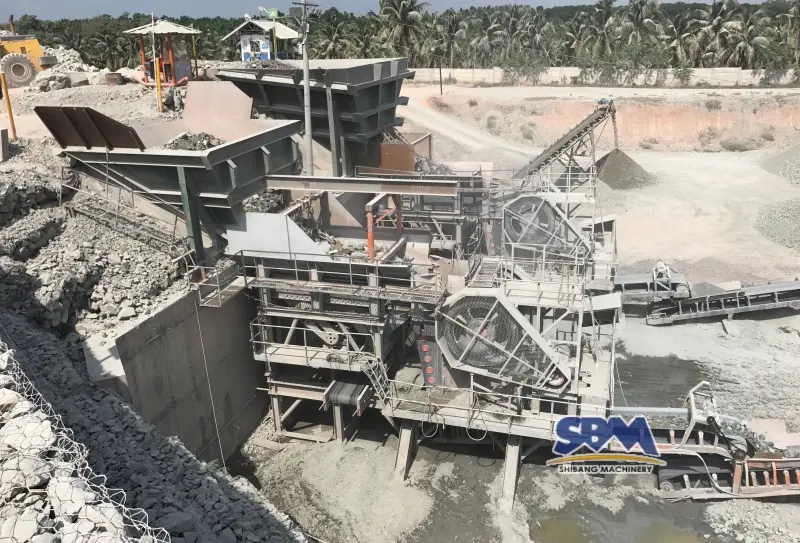
Granite crushing is not a one-size-fits-all process. The right plant for road base is not always the best choice for railway ballast, concrete aggregates, asphalt, or manufactured sand. That is why many buyers search for granite crushing solutions instead of a single machine: they need a complete system that matches their final product, market demand, and operating conditions. This guide explains how to match granite crushing equipment and plant design to different applications, so you can choose a solution that produces the right size, shape, and quality for your target market.
Why Granite Crushing Needs Application-Specific Design?
Granite is hard, abrasive, and durable, which makes it an excellent raw material for many construction products. But the way you crush it should depend on the final use.
For example:
- A plant for road base may prioritize capacity and cost per ton.
- A plant for highway aggregates must focus on shape and gradation.
- A plant for railway ballast needs strong, angular, low-fines stone.
- A plant for concrete or asphalt may need more shaping and tighter quality control.
- A plant for manufactured sand needs a dedicated sand-making and screening stage.
This is why successful granite crushing projects start from the application, not only from the equipment catalog.
Granite Crushing for Road Base and Sub-Base
Road base is one of the most common uses for granite crushing products. In this application, the focus is usually on volume, durability, and stable gradation.
Typical plant setup
- Vibrating feeder.
- PE jaw crusher as primary crushing.
- Cone crusher as secondary crushing.
- Vibrating screen for final grading.
What matters most?
- Stable throughput.
- Well-controlled size distribution.
- Enough strength to support heavy traffic layers.
- Lower operating cost per ton.
For road base, the plant does not always need aggressive shaping. A practical jaw + cone + screen setup is often the most efficient solution.
Related Contents:
Granite Crushing for Highway Aggregates
Highway and expressway projects are more demanding than basic road base work. They need stronger control over particle shape, fines, and consistency.
Typical plant setup
- PE jaw crusher.
- Cone crusher.
- Vibrating screen.
- Optional VSI or impact crusher for shaping selected fractions.
What matters most?
- Cubical or angular particles.
- Low flakiness.
- Stable grading.
- Controlled dust and fines.
If your granite crushing plant is aimed at highway projects, you should think beyond capacity. A slightly lower output with better quality may sell at a higher price and satisfy stricter project specs.
Granite Crushing for Railway Ballast
Railway ballast is a special market. It requires coarse, durable, angular stone that can lock together while still allowing drainage.
Typical plant setup
- Jaw crusher for primary reduction.
- Cone crusher for secondary reduction.
- Heavy-duty screen with oversize return.
- Strict separation of fines and ballast-sized products.
What matters most?
- Strong particles with minimal breakage.
- Low fines content.
- Stable coarse grading.
- Clean stockpiles and careful handling.
In granite crushing for ballast, over-crushing is a major risk. The plant should be tuned to protect shape and avoid creating too much small material.
Granite Crushing for Concrete Aggregates
Concrete producers often want a balanced mix of coarse and fine aggregates with reliable gradation and good particle quality.
Typical plant setup
- Jaw crusher.
- Cone crusher.
- Screening system.
- Optional shaping stage if higher-quality concrete aggregate is needed.
What matters most?
- Consistent size fractions.
- Controlled fines content.
- Strong interlock and durability.
- Reliable supply for batching plants.
For concrete applications, granite crushing systems should be designed to support multiple aggregate sizes, such as 0–5 mm, 5–10 mm, 10–20 mm, and 20–31.5 mm, depending on local market requirements.
Granite Crushing for Asphalt and Surface Courses
Asphalt projects care a lot about particle shape, surface texture, and gradation. Granite is an excellent material here if it is processed properly.
Typical plant setup
- Jaw crusher.
- Cone crusher.
- Screen.
- VSI or impact crusher for shaping critical fractions.
What matters most?
- High quality, cubical particles.
- Good adhesion with bitumen.
- Controlled dust and fine balance.
- Stable product consistency over time.
If the granite aggregate is too flaky or too dusty, asphalt performance may suffer. That is why many asphalt-focused granite crushing lines include a shaping stage.
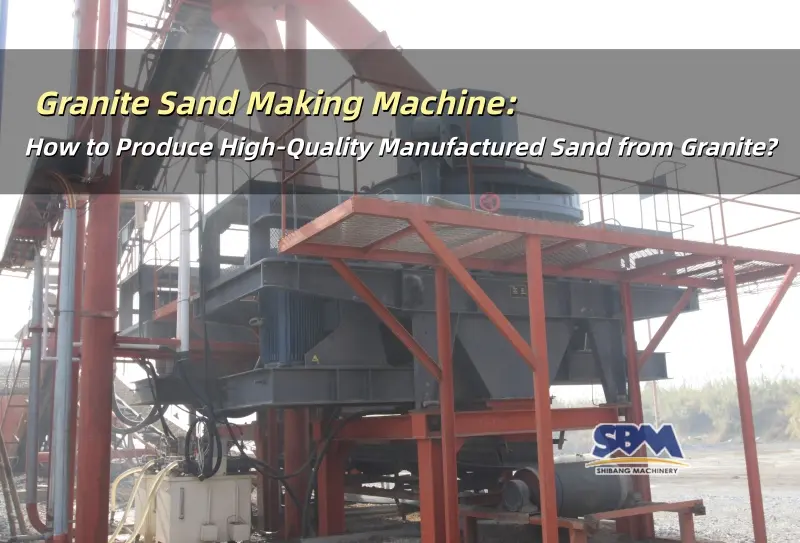
Granite Crushing for Manufactured Sand
When the market needs sand, granite crushing can be extended into manufactured sand production.
Typical plant setup
- Jaw crusher.
- Cone crusher.
- VSI sand maker.
- Screening and optional washing.
What matters most?
- Particle size control.
- Shape and surface texture.
- Fine content management.
- Stable gradation for concrete and asphalt use.
This application is different from coarse aggregate production because the value depends not only on strength, but also on particle engineering.
How to Choose the Right Granite Crushing Solution?
To select the right plant, start with these questions:
- What is the final product?
- Road base.
- Railway ballast.
- Concrete aggregates.
- Asphalt aggregates.
- Manufactured sand.
- What capacity do you need?
- Small quarry.
- Medium plant.
- Large commercial aggregates operation.
- How important is particle shape?
- Basic construction grade.
- Premium road or asphalt grade.
- Strict rail or concrete specification.
- Do you need a fixed or mobile solution?
- Long-term quarry.
- Temporary project.
- Multi-site contractor.
- What is more important?
- Lowest initial cost.
- Lowest operating cost.
- Highest product value.
The answers to these questions define the right granite crushing configuration better than any generic model chart.
Granite Crushing Plant Combinations by Application
| Application | Recommended Granite Crushing Setup | Main Priority |
|---|---|---|
| Road base | Jaw + cone + screen | Capacity and cost efficiency |
| Highway aggregates | Jaw + cone + screen + optional shaping | Shape and grading |
| Railway ballast | Jaw + cone + heavy screening | Angularity and low fines |
| Concrete aggregates | Jaw + cone + screen, optional shaping | Stable quality and size fractions |
| Asphalt aggregates | Jaw + cone + VSI / impact + screen | Cubical shape and adhesion |
| Manufactured sand | Jaw + cone + VSI + washing | Sand quality and gradation |
This table can help you quickly identify which granite crushing solution fits their project.
FAQs About Granite Crushing Solutions
1. Is one granite crushing plant suitable for every application?
Not usually. A plant designed for road base may not produce the particle shape needed for asphalt or railway ballast. The best granite crushing solution depends on the final product and quality requirements.
2. What crusher is best for general granite crushing?
For most hard granite projects, a PE jaw crusher as the primary machine and a cone crusher as the secondary machine is the most practical starting point. From there, the plant can be adjusted with screens or shaping equipment depending on the end use.
3. Can a granite crushing plant produce both aggregates and sand?
Yes. Many plants are designed to produce coarse aggregates and manufactured sand at the same time. This usually requires a cone crusher, screening system, and a VSI or sand-making unit to handle the fine fraction.