Email: [email protected]

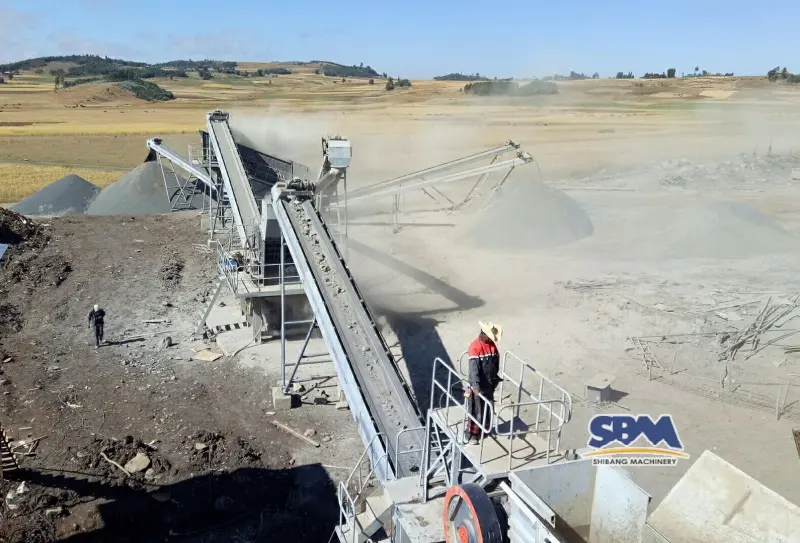
A client recently told me this. Their country invests heavily in infrastructure development. They need various types of equipment greatly. Today we’ll talk about the equipment needed in infrastructure construction. What is the role of crushers in infrastructure construction?
Which types of equipment do infrastructure construction projects use?
Infrastructure projects use a wide range of heavy and light equipment, usually grouped by function rather than by brand. Below is a concise breakdown by category.
Earthmoving equipment
Earthmoving machines handle excavation, land clearing, and grading for roads, bridges, rail, and utilities. Excavators, bulldozers, backhoe loaders, motor graders, and wheel tractor-scrapers are common types. They dig soil and rock in bulk. They cut, push, and level these materials efficiently. These machines are essential in early project stages such as site preparation, foundation works, and roadbed formation.
Lifting and material handling
These machines move and position heavy components like girders, precast segments, rebar cages, and formwork. Typical equipment includes tower cranes, mobile cranes, rough-terrain cranes, telehandlers, and forklifts. Each suits different lift heights and capacities. They also match various site access conditions. Pile drivers and piling rigs support bridge and elevated road works. They install deep foundations. These foundations bear heavy loads.
Hauling and transport
Hauling equipment moves bulk materials, debris, and aggregates around or off the site. Dump trucks, articulated dump trucks, and tipper trucks transport materials. They move soil, rock, asphalt, and demolition waste. They operate between excavation areas, crushers, stockpiles, and disposal sites. Flatbed and heavy‑duty trucks also carry steel, precast elements, and machinery to and from infrastructure projects.
Road and pavement equipment
Road, airport, and port pavements require specialized equipment beyond basic earthmoving. Asphalt pavers, concrete pavers, and slip-form pavers place the wearing course. Road rollers and compactors achieve density. They target subgrade, base, and surface layers. Cold planers and milling machines aid rehabilitation. They remove existing asphalt or concrete layers. They prepare surfaces before resurfacing.
Foundation, utility, and finishing
Foundation and underground utility work relies on trenchers. They handle pipelines and cables. Drilling and piling rigs create deep foundations. Compactors and plate tampers backfill around utilities. Concrete mixers and pumps aid structural tasks. Skid steer loaders use various attachments. Small compaction equipment supports finishing. Hand tools manage formwork, concreting, drainage, and repairs across the jobsite.
What is the role of crushers in infrastructure construction?
Crushers play a central role in infrastructure construction. They turn raw rock and demolition debris into graded aggregates. Roads, bridges, railways, and concrete structures depend on these materials. Without them, most infrastructure projects would face much higher material costs and serious logistical constraints.
Producing structural aggregates
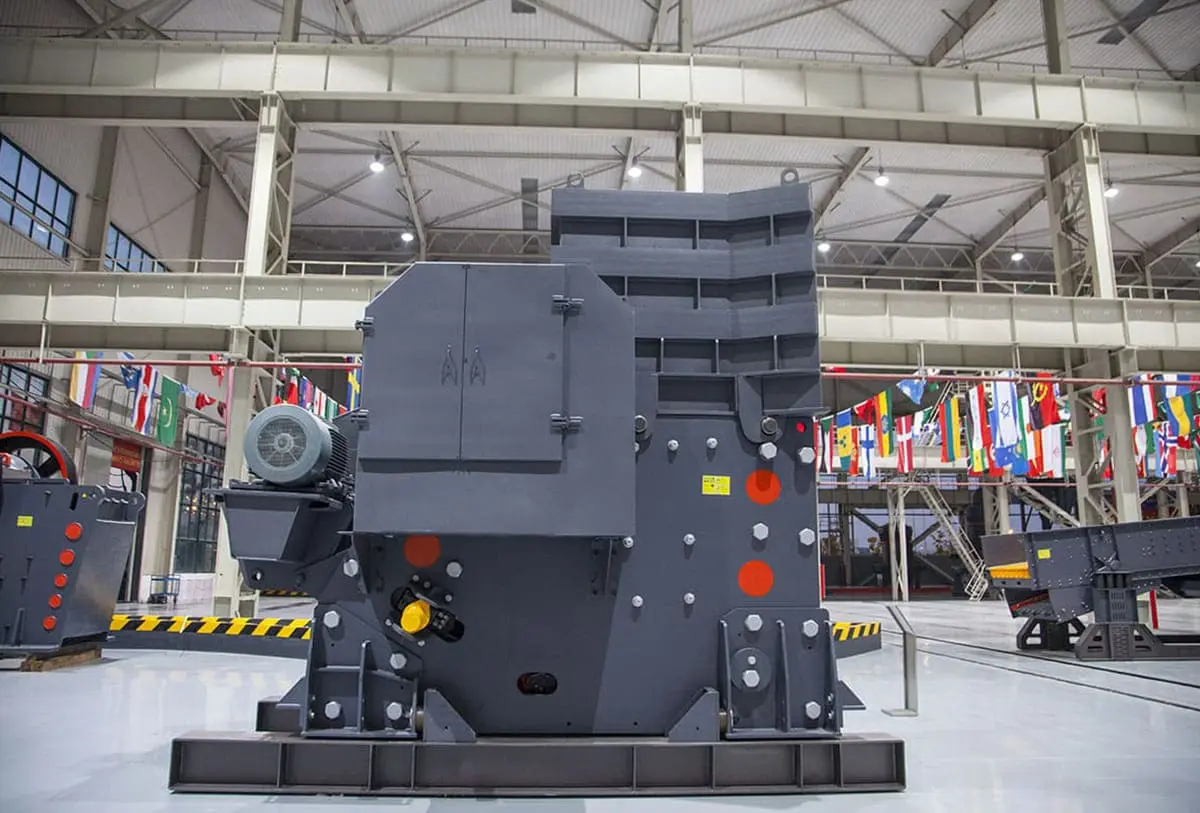
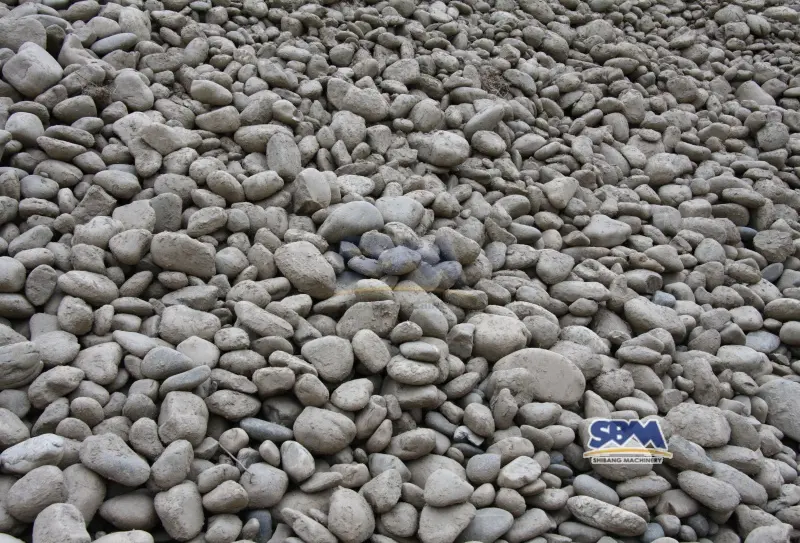
Crushers reduce blasted rock or river stone into specific sizes used in concrete, asphalt, base course, and ballast. Primary crushers, often jaw crushers, handle large feed. They create manageable chunks. Workers process these chunks further. Secondary and tertiary crushers (cone and impact crushers) then shape and grade the material to meet tight specifications for strength, gradation, and durability in infrastructure works.
Enabling road and rail construction
Road construction relies on crushed stone for sub‑base, base, and asphalt aggregate, while railways need high‑quality ballast with defined size and angularity. On‑site or nearby crushing plants shorten haul distances from quarries, stabilize supply, and ensure consistent quality for large linear projects like highways and rail corridors.
Recycling and cost reduction
Asphalt and concrete crushers process demolition waste from old roads, bridges, and buildings into reusable aggregate, reducing disposal volumes and demand for rock. This recycling lowers project material costs and supports sustainability targets that are increasingly embedded in public infrastructure contracts.
Improving constructability and performance
Well‑crushed aggregates improve workability, compaction, and long‑term performance of pavements and foundations because particle size and shape can be controlled. Uniform, angular crushed stone interlocks better under load than unprocessed rock, enhancing bearing capacity and reducing deformation under traffic and structural loads.
Supporting diverse applications
Different crusher types serve specific infrastructure needs: jaw crushers for primary size reduction, cone crushers for high‑strength concrete aggregate, and impact crushers for well‑shaped asphalt aggregate and recycling. Mobile and tracked crushers allow contractors to bring this capability directly to road, rail, and urban renewal sites, improving flexibility and project timelines.
Q & A
Q1: What are the main types of crushers used in infrastructure projects and how do they differ?
Common crusher types in infrastructure construction include jaw crushers, cone crushers, impact crushers, and vertical shaft impact (VSI) or sand-making crushers. Jaw crushers are mainly used as primary crushers to handle large feed and produce coarse aggregates, while cone crushers are typically used in secondary and tertiary stages to produce high‑strength, well‑graded aggregates for concrete and base courses. Impact crushers are often used for shaping and for processing softer rock and recycled materials (concrete, asphalt), and VSI/sand-making machines are used to produce manufactured sand with good particle shape for asphalt and concrete surface layers.
Q2: Why is particle size and shape control by crushers so important for roads and bridges?
For roads, bridges, and railways, aggregates need specific size ranges and good angularity so that layers like sub‑base, base, and asphalt or concrete can achieve high compaction, strength, and long‑term durability. Well‑crushed, angular particles interlock better, reduce deformation under traffic loading, and improve the bonding between aggregate and asphalt or cement paste, which directly affects rutting resistance, cracking performance, and overall service life of the infrastructure.
Q3: How do mobile crushers benefit large linear infrastructure projects such as highways and railways?
Mobile crushers move along the route. They process rock or demolition material directly on or near the job site. This reduces haul distances and truck numbers for bringing in or removing materials. Moreover, on-site processing improves schedule flexibility. It also lowers logistics and material costs. Additionally, contractors quickly produce different aggregate sizes as design requirements change along project sections.