Email: [email protected]

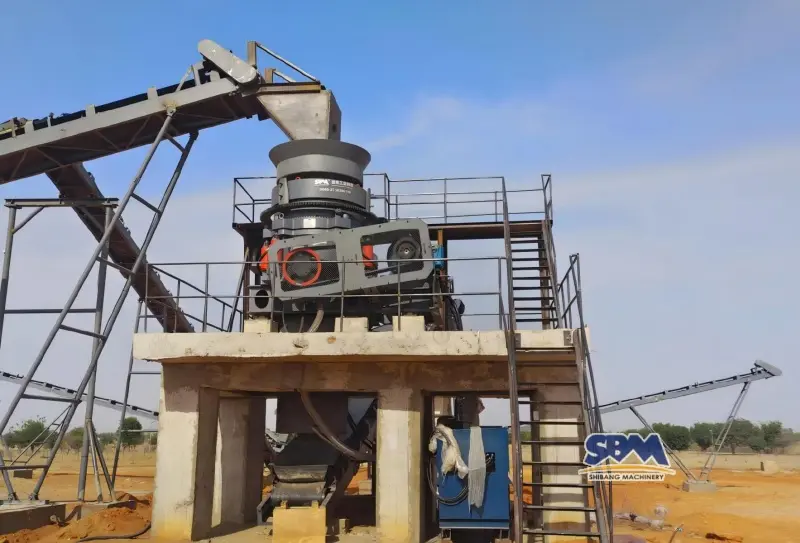
Wind farms and large solar parks need a lot of aggregates for roads, crane pads, turbine foundations, inverter stations and substation platforms. Granite is a natural fit because it is hard, durable and resistant to weathering. But project owners and EPC contractors are no longer asking only for “granite aggregates” – they increasingly look for low‑carbon, sustainable granite aggregates that match the green profile of their wind and solar projects. This guide explains how to design and operate a granite crushing plant that can supply wind and PV projects with strong, well‑graded materials and a convincing low‑carbon story.
Why Wind and Solar Projects Care About “Low-Carbon” Aggregates?
Many wind and solar projects are financed and evaluated under ESG and green taxonomy frameworks. That means:
- Life‑cycle emissions of materials (including aggregates) matter in project reporting.
- Bids with documented low‑carbon materials can receive extra scoring or act as differentiators.
- Developers want suppliers whose operations align with the image of clean energy.
For granite aggregate suppliers, this is both a challenge and an opportunity: you can’t change the chemistry of the rock, but you can reduce and document the emissions from crushing, transporting and using it.
Granite Aggregates for Wind and Solar: Typical Uses and Requirements
Wind and PV projects use granite aggregates in several key applications:
- Access and internal roads – require strong base and sub‑base layers to support heavy trucks and cranes.
- Crane pads and hardstands – need high bearing capacity and good drainage to hold crawler cranes and maintenance equipment.
- Turbine foundations / inverter & transformer foundations – need high‑quality concrete aggregates with controlled gradation and strength.
- Drainage layers around cables and substations – require clean, well‑graded material.
These applications call for:
- High strength and durability (granite is excellent here).
- Controlled gradation and low fines where drainage is critical.
- Reliable, consistent quality over long project timelines.
Solution1: Energy-Efficient Granite Crushing for Lower CO₂ per Ton
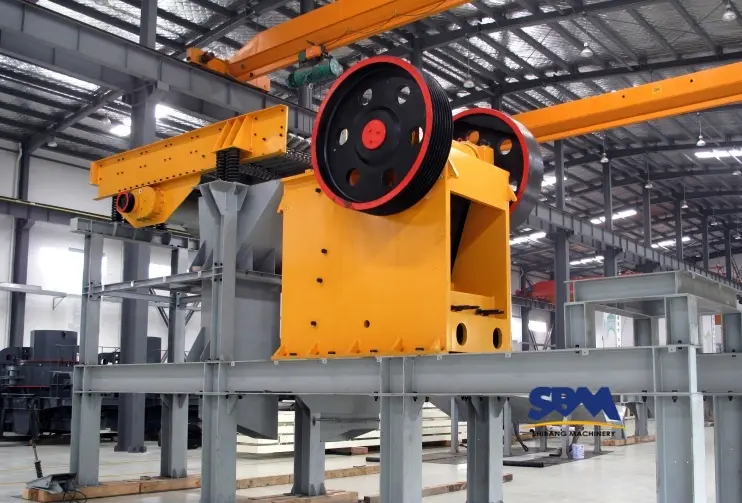
- Use energy-efficient jaw and cone crushers
- Choose modern PE jaw and cone models with optimized chambers, higher efficiency motors and the ability to run close to their best operating point.
- Avoid undersized machines that have to work at extreme loads, creating more wear and kWh per ton.
- Apply variable frequency drives (VFDs) and smart feeding
- Use VFDs on feeders and some crushers to smooth load, avoid peaks and reduce idle running.
- Keep feed continuous and even so that energy is converted into useful crushing, not empty spinning.
- Reduce recirculation and over‑crushing
- Well‑designed screening and correct CSS on the cone reduce the amount of material being re‑crushed, lowering both wear and energy use.
Related Contents:
- Best Jaw Crusher for Granite
- Granite Crusher Machine
- Granite Crushing Plant
- 200 TPH Granite Crushing Plant Design
Solution2: Smart Plant Design and Dust/Noise Control for ESG Compliance
- Compact, gravity‑assisted layout
- Short conveyors, fewer transfer points and use of elevation reduce power use, belt wear and dust sources。
- Integrated dust suppression and enclosures
- Water spray, covers and local enclosures at crushers and screens reduce dust and are healthy and friendly to the surrounding environment and workers.
- Noise management
- Orienting the plant away from nearby communities, using enclosures and planning working hours is in line with local environmental protection requirements and project party expectations.
Solution3: Turning Fines and Waste into Low-Carbon Products
Granite lines inevitably produce stone powder and fine materials. Making good use of them can reduce waste and additional material mining, which is also in line with the trend of sustainable construction.
- Produce granite M‑sand for concrete and backfill
- Feed fine materials with reasonable particle sizes into the sand making machine and sand washing system to produce machine-made sand that meets specifications and reduce reliance on natural river sand.
- Use suitable fines in low‑carbon concrete blends
- Cooperate with cement plants or concrete plants to use part of the qualified fine powder as mineral admixtures, fillers or micro powders to replace part of the cement or other raw materials.
- Supply multiple gradations from one plant
- The screening system is used to simultaneously provide road base, concrete aggregate, drainage layer aggregate and M‑sand. One line covers multiple material usage scenarios of the project, reducing external transportation and multi-source mining.
Solution4: Logistics and Local Sourcing – A Hidden Carbon Lever
For wind power and photovoltaics, the transportation distance of materials has a significant impact on carbon emissions.
- Closer quarries = lower transport emissions
- Indicate the distance between your granite source and the project, and how many truck miles can be saved compared to a long-distance aggregate supply.
- Optimized hauling and loading
- Reasonably organize loading, stowage and round-trip routes to reduce empty driving and waiting.
- On‑site or near‑site mobile crushing (where feasible)
- For remote and large-scale projects, some mobile crushing units can be considered to be set up near or within the project to reduce long-distance transportation of raw stone or gravel.
How to Present “Low-Carbon Granite Aggregates” in Bids and Marketing?
- Energy per ton
- For example: a continued downward trend in kWh/t, or the proportion of energy savings compared to older lines/old equipment (absolute figures do not need to be disclosed, percentages can also be used).
- Dust and noise control measures
- List your spraying, dusting, containment and monitoring measures to highlight the protection of workers and the surrounding environment.
- Fines utilization / reduced waste
- Indicate what proportion of the fine material is used as manufactured sand or other products rather than simply being discarded.
- Local sourcing and transport optimization
- Indicate the approximate distance between the quarry and the wind power/photovoltaic project, emphasizing the reduction of carbon emissions caused by long-distance aggregate transportation.
- Optional: cooperation on low-carbon concrete
- If available, collaboration with concrete or precast elements to develop low carbon mixes may also be mentioned in the document.
FAQs – Low-Carbon Granite Aggregates for Wind and Solar Projects
1. How can I prove that my granite aggregates are “low-carbon” to wind and solar clients?
You can track and share data on energy consumption per ton, dust and noise control, utilization of fines (e.g. M‑sand), local sourcing distances and any renewable power use. Combined, these show that your plant is more efficient and environmentally conscious compared with traditional operations.
2. Do I need completely new crushers to offer low-carbon granite aggregates?
Not always. Many plants can reduce energy and emissions by upgrading motors and drives, optimizing feed and recirculation, improving layout, adding M‑sand lines, and strengthening dust control. New crushers help, but process optimization often brings large gains on its own.
3. Will low-carbon measures increase my aggregate cost for wind and solar projects?
Some investments—like better dust control or new drives—have upfront costs, but they tend to reduce power, wear, downtime and compliance risks over time. For many suppliers, these savings plus higher acceptance in ESG-focused tenders make low‑carbon measures financially attractive rather than a pure expense.